Quick Answer
Okay, so here's the quick version on creosote. It's that black, flammable gunk that builds up in your chimney from burning wood. You’ll notice a nasty tar smell, smoke puffing back into your room, or just plain see the stuff caked on in there. If it's just light, flaky dust, you might manage a DIY cleaning for under $100. But if that stuff is thick, puffy, or shiny like tar—that’s Stage 2 or 3—do not mess with it. Calling a pro for a standard sweep is $150-$350. For the really nasty glazed stuff, it can be $800 or more. Don't risk your house.
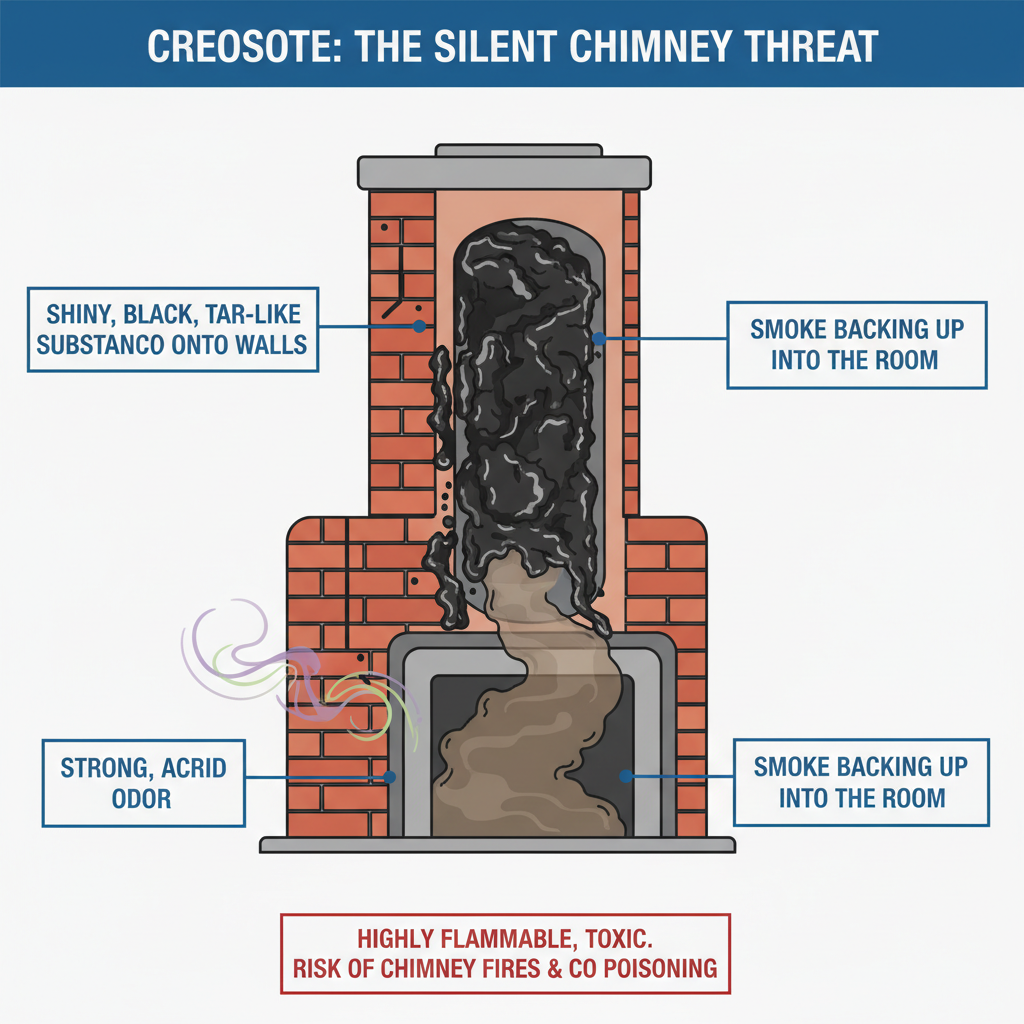
Common Symptoms
Possible Causes
Step-by-Step Diagnosis
Step 1
Perform a visual inspection. When the fireplace is completely cold, use a bright flashlight to look up the flue. Check for buildup thicker than 1/8 inch and note its texture (flaky, crunchy, or shiny).
Step 2
Do a scrape test. Carefully use a poker or screwdriver to scrape the flue wall. If it's flaky, it's Stage 1. If it's hard and crunchy, it's Stage 2. If it's gooey or a hard glaze, it's Stage 3.
Step 3
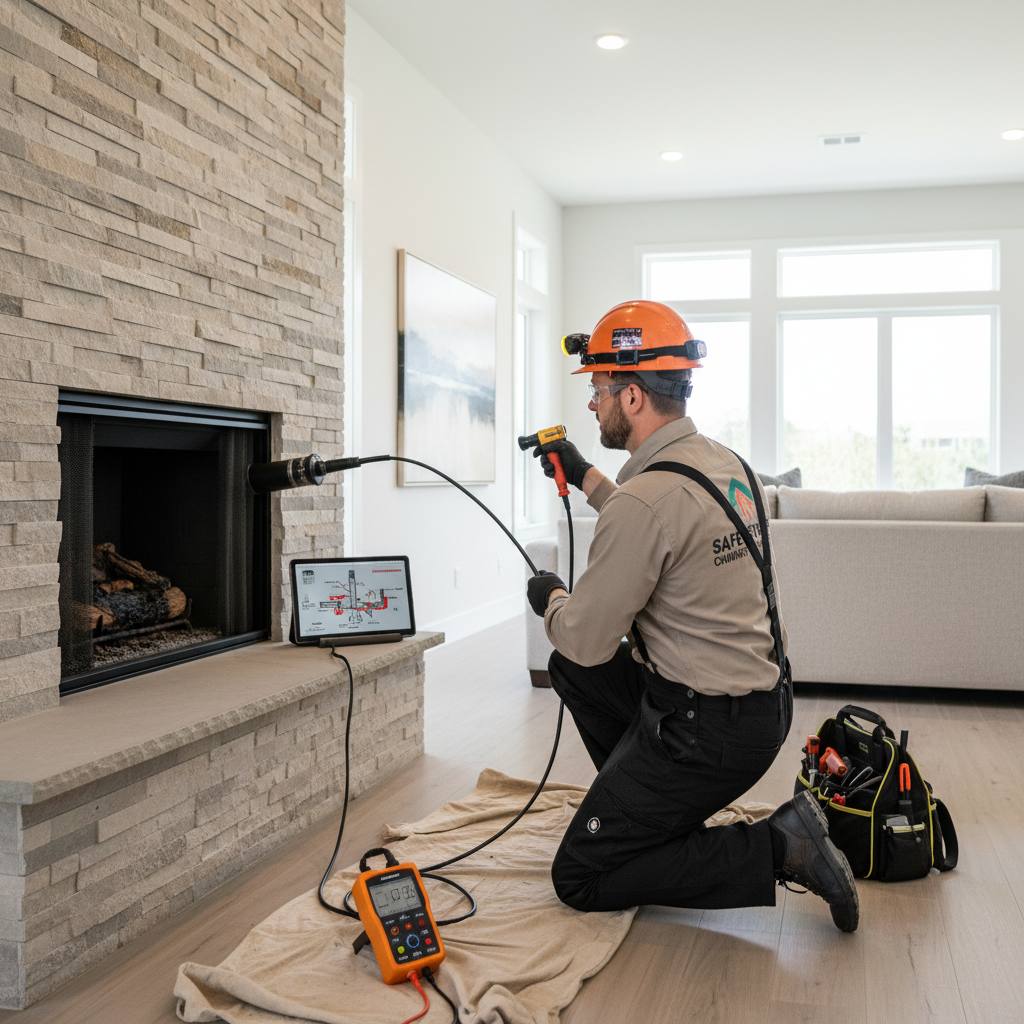
Call for a professional Level 1 inspection. A certified sweep can identify the type and severity of creosote and check the overall condition of your chimney, usually as part of a standard cleaning service.
DIY vs Professional Costs
| Repair Type | DIY Cost | Professional Cost | Time Required |
|---|---|---|---|
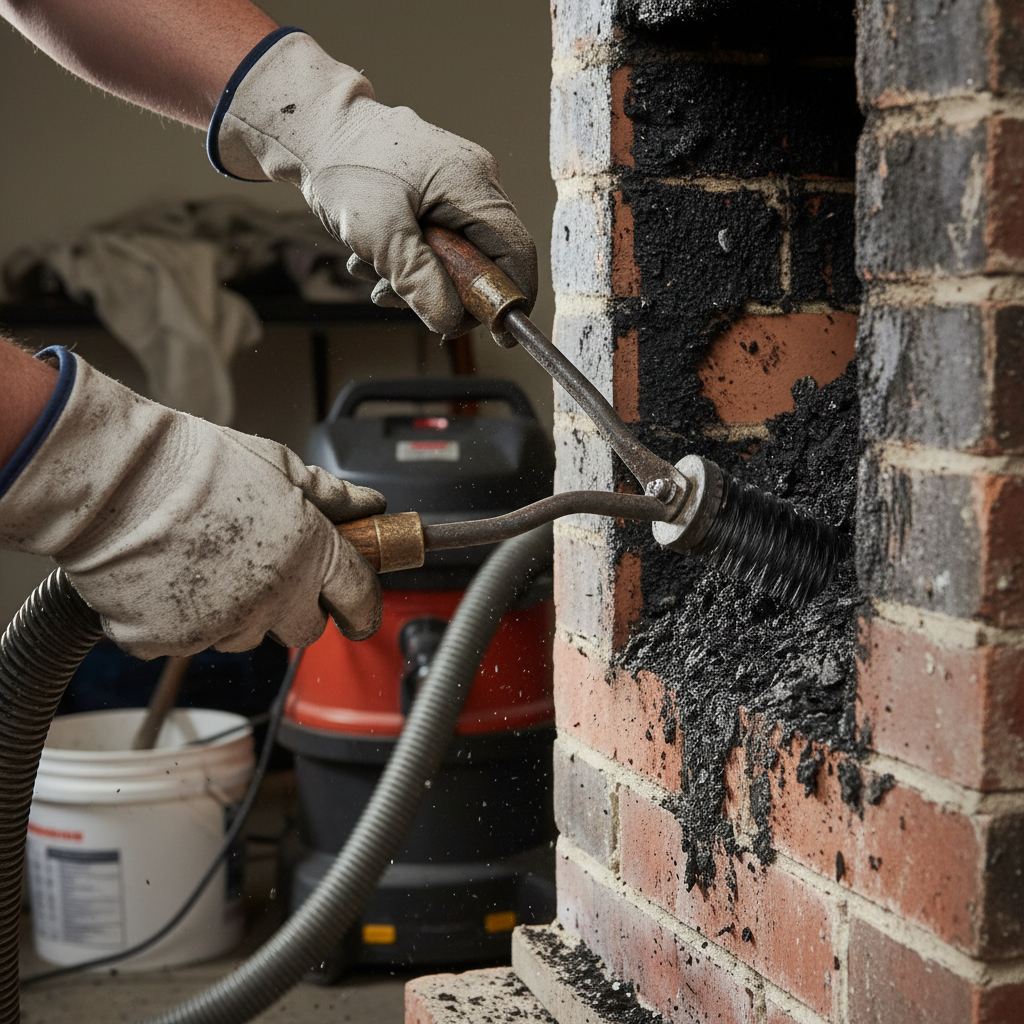
Stage 1 (Flaky Soot) Brush Cleaning | $50-150 | N/A (Part of Sweep) | 1-2 hours |
Standard Pro Sweep (Stage 1 & 2 Creosote) | Not Recommended | $150 - $350 | 1-1.5 hours |
Stage 3 Glaze Removal | DO NOT ATTEMPT | $300 - $800+ | 2-5 hours |
When to Call a Professional Chimney
- You see buildup that is more than 1/8-inch thick.
- The creosote is not just dusty, but appears puffy, crunchy, sticky, or like a shiny black glaze (Stage 2 or 3).
- You suspect you've had a chimney fire (roaring noise, warped liner, chunks of creosote on the ground).
- You're not physically able to safely work on the chimney yourself or lack the proper tools.
- It has been over a year since your last professional inspection, as recommended by the NFPA.
Prevention Tips
- Burn only seasoned, dry hardwood with a moisture content below 20%.
- Build smaller, hotter fires and avoid slow, smoldering fires that last overnight.
- Make sure the fireplace damper is fully open when a fire is burning to ensure a strong draft.
- Have your chimney inspected annually by a CSIA-certified professional and cleaned as needed.
- Install a chimney cap to keep out rain and moisture, which helps creosote form.
Frequently Asked Questions
Related Guides
Creosote Buildup (Troubleshooting & Fixes)
A veteran tech's guide to creosote buildup. Learn how to spot this chimney fire risk, what causes it, and when you can DIY vs. calling a pro. Don't get burned.
Preparing Your Chimney for Winter: Essential Seasonal Maintenance and Inspection Troubleshooting & Fixes (2024 Guide)
Essential guide to preparing your chimney for winter: learn DIY inspection tips, understand creosote dangers, and know when to call a CSIA-certified professional for annual maintenance and cleaning. Prevent creosote buildup and chimney fires.
Efflorescence on Chimney Masonry Troubleshooting & Fixes (2024 Guide)
Seeing white powder on your chimney brick? A veteran tech explains what that efflorescence is, why it's a warning sign for water damage, and how to effectively diagnose and fix it, including DIY and when to call a professional.
Chimney Cleaning Tools & Guide: DIY vs. Pro, When to Clean & Spot Dangers
Discover when to DIY chimney cleaning vs. hiring a professional. Learn about essential chimney cleaning tools, the dangers of creosote, how to spot warning signs, and critical safety tips to prevent chimney fires and maintain a safe home.
Animals in Your Chimney? (Troubleshooting & Fixes)
Hearing scratching in your chimney? A veteran tech explains how to figure out what's in there, get it out, and stop it from happening again.
Fireplace Smoking? Troubleshooting Poor Chimney Draft & When to Consider an Inducer Fan
Is your fireplace smoking up the house? Learn how to troubleshoot poor chimney draft, identify common causes, and discover if a chimney draft inducer fan is the right solution for your home.
Need Professional Help?
Find top-rated chimney experts in your area