Quick Answer
Okay so here's the quick version. Your fireplace is acting up—smoky, not giving off heat—because your chimney's clogged with gunk called creosote. It's basically baked-on tar from burning wet or junky wood. This stuff is a fire hazard, plain and simple. You gotta stop burning bad wood immediately. A basic cleaning might cost you $50-150 in tools if you're brave, or you can call a pro like me for a couple hundred bucks to do it right and not make a mess. Don't mess around with this one.
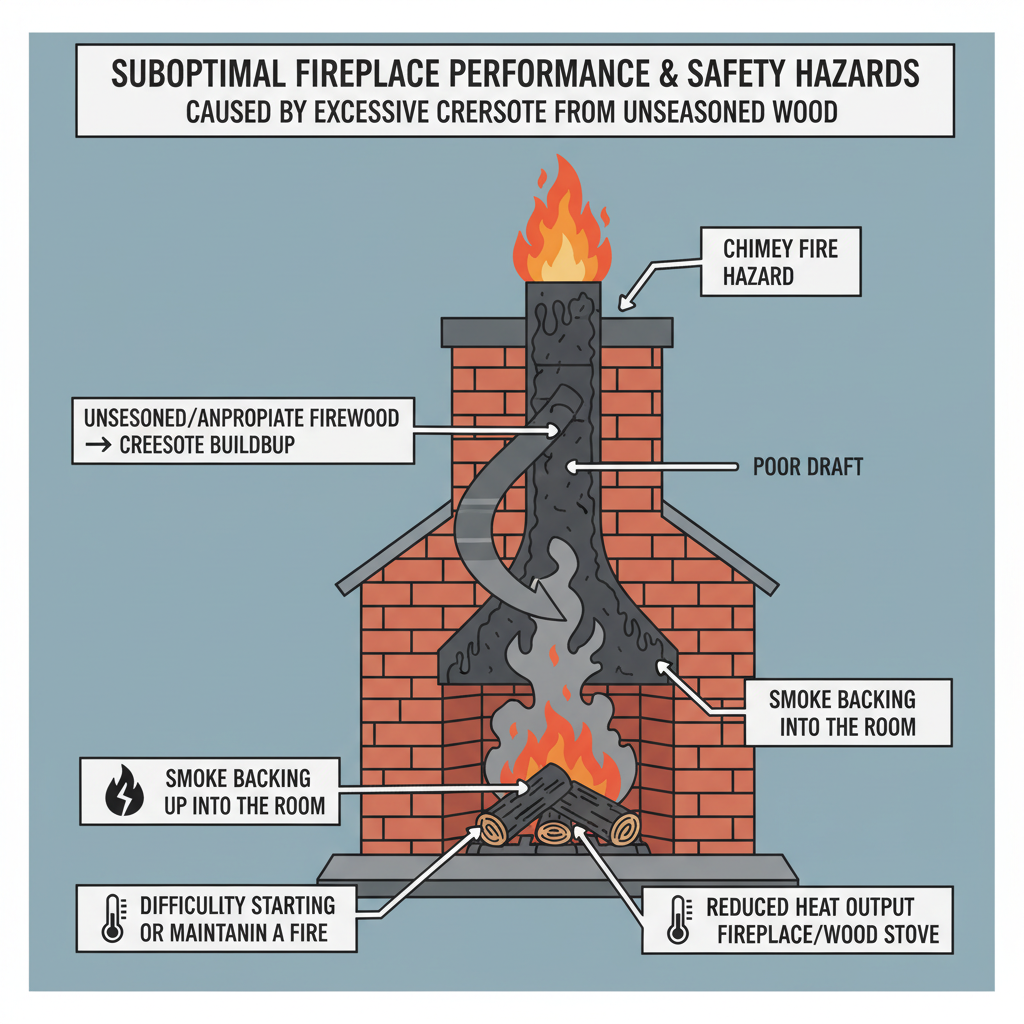
Common Symptoms
Possible Causes
Step-by-Step Diagnosis
Step 1
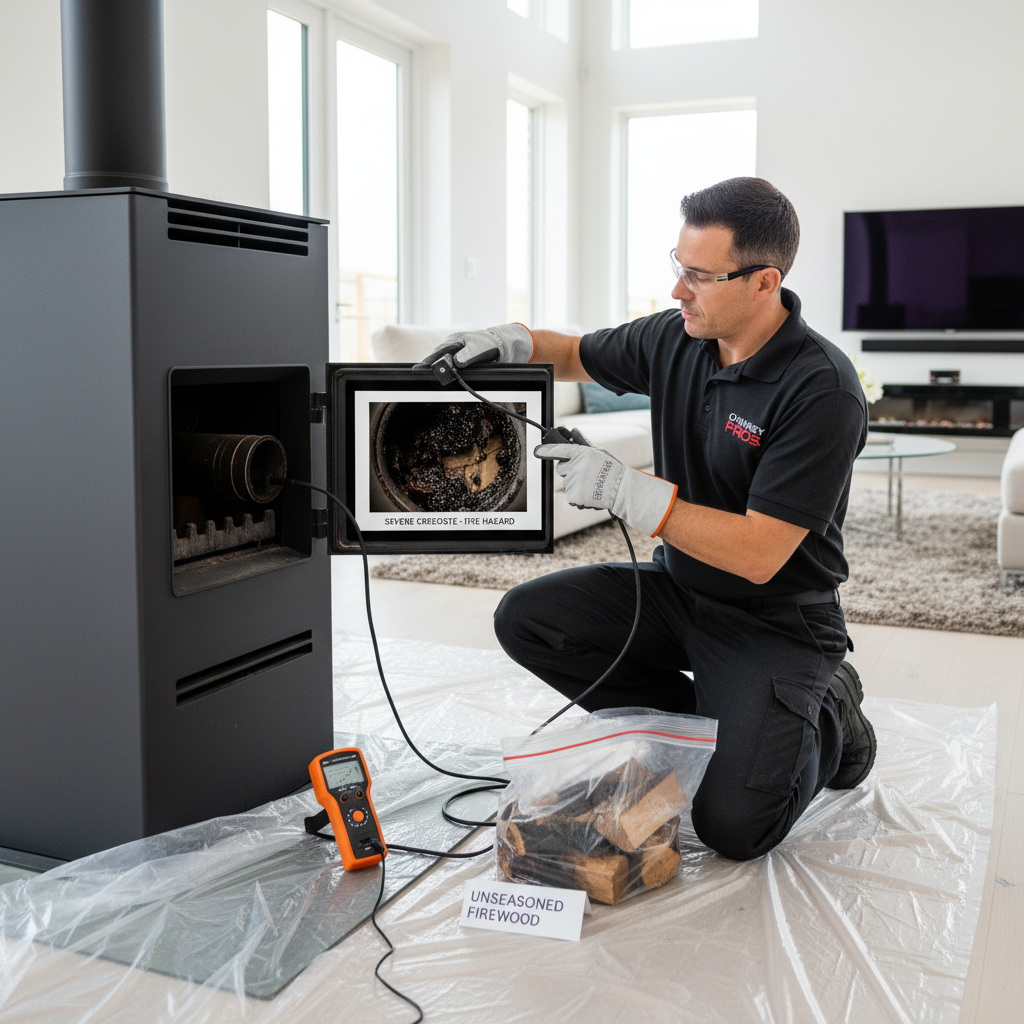
Inspect Your Firewood. Check for cracks on the ends, a grayish color, and listen for a sharp 'clack' when two pieces are hit together. Use a moisture meter to confirm it's below 20%.
Step 2
Visually Inspect the Flue. Use a powerful flashlight to look up past the damper for buildup. Note if it's dusty (Stage 1), flaky (Stage 2), or shiny and tar-like (Stage 3).
Step 3
Observe Fire Performance. Build a fire and see if it starts easily and burns brightly. Note if smoke spills into the room when you open the stove door, which indicates poor draft.
Step 4
Check for Odors. Pay attention to any persistent smoky or tarry smells, especially on humid days when the fireplace isn't in use.
DIY vs Professional Costs
| Repair Type | DIY Cost | Professional Cost | Time Required |
|---|---|---|---|
Switch to Seasoned Firewood | $0 - $400/cord | N/A | Ongoing |
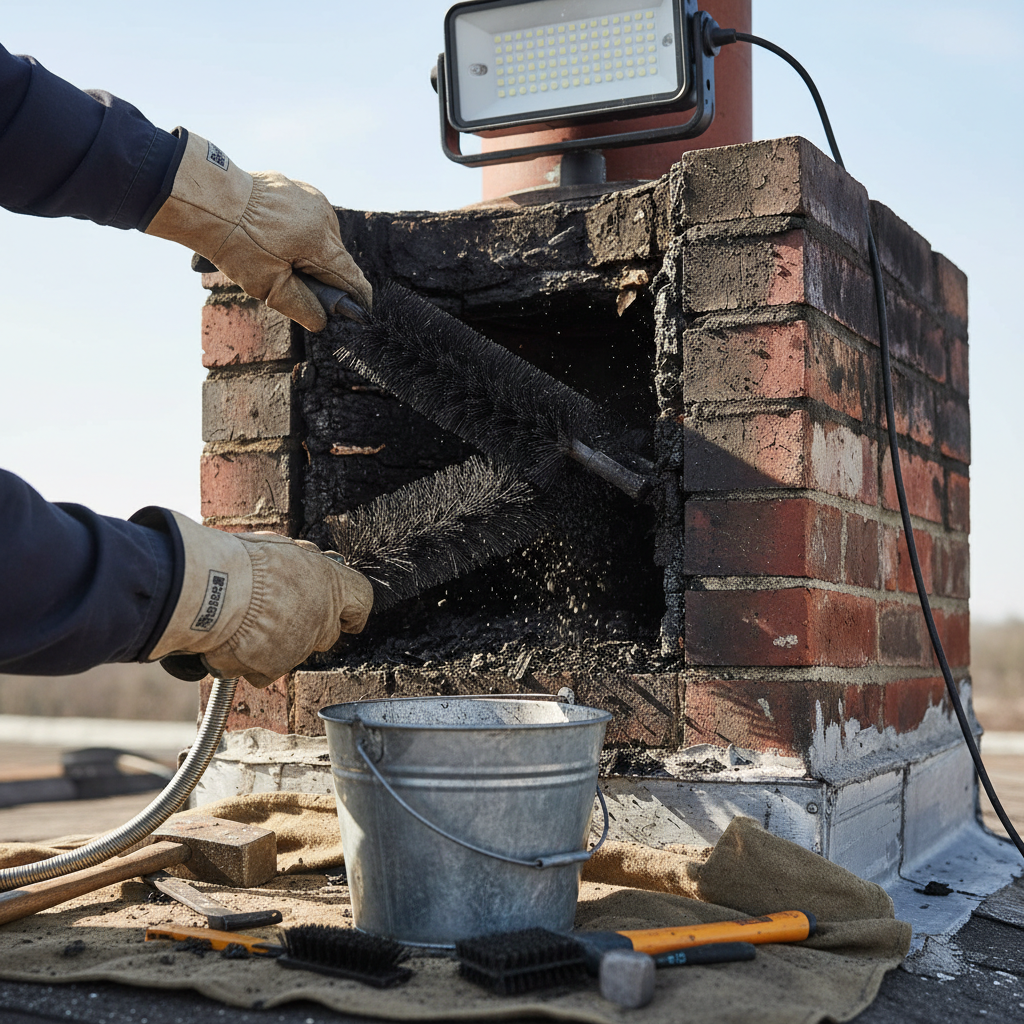
Light Sweeping (Dusty, Stage 1 Creosote) | $50-150 (for rods & brush) | $150-400 | 1-3 hours |
Advanced Creosote Removal (Glazed, Stage 2/3) | Not Recommended | $250-800+ | 2-5 hours |
When to Call a Professional Chimney
- If you see heavy, glazed, or tarry (Stage 2 or 3) creosote buildup.
- If you suspect or have experienced a chimney fire (roaring sound, flames from chimney top).
- If you have persistent drafting problems and smoke backs into the room despite using good habits.
- For your annual inspection and cleaning, which is the best way to ensure safety.
- If you are not physically able or comfortable working on a ladder or roof to perform a DIY cleaning.
Prevention Tips
- Burn only well-seasoned hardwood with a moisture content below 20%.
- Maintain a hot, clean-burning fire with adequate air supply; avoid long, smoldering fires.
- Have your chimney professionally inspected and swept at least once a year.
- Install a stovepipe thermometer to monitor flue gas temperatures and ensure you're burning in the optimal range.
- Never burn trash, cardboard, or treated/painted wood.
Frequently Asked Questions
Related Guides
Comprehensive Chimney Inspection: What Professionals Look For & Homeowner Checklist Guidance Troubleshooting & Fixes (2024 Guide)
A veteran chimney tech explains what happens during an inspection, what to look for yourself, and when to call a pro. Get the real story on costs and safety.
Preparing Your Chimney for Winter: Essential Seasonal Maintenance and Inspection Troubleshooting & Fixes (2024 Guide)
Don't risk a chimney fire this winter. A vet tech explains how to inspect your chimney for dangerous creosote so you'll know when to call a pro for a sweep.
Why is my chimney smoking up the house? (Troubleshooting & Fixes)
Getting smoke in your house from your fireplace? A vet tech of 25+ years explains the common causes like a closed damper or cold flue and how to fix them.
Efflorescence on Chimney Masonry Troubleshooting & Fixes (2024 Guide)
Seeing white powder on your chimney brick? A veteran tech explains what that efflorescence is, why it's a warning sign for water damage, and how to actually fix it.
Your Chimney Damper Giving You Grief? (A Veteran's Guide to Fixing It)
Chimney damper stuck, leaking, or broken? An experienced technician explains how to troubleshoot smoke, drafts, and stuck handles for throat and top-sealing dampers.
Chimney Cleaning Tools: What Professionals Use & When to DIY (or Not) Troubleshooting & Fixes (2024 Guide)
A veteran technician explains chimney cleaning tools, the dangers of creosote, and tells you when to DIY vs. when to call a pro. Don't risk a fire.
Need Professional Help?
Find top-rated chimney experts in your area