Quick Answer
Okay, so here's the quick version. That nasty, campfire-from-hell smell coming from your fireplace in the summer is almost always creosote buildup inside your chimney. When the air gets heavy and humid, it's like adding water to a sponge – it just pushes all that stale, smoky, acrid smell right down into your house. The only real fix is a professional chimney sweep. Don't waste money on deodorizers. A good cleaning runs about $150 to $350 and it's the only thing that actually solves the problem instead of just covering it up.
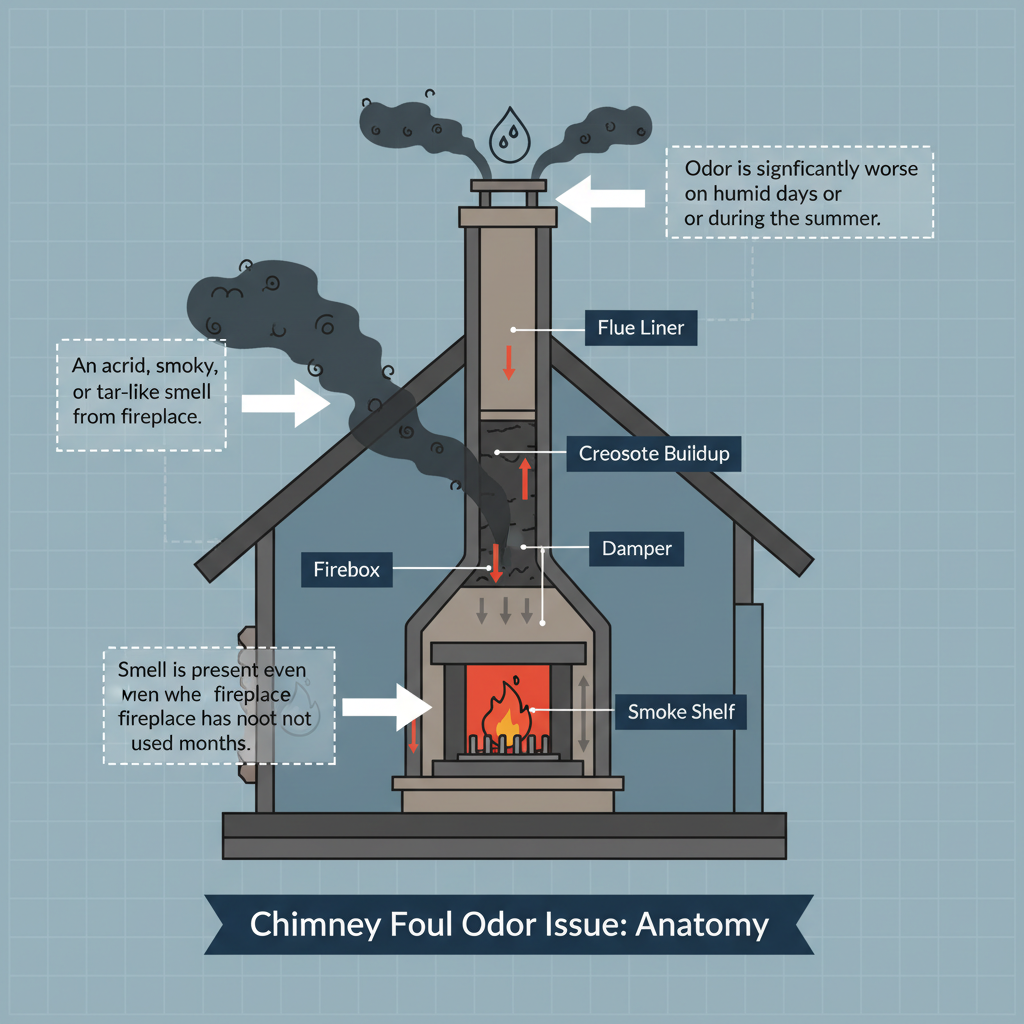
Common Symptoms
Possible Causes
Step-by-Step Diagnosis
Step 1
Confirm the smell is strongest at the fireplace opening.
Step 2
Check that the damper is fully closed and not warped or rusted.
Step 3
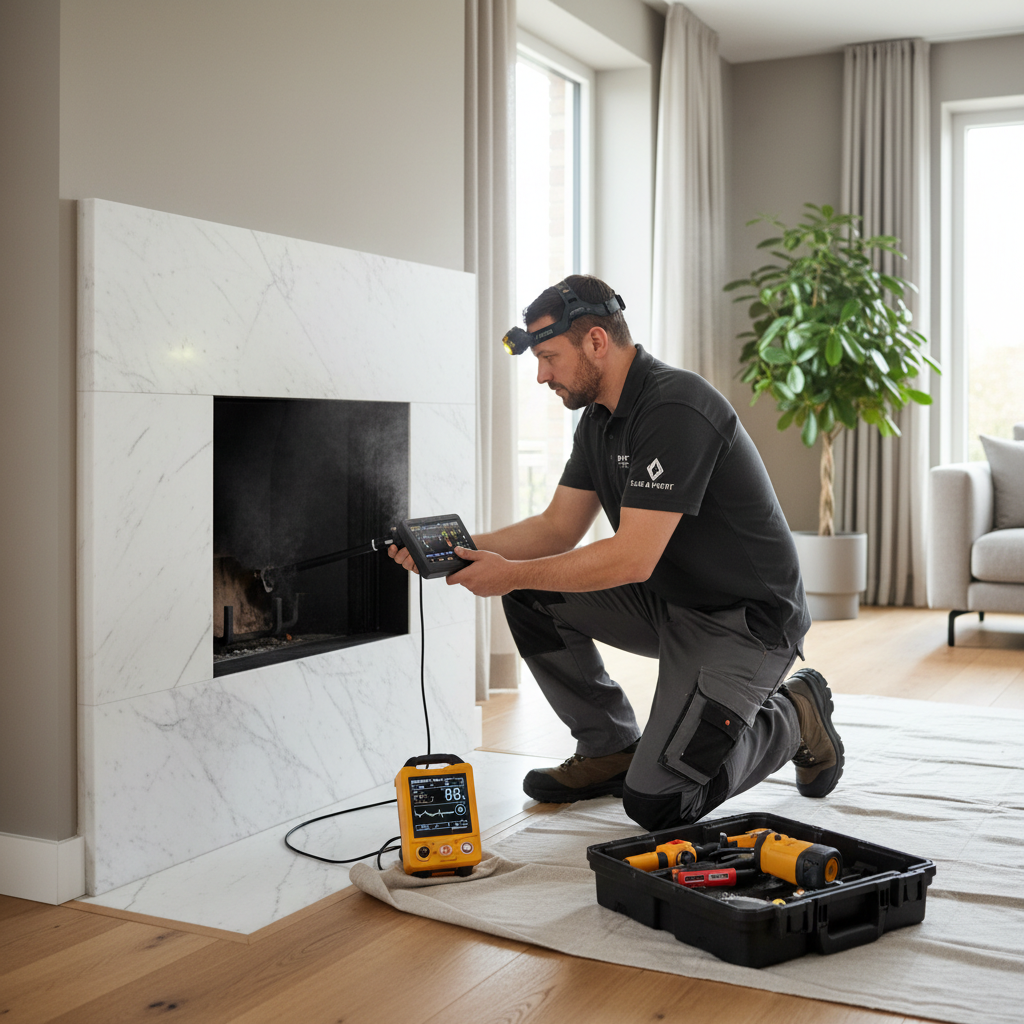
Use a strong flashlight to look up the flue for visible black buildup (creosote) or obstructions.
Step 4
Conduct a negative pressure test by turning on exhaust fans and seeing if air is being pulled out of the fireplace into the room.
Step 5
Listen for animal noises and look for signs like droppings or nesting material in the firebox.
Step 6
Safely inspect the chimney exterior for a secure cap and check the concrete crown for cracks.
DIY vs Professional Costs
| Repair Type | DIY Cost | Professional Cost | Time Required |
|---|---|---|---|
Professional Chimney Sweeping | Not Recommended | $150 - $350 | 1-2 hours |
Install Top-Sealing Damper | $150 - $300 (parts) | $300 - $600 | 2-4 hours |
Animal Removal | Not Recommended | $150 - $500+ | 1-3 hours |
Chimney Crown Repair/Waterproofing | $50 - $150 (materials) | $200 - $1,000+ | 4-8 hours |
When to Call a Professional Chimney
- If the smell persists after you've tried simple fixes like ensuring the damper is closed.
- If you look up the flue and see thick, tarry, or glazed creosote buildup.
- If you suspect an animal is trapped or has died inside the chimney.
- If you see any signs of water damage, like stains on the ceiling or crumbling bricks.
- For your annual inspection and cleaning, which is non-negotiable for safety.
Prevention Tips
- Schedule an annual professional chimney inspection and cleaning with a CSIA-certified sweep.
- Install a high-quality stainless steel chimney cap with a screen to keep out rain and animals.
- Burn only dry, seasoned hardwoods to minimize creosote production.
- Upgrade from a throat damper to a top-sealing damper to create an airtight seal.
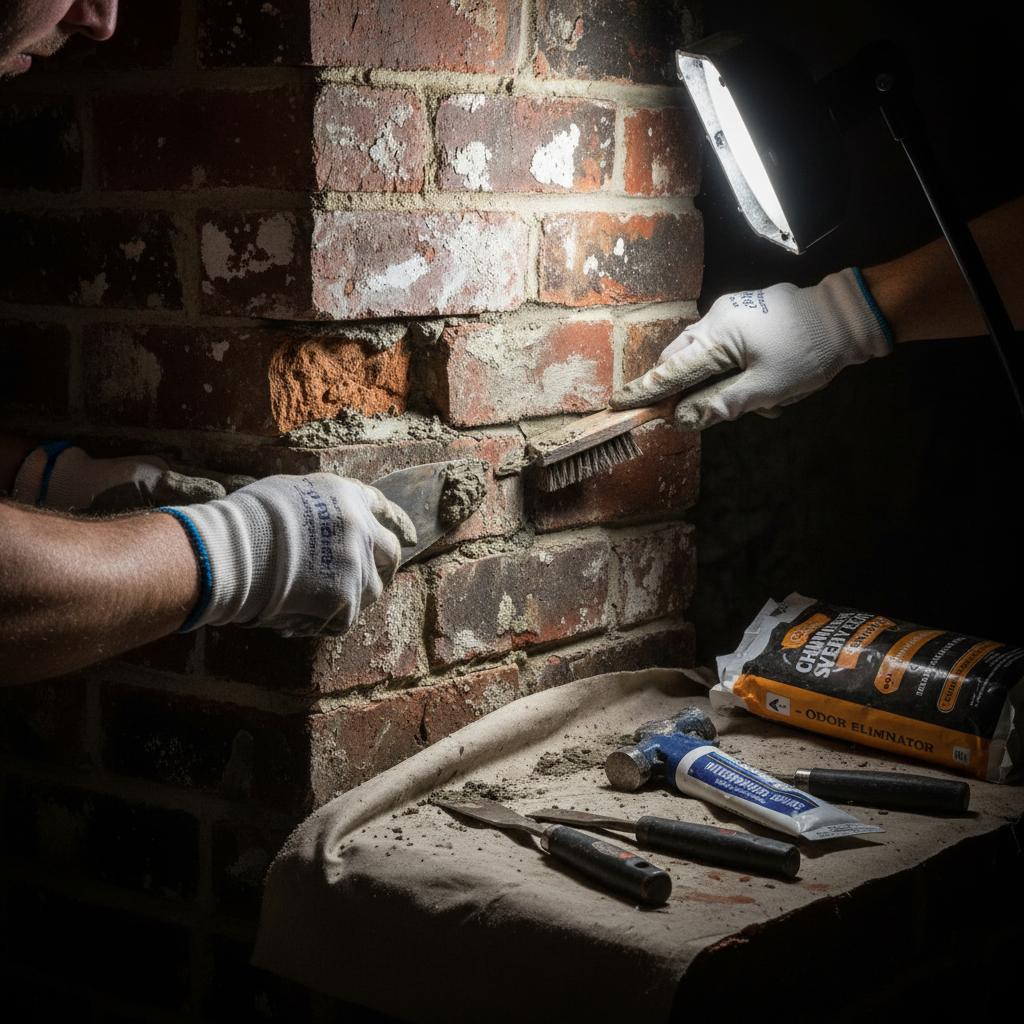
- Address any signs of water leaks, like cracked masonry or a damaged crown, immediately.
Frequently Asked Questions
Related Guides
Comprehensive Chimney Inspection: What Professionals Look For & Homeowner Checklist Guidance Troubleshooting & Fixes (2024 Guide)
A veteran chimney tech explains what happens during an inspection, what to look for yourself, and when to call a pro. Get the real story on costs and safety.
Preparing Your Chimney for Winter: Essential Seasonal Maintenance and Inspection Troubleshooting & Fixes (2024 Guide)
Don't risk a chimney fire this winter. A vet tech explains how to inspect your chimney for dangerous creosote so you'll know when to call a pro for a sweep.
Why is my chimney smoking up the house? (Troubleshooting & Fixes)
Getting smoke in your house from your fireplace? A vet tech of 25+ years explains the common causes like a closed damper or cold flue and how to fix them.
Efflorescence on Chimney Masonry Troubleshooting & Fixes (2024 Guide)
Seeing white powder on your chimney brick? A veteran tech explains what that efflorescence is, why it's a warning sign for water damage, and how to actually fix it.
Your Chimney Damper Giving You Grief? (A Veteran's Guide to Fixing It)
Chimney damper stuck, leaking, or broken? An experienced technician explains how to troubleshoot smoke, drafts, and stuck handles for throat and top-sealing dampers.
Chimney Cleaning Tools: What Professionals Use & When to DIY (or Not) Troubleshooting & Fixes (2024 Guide)
A veteran technician explains chimney cleaning tools, the dangers of creosote, and tells you when to DIY vs. when to call a pro. Don't risk a fire.
Need Professional Help?
Find top-rated chimney experts in your area