Quick Answer
Okay, so you're in a fight with your contractor. First, stop, document everything thoroughly (pictures, emails, detailed notes), and review your contract meticulously—it's your primary guide. Send a formal, written demand for resolution, citing specific contract clauses and issues. If that fails, consider formal complaints (e.g., state licensing board), mediation, arbitration, or legal action. Costs vary: free for self-advocacy with initial letters, but potentially thousands for legal or mediation services. Strategic, documented action from the outset is crucial.
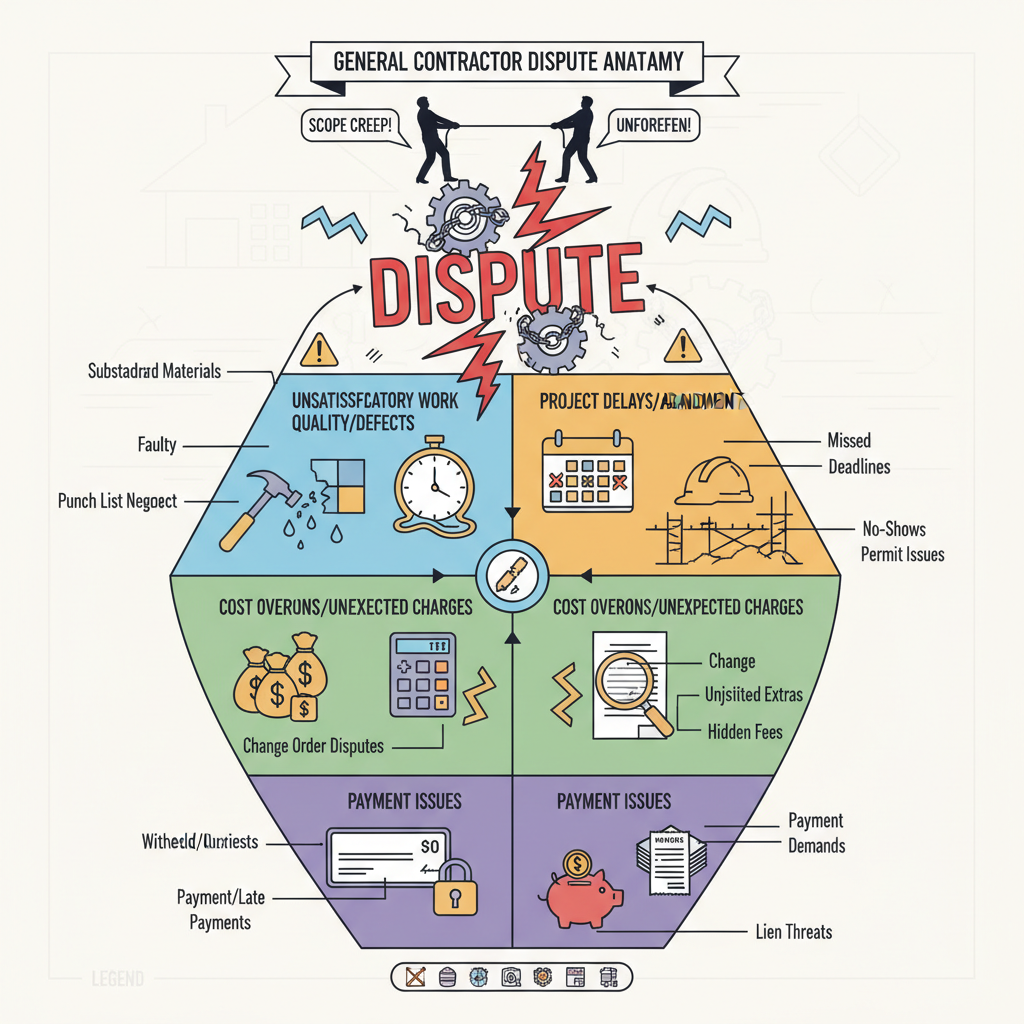
Common Symptoms
Possible Causes
Step-by-Step Diagnosis
Step 1
Immediately pause any further payments and, if necessary, issue a stop-work order to the contractor.
Step 2
Thoroughly review your contract, highlighting the specific clauses related to the scope of work, timeline, materials, and payment schedule that have been violated.
Step 3
Document everything meticulously: take dated photos and videos of the defects, save all emails and text messages, and keep a log of all phone calls.
Step 4
Send a formal, written demand letter to the contractor via certified mail. Detail the specific issues, reference the contract, propose a clear remedy, and give a firm deadline for a response.
Step 5
File a complaint with your state's contractor licensing board. This is often a free and effective way to get a response.
Step 6
If the dispute involves a significant amount of money, a lien, or if the contractor is unresponsive, consult with a construction law attorney to understand your full range of legal options.

DIY vs Professional Costs
| Repair Type | DIY Cost | Professional Cost | Time Required |
|---|---|---|---|
Direct Negotiation & Demand Letter | $0 - $50 | $300 - $1,000+ | 2-5 hours |
Filing State Licensing Board Complaint | $0 | N/A | 2-4 hours |
Mediation / Arbitration | $500 - $3,000 (your share of mediator) | $2,500 - $10,000+ | 1-3 days |
Small Claims Court | $50 - $400 | $1,000 - $5,000+ | Months |
Hiring a Construction Attorney | N/A | $300 - $800+ per hour | Ongoing |
When to Call a Professional General Contractor
- The second a mechanic's lien is filed on your property. This is a legal emergency.
- When the contractor has clearly abandoned the job and is no longer communicating.
- If the financial loss or cost to repair the defective work is substantial, typically more than you could recover in small claims court.
- Before you sign ANY settlement agreement or release form offered by the contractor.
- If you discover major safety violations or work that is not up to code.
- When your formal written demands are ignored and you're ready to take legal action.
Prevention Tips
- Always get a hyper-detailed written contract. If it's not in the contract, it doesn't exist.
- Thoroughly vet any contractor: check their license, insurance, and actually call their references.
- Never pay a large upfront deposit. Structure payments to be made only after specific project milestones are completed and inspected.
- Maintain a written record of all communications, especially any changes to the project scope.
- Conduct regular site visits to inspect the work quality as it happens, not after it's too late.
- Never make the final payment until a final walkthrough is complete and you have signed lien releases from the general contractor and all major subcontractors.
Frequently Asked Questions
Related Guides
Finding a Good Contractor That Won't Rip You Off (Troubleshooting & Fixes)
Learn how to find, vet, and hire a reliable general contractor for your home renovation project. Avoid scams and ensure quality work with our step-by-step guide.
Resolving Disputes with a General Contractor: A Homeowner's Troubleshooting Guide
Resolve disputes with your general contractor effectively. Learn how to address poor work quality, project delays, cost overruns, and communication breakdowns with our practical guide for homeowners. Protect your investment.
Deck Permit Requirements: Avoid Fines & Build Confidently (Troubleshooting & Fixes)
Wondering if you need a permit to build a deck? A veteran contractor explains the messy world of deck permits, how to figure out what you need, and how to avoid fines.
Basement Waterproofing During a Remodel (Troubleshooting & Fixes)
A veteran contractor's guide to fixing a wet basement during a remodel. Learn how to stop water intrusion, fix damage, and waterproof for good.
Top Questions to Ask a General Contractor: Your Essential Hiring Guide
Comprehensive guide to choosing a general contractor. Learn essential questions to ask about licensing, insurance, experience, communication, project management, and contracts to ensure a successful home renovation and avoid common pitfalls and scams. Hire with confidence.
Hiring a General Contractor: A Vet's No-Nonsense Checklist (Troubleshooting & Fixes)
A veteran tech's guide to hiring a general contractor. Skip the nightmares by using this checklist to vet licenses, insurance, references, and contracts.
Need Professional Help?
Find top-rated general contractor experts in your area