Quick Answer
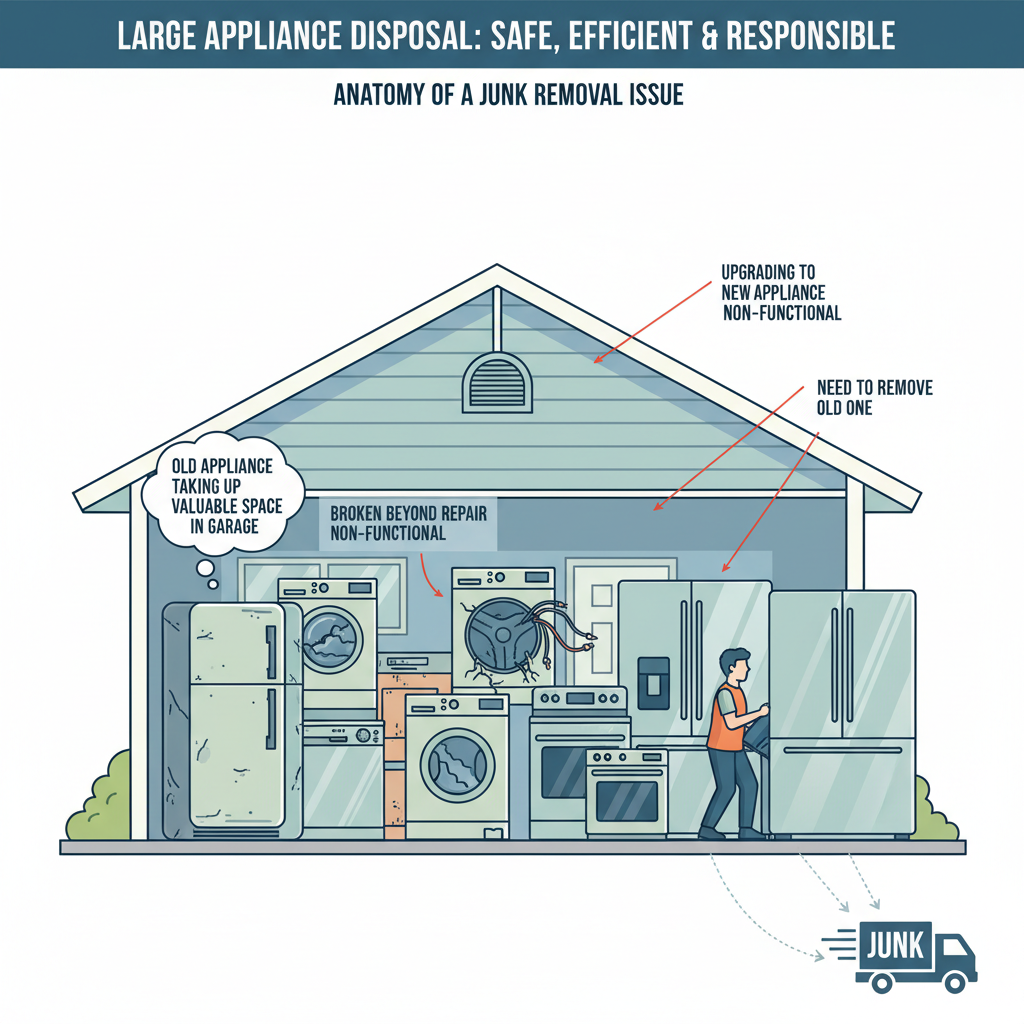
Okay, so here's the quick version. You've got a big ol' hunk of metal—a fridge, a washer, whatever—and you need it gone. You can't just toss it on the curb, most times anyway. Your main choices are hauling it to a scrap yard yourself, seeing if your city has a bulk pickup day, or calling a junk removal service. Doing it yourself can be cheap, maybe $20-50 in dump fees, but it's a pain. Calling a pro? You're looking at $75 to maybe $250, but they do all the heavy lifting, literally.
Common Symptoms
Possible Causes
Step-by-Step Diagnosis
Step 1
Assess the appliance's condition. Is it working, easily repairable, or completely broken? This determines if you can sell, donate, or must recycle it.
Step 2
Check your local municipal waste collection rules. Go to your city or county's website to find their policies for 'bulk items' or 'white goods'.
Step 3
Identify if the appliance contains refrigerants. Look for a sticker on refrigerators, freezers, or AC units mentioning 'R-134a,' 'R-410a,' etc. This requires certified professional handling.
Step 4
Evaluate your personal capacity for removal. Be honest about your physical ability, access to a proper vehicle (truck), and necessary equipment (appliance dolly, straps).
Step 5
Research and compare your disposal options. Look into city pickup, recycling center drop-off, retailer take-back programs, and professional junk removal services to see what makes the most sense for your situation and budget.
DIY vs Professional Costs
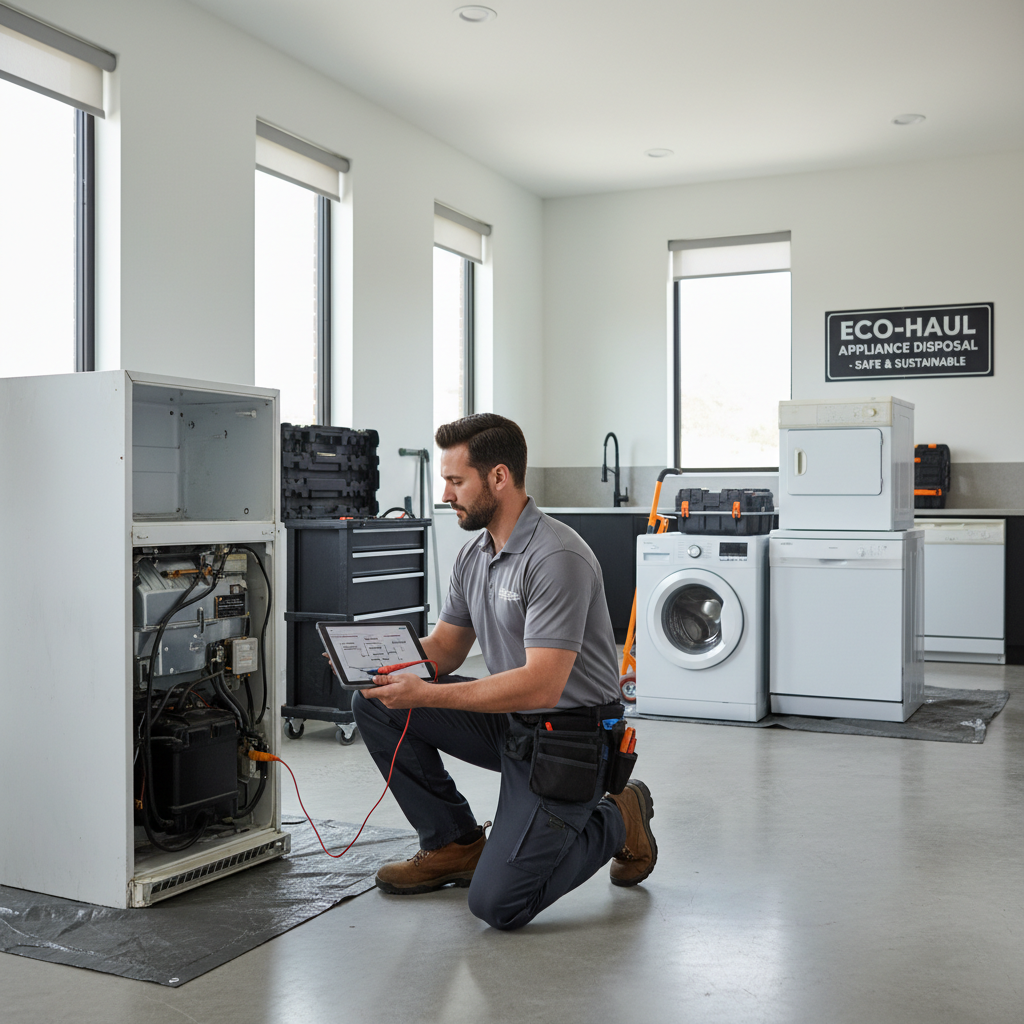
| Repair Type | DIY Cost | Professional Cost | Time Required |
|---|---|---|---|
Hauling it Yourself to the Dump/Recycler | $20-75 | N/A | 2-4 hours |
Donating a Working Appliance | $0 | N/A | 1 hour |
Using the City's Curbside Pickup | $0-50 | N/A | 1 hour |
Using a Retailer Take-Back Program | N/A | $30-75 | 0 hours |
Hiring a Junk Removal Service | N/A | $75-250 | 15-30 mins |
When to Call a Professional Junk Removal
- The appliance is extremely heavy or located in a difficult-to-access area like a basement or second floor.
- You do not own a truck or a vehicle large enough to transport the appliance to a disposal site.
- The appliance contains refrigerants (Freon) and you are not EPA-certified to handle them.
- You need the appliance removed quickly to make space for a new delivery.
- Your local area has no convenient municipal pickup or drop-off options available.
- You want to avoid the physical risk and hassle of moving the appliance yourself.
Prevention Tips
- Before you buy a new appliance, ask the retailer about their take-back or haul-away programs for the old one.
- Perform regular maintenance on your appliances, like cleaning fridge coils and dryer vents, to extend their lifespan and delay the need for disposal.
- If an appliance is still in good working condition but you're upgrading, consider donating it to a local charity or selling it to give it a second life.
- Take a few minutes to learn your local community's regulations and recycling options for large appliances so you have a plan before you need it.
Frequently Asked Questions
Related Guides
Disposing of Old, Broken, or Unwanted Large Household Appliances (Refrigerators, Washers, Dryers, Stoves, Dishwashers, AC Units) Safely, Efficiently, and Responsibly: A Pro's Guide (2024)
A veteran tech's guide to getting rid of old appliances. Learn how to dispose of your refrigerator, washer, or dryer the right way, from DIY options to pro costs.
That Cluttered Basement Disaster: A Veteran's Guide to Taking It Back (Troubleshooting & Fixes)
Tired of that cluttered basement? A 25-year veteran tech shows you how to declutter, organize, and haul away the junk to get your space back for good.
What to Do When Junk Removal Won't Take Your Stuff: A Comprehensive Guide to Household Hazardous Waste (HHW) Disposal
Learn what Household Hazardous Waste (HHW) is, why junk removal services can't take it, and how to safely and legally dispose of old paints, chemicals, batteries, and electronics.
Yard Debris Overload? Your Expert Guide to Troubleshooting & Removal
Overwhelmed by piles of yard debris? Get expert tips from a 25-year veteran for managing and disposing of leaves, branches, and clippings. Learn when to DIY yard waste removal, when to call a professional service, and how to prevent future build-ups. Ensure a clean, safe, and attractive yard.
Garage Clutter and Disorganization Troubleshooting & Fixes (2024 Guide)
Transform your chaotic garage into an organized, functional space with this comprehensive guide. Learn to identify clutter causes, implement smart sorting systems, and choose the right storage and disposal methods for a lasting solution.
Eco-Friendly Junk Removal: A Veteran's Guide to Getting Rid of Your Stuff the Right Way (Troubleshooting & Fixes)
A veteran tech's no-nonsense guide to eco-friendly junk removal. Learn how to sort, donate, and recycle your clutter to avoid the landfill without the headache.
Need Professional Help?
Find top-rated junk removal experts in your area