Quick Answer
Okay, so here's the quick version. Your brick or stone is crumbling 'cause of water and age, plain and simple. Water gets into little cracks, freezes, expands, and busts the mortar or even the brick face apart. Nine times out of ten, it’s just the mortar joints needing to be ground out and repointed (tuck-pointing). You can probably handle small sections yourself for under $200 in tools and mix. But if you see big stair-step cracks, extensive spalling, or the wall is bulging, you've got bigger problems. That's when you call a professional masonry contractor, and costs can get up there, fast.
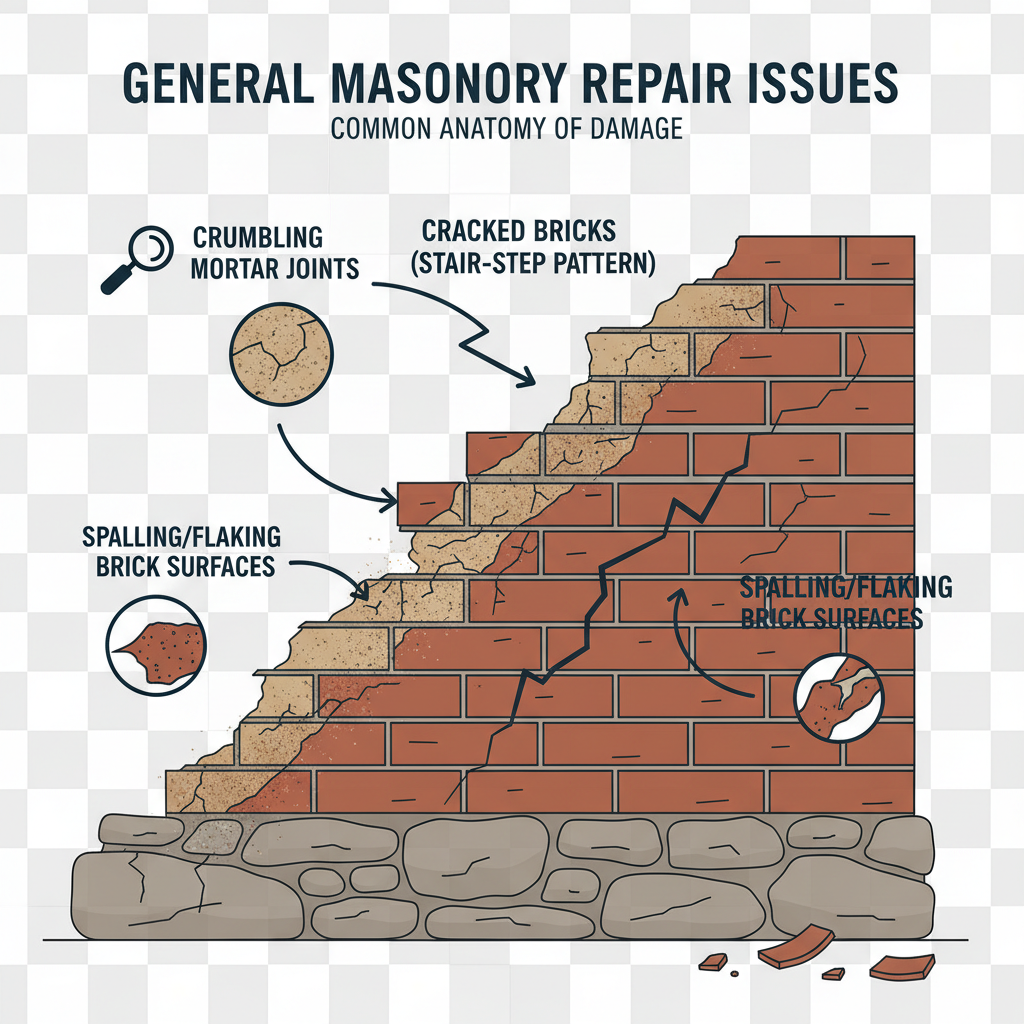
Common Symptoms
Possible Causes
Step-by-Step Diagnosis
Step 1
Perform a visual walk-around inspection of the entire structure to identify patterns and problem areas.
Step 2
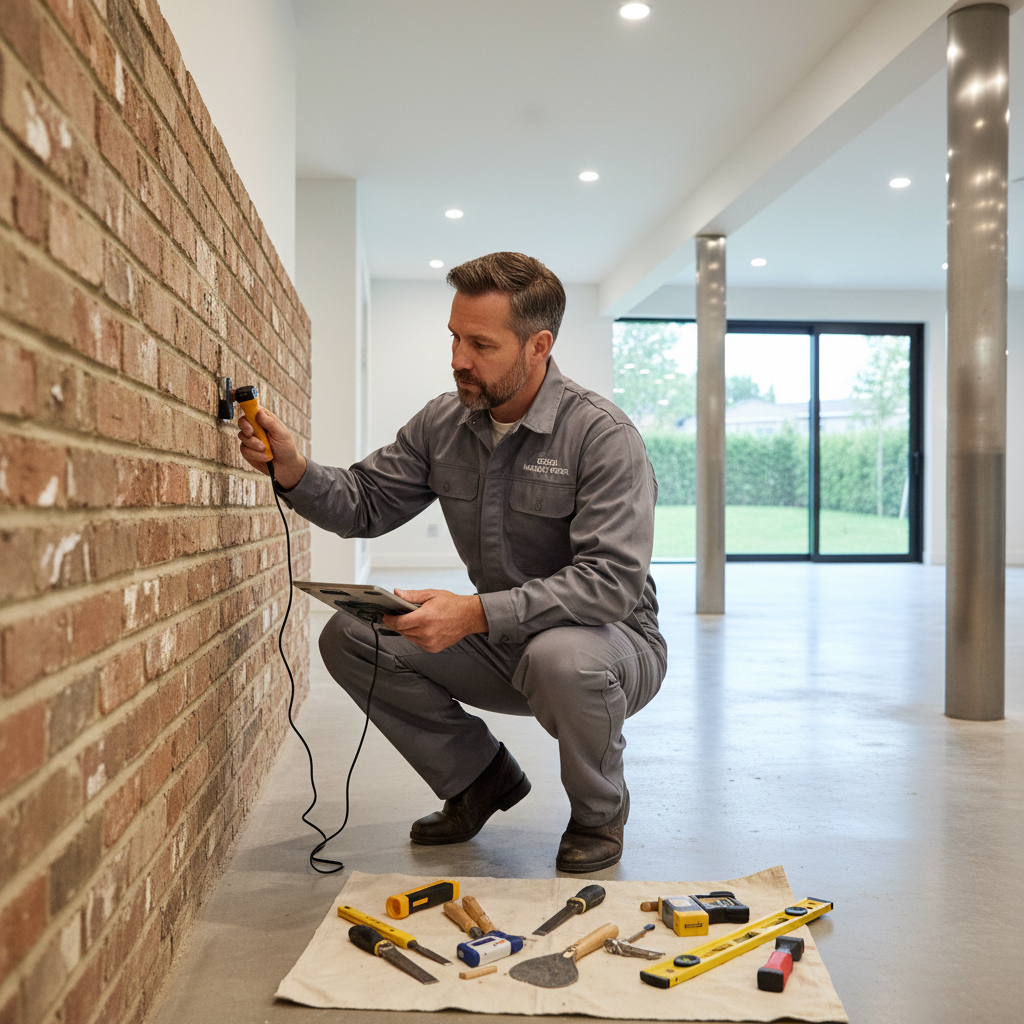
Use a screwdriver or similar tool to gently probe mortar joints, checking for softness or crumbling.
Step 3
Tap bricks with a rubber mallet or hammer handle to listen for hollow sounds that indicate loose units.
Step 4
Search for the source of any moisture, like efflorescence, by checking gutters, grading, and potential leaks.
Step 5
Use a long level or straightedge to check for any bulging or leaning in the wall, which indicates structural stress.
DIY vs Professional Costs
| Repair Type | DIY Cost | Professional Cost | Time Required |
|---|---|---|---|
Minor Tuck-pointing (repointing) | $50-200 | $500-1000+ | 4-8 hours |
Replacing a Few Cracked Bricks | $75-250 | $600-1200+ | 1 day |
Cleaning Efflorescence | $30-75 | $300-600 | 2-3 hours |
When to Call a Professional Masonry
- You have cracks wider than 1/4 inch, especially stair-step cracks running up the wall.
- The wall is visibly bulging, bowing, or leaning, even slightly.
- The damage isn't isolated but appears in multiple spots all over the house.
- The cracks in the brick extend down into the concrete foundation.
- You've tried to find a water leak causing the problem but can't locate the source.
Prevention Tips
- Regularly clean your gutters and ensure downspouts direct water at least 4-6 feet away from the foundation.
- Maintain proper grading so the ground slopes away from your home's masonry.
- Seal small cracks in mortar as soon as you see them to prevent water from getting in.
- Avoid piling mulch, soil, or vegetation directly against brick or stone walls.
- Perform a visual inspection of your masonry twice a year, especially in the spring and fall.
Frequently Asked Questions
Related Guides
Efflorescence on Brick Troubleshooting & Fixes (2024 Guide)
Got that ugly white powder on your brick? Here's a veteran mason's guide to what efflorescence is, how to get rid of it, and how to stop it for good.
Masonry Problems on Your House? (Troubleshooting & Fixes)
Seeing cracked bricks or crumbling mortar? A veteran tech shares 25+ years of experience on how to fix masonry issues and when to call a pro.
Masonry Repair (General) Troubleshooting & Fixes (2024 Guide)
Seeing cracked mortar or crumbling bricks? A 25-year vet explains the common causes of masonry fails and how to fix them before it gets expensive.
Masonry Repair for Crumbling Walls & Mortar Troubleshooting & Fixes (2024 Guide)
Seeing crumbling mortar or cracked bricks? A veteran tech of 25+ years shows you how to spot the real problem and when you can fix it yourself.
Masonry Damage: This refers to various forms of deterioration or structural compromises in building elements constructed from materials like brick, stone, or concrete blocks. This can include issues with the mortar, the individual units (bricks, stones), or the structural integrity of the masonry assembly. Troubleshooting & Fixes (2024 Guide)
Got crumbling brick or cracked mortar? A 25-year vet shows you how to spot serious masonry damage, what you can fix yourself, and when to call in a pro.
General Masonry Repair Troubleshooting & Fixes
Need Professional Help?
Find top-rated masonry experts in your area