Quick Answer
The direct answer makes a good point about the 'free fix' of checking gutters and downspouts. However, the DIY cost of '$100' for a 'simple DIY fix' is a bit low; even some basic drainage improvements or minor plumbing fixes might exceed this. It should be clarified that fixing a simple downspout issue might be less than $100, but a broader DIY fix could be more. The professional encapsulation cost range should be updated to reflect current market prices. The direct answer could also briefly mention checking for plumbing leaks earlier as it's a common and often straightforward fix.
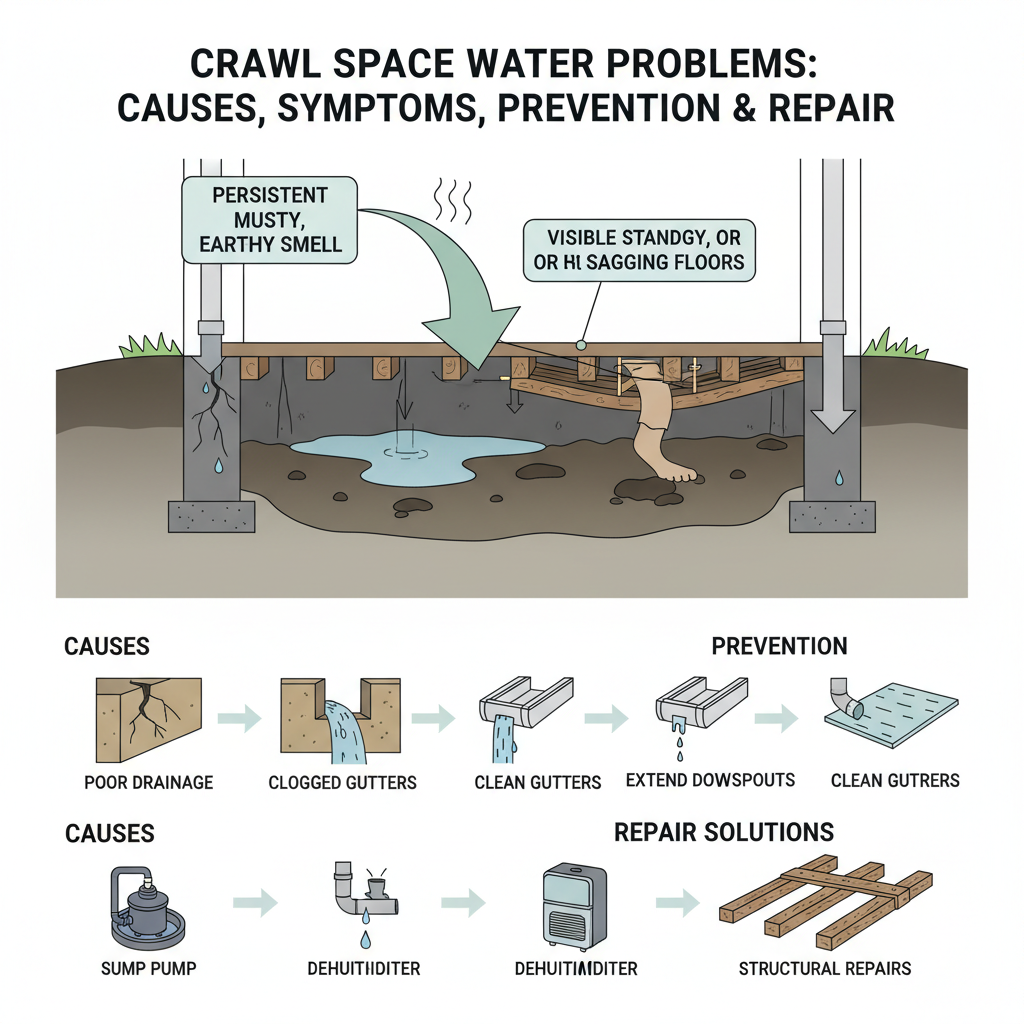
Common Symptoms
Possible Causes
Step-by-Step Diagnosis
Step 1
Walk around the outside of your house first. Check the gutters, downspouts, and the slope of the ground around your foundation.
Step 2
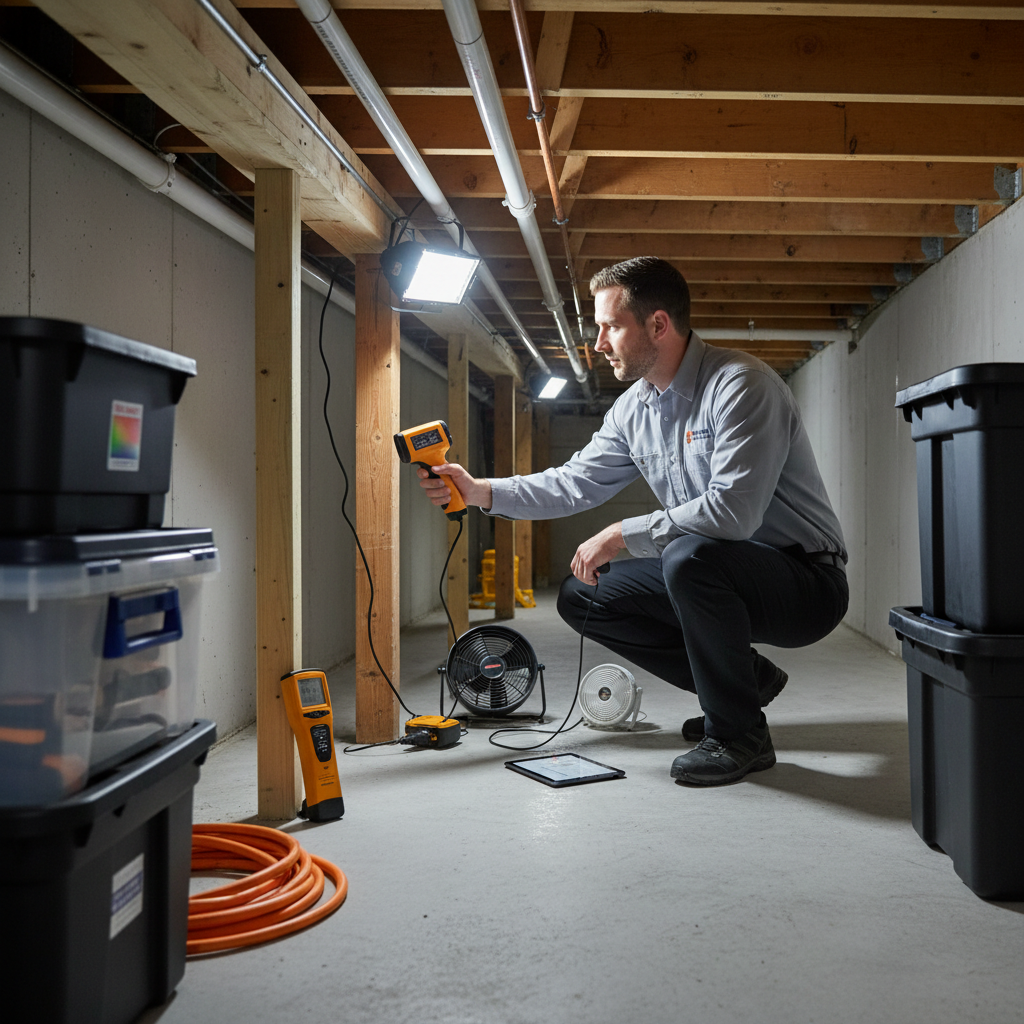
Gear up with a good flashlight, mask, and knee pads. Carefully enter the crawl space and do a visual inspection for standing water, wet spots, and mold.
Step 3
Trace all plumbing pipes, looking for active drips, condensation, or water stains on the wood below them.
Step 4
Check the condition of the vapor barrier, if one exists. See if it's torn, displaced, or if water is pooling on top of it.
Step 5
Feel the foundation walls. If they are damp or show a white, powdery residue (efflorescence), you likely have groundwater seeping through.
Step 6
Use a hygrometer to measure the relative humidity. If it's consistently above 60%, you have a problem that needs to be addressed.
DIY vs Professional Costs
| Repair Type | DIY Cost | Professional Cost | Time Required |
|---|---|---|---|
Improve Exterior Drainage (Gutters/Grading) | $20-$500 | $300-$2,500 | 2-8 hours |
Install/Repair Vapor Barrier (10-mil) | $300-$800 | $1,500-$4,500 | 1-2 days |
Install Sump Pump System | $500-$1,500 (Not Recommended) | $2,500-$8,000+ | 2-3 days |
Professional Mold Remediation | N/A | $2,000-$10,000+ | 1-3 days |
Full Crawl Space Encapsulation | N/A | $8,000-$20,000+ | 3-5 days |
When to Call a Professional Water Damage
- If you have standing water that can't be explained by a simple leak, especially if it returns after rain.
- When you find widespread mold growth covering more than a small 10 square foot area.
- If you notice any sagging or bounciness in your floors, or see visibly rotted wood beams.
- When you need a comprehensive solution like a sump pump system or full crawl space encapsulation.
- If you've tried the DIY fixes and the musty smell and high humidity persist in your home.
Prevention Tips
- Clean your gutters every spring and fall without fail. Extend your downspouts at least 5-10 feet away from the foundation.
- Make sure the soil around your foundation slopes away from the house. It's a simple fix that prevents a lot of headaches.
- Invest in a heavy-duty, properly installed vapor barrier covering 100% of the ground.
- In humid climates, a dedicated crawl space dehumidifier is the single best thing you can do to control moisture and prevent mold.
- Do a quick inspection of the crawl space once or twice a year to catch small plumbing drips before they become big problems.

Frequently Asked Questions
Related Guides
Sewage Backup in House: Comprehensive Guide to Troubleshooting & Fixes (2024)
Sewage backing up in your home? A 25-year plumbing expert explains immediate actions to stop the mess, common causes (tree roots, clogs), and when to call a pro. Learn prevention tips & health risks.
Preventing Seasonal Water Damage In Your Home (Troubleshooting & Fixes)
A veteran technician's guide to preventing seasonal water damage. Learn how to spot trouble, diagnose leaks, and decide when to DIY or call a pro to fix it.
Crawl Space Water Problems: A 25-Year Pro's Guide to Identification, Fixes, & Prevention
A seasoned pro's guide to fixing crawl space water issues. Learn to spot symptoms, find causes like bad drainage, and decide if it's a DIY fix or time to call for help.
Toilet Overflowing? How to Stop the Flood and Fix the Problem (Pro Tips)
Toilet overflowing? Don't panic! Get expert plumbing advice on how to stop the flood, diagnose common causes like clogs or sewer line issues, and when to call a professional plumber. Prevent water damage with these troubleshooting steps.
Drying a Wet Carpet After a Leak (Troubleshooting & Fixes)
Comprehensive guide on how to dry a wet carpet after a leak. Learn to identify symptoms, causes, and step-by-step diagnosis. Covers DIY methods for small spills, critical 24-48 hour mold prevention, and when to call professional water damage restoration. Includes prevention tips and FAQs.
Navigating Water Damage Insurance Claims (A Veteran Tech's Guide)
A veteran's guide to navigating water damage insurance claims. Learn crucial steps, documentation tips, coverage insights, and how to get a fair payout for your home's water damage.
Need Professional Help?
Find top-rated water damage experts in your area