Quick Answer
That funk from your HVAC vents usually indicates mold/mildew from moisture, a deceased pest, or an electrical issue. Specific smells like rotten eggs (gas leak) or hot plastic (electrical fault) demand immediate professional attention and safety precautions. Start by checking and replacing your air filter. Then, inspect for visible mold on coils and clean your condensate drain line with vinegar. For serious or persistent odors, or if you're unsure, always contact an HVAC professional.
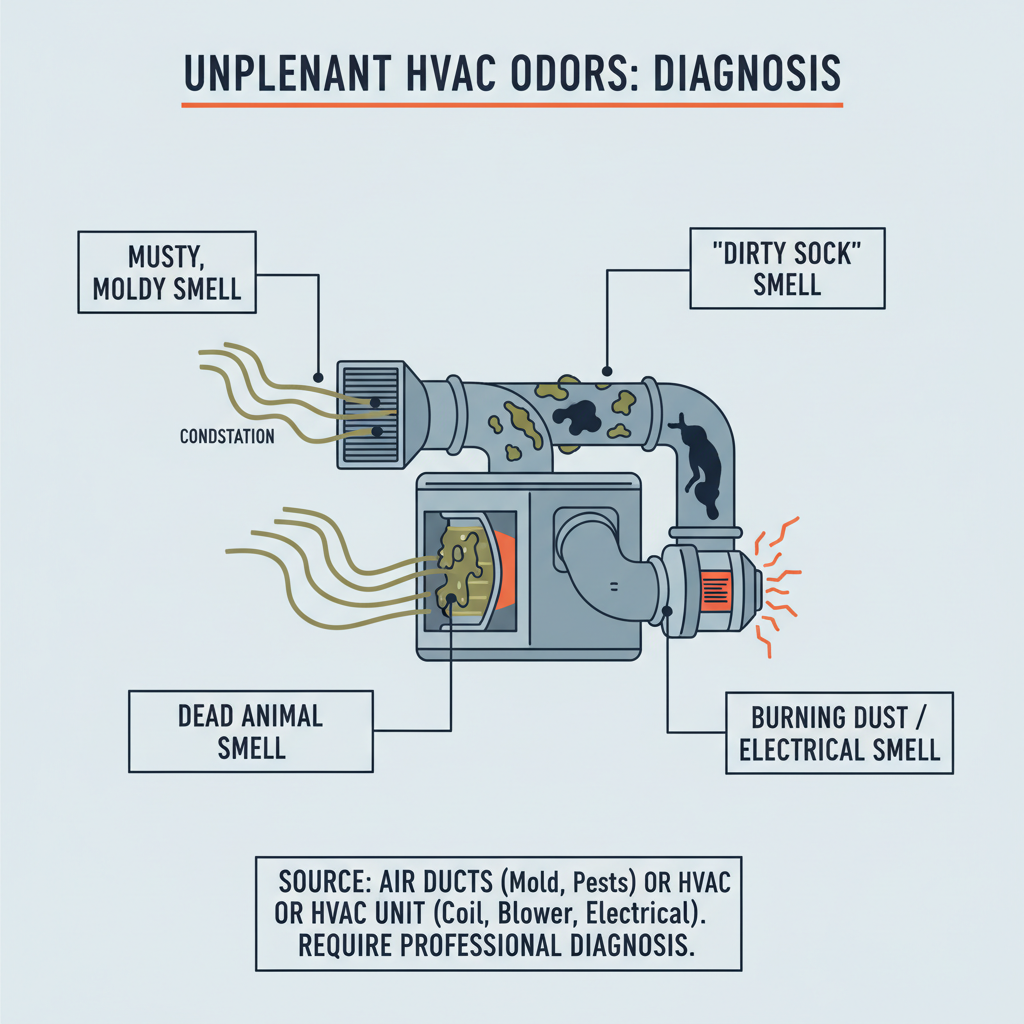
Common Symptoms
Possible Causes
Step-by-Step Diagnosis
Step 1
Identify the specific type of odor and note when it occurs (e.g., only with AC, only with heat, or all the time).
Step 2
Turn off power to the HVAC unit at the circuit breaker before performing any inspections.
Step 3
Locate and inspect your air filter. If it's dirty or smells bad, replace it immediately.
Step 4
Open the access panel on your indoor air handler and use a flashlight to visually inspect the evaporator coil for dirt, grime, or visible mold growth.
Step 5
Check the condensate drain pan located beneath the evaporator coil for standing water, slime, or rust.
Step 6
Locate the exterior exit point of your condensate drain line and check if it's clogged or dripping properly when the AC is running.
Step 7
Go to each supply vent and smell the air coming out to determine if the odor is stronger in one particular area of the house.
Step 8
If a rotten egg smell is present, immediately stop all diagnosis, evacuate the building, and call your gas company's emergency line from a safe location.
Step 9
If a persistent burning plastic or electrical smell is present, keep the power off and call a qualified HVAC technician immediately.
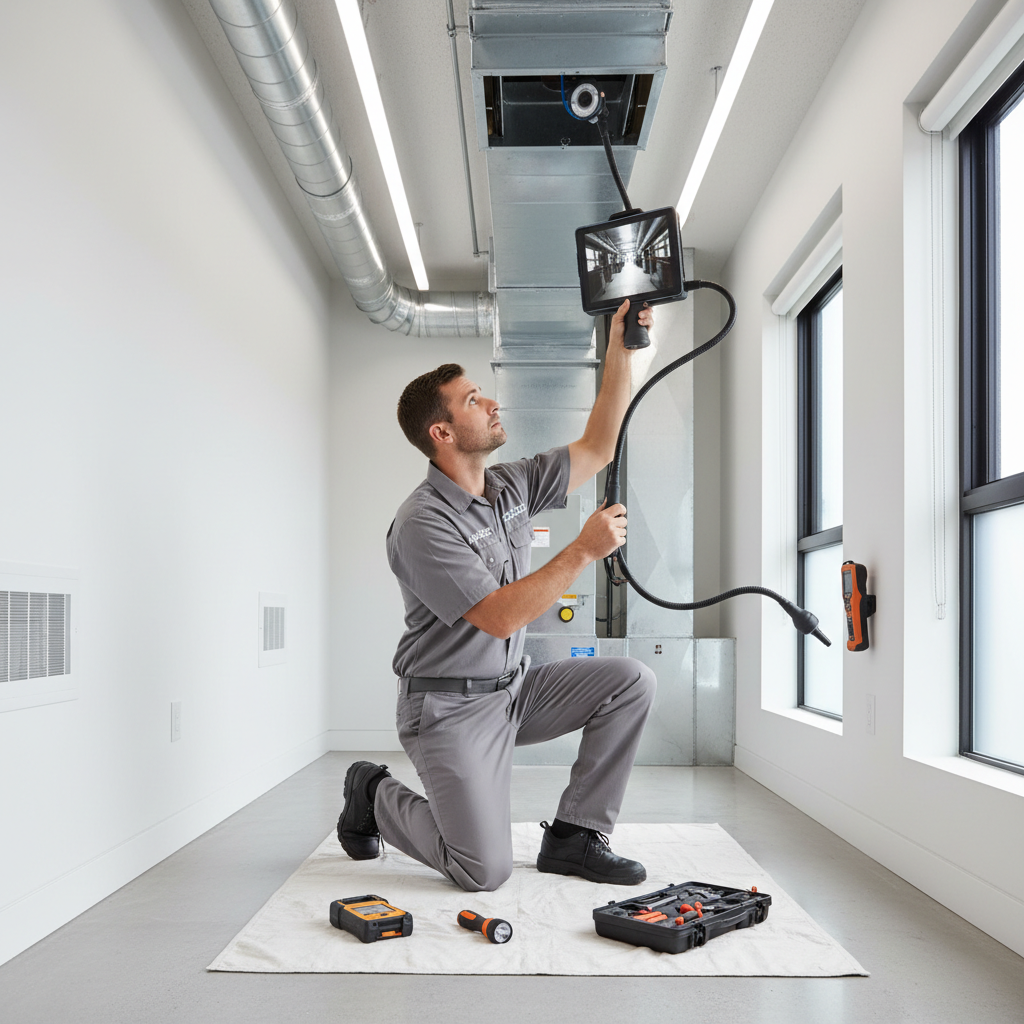
DIY vs Professional Costs
| Repair Type | DIY Cost | Professional Cost | Time Required |
|---|---|---|---|
Air Filter Replacement | $10 - $50 | $75 - $150 (part of a service call) | 5 minutes |
Cleaning Condensate Drain Line | $5 - $15 | $100 - $250 | 30 minutes |
Cleaning Evaporator Coil | $15 - $30 (spray can for accessible parts) | $150 - $400 (for a deep clean) | 1 hour |
Professional Duct Cleaning | N/A | $300 - $700 | 2-4 hours |
Pest Removal & Sanitizing | N/A | $200 - $800+ | Varies |
When to Call a Professional Air Duct
- If you smell rotten eggs or sulfur, which could indicate a gas leak. Evacuate first, then call the gas company.
- If there is a strong, persistent burning smell of plastic or electricity. Shut the system down at the breaker immediately.
- If you discover a large amount of visible mold on your coils or inside your air handler.
- If you are certain there is a dead animal in a part of the ductwork you cannot easily access.
- If you smell a sweet, chemical-like odor, which can be a sign of a refrigerant leak.
- If you've performed all the basic DIY steps (filter, drain line) and the odor persists.
Prevention Tips
- Change your air filter religiously every 1-3 months. It's the cheapest and easiest thing you can do.
- Schedule an annual professional HVAC tune-up, which includes cleaning the coils and checking the drain system.
- Pour a cup of distilled white vinegar down your condensate drain line every few months to prevent algae and sludge buildup.
- Control your home's humidity, keeping it between 30-50% to inhibit mold growth. Use a dehumidifier if needed.
- Have your ductwork inspected for leaks and get them sealed to prevent pulling in air from attics or crawlspaces.
- Keep the area around your outdoor unit clear of leaves, debris, and overgrown vegetation to discourage pests.
- Consider installing a UV-C light in your air handler to continuously kill mold and bacteria on the coil and drain pan.
Frequently Asked Questions
Related Guides
How to Hire an Air Duct Cleaner That Won't Rip You Off (Troubleshooting & Fixes)
A veteran tech's guide to choosing an air duct cleaning company. Learn how to spot scams, what questions to ask, and avoid the 'blow-and-go' outfits.
Signs Your Home's Air Ducts Need Cleaning: A Troubleshooting Guide
Learn the definitive signs your home's air ducts need cleaning. This guide covers common symptoms, underlying causes, DIY diagnostic steps, practical prevention tips, and when to call a professional for a healthier home environment. Improve your indoor air quality and reduce allergens.
Fuzzy HVAC Vents? Here's How to Deal With That Nasty Buildup (Troubleshooting & Fixes)
Fuzzy HVAC vents indicate a dust problem. Learn how to clean your air vents yourself, improve indoor air quality, boost HVAC efficiency, and know when to call a pro.
Why Your House Is Always Dusty: A Guide to HVAC Duct Issues and Solutions
Stop the constant battle with dust! Discover how leaky HVAC ducts, poor filtration, and other common issues contribute to a dusty home. Learn practical DIY fixes and when to call a pro for cleaner air and a healthier living space.
Funky Smells from Your HVAC Vents (Troubleshooting & Fixes)
Identify and fix common HVAC smells like musty, burning, or rotten egg odors. Learn DIY troubleshooting and when to call a pro for home comfort and safety.
DIY vs. Professional Air Duct Cleaning: What Homeowners Need to Know
A veteran tech's honest take on DIY air duct cleaning. Learn what you can actually do yourself, when you're wasting your time, and when to call a pro.
Need Professional Help?
Find top-rated air duct experts in your area