Quick Answer
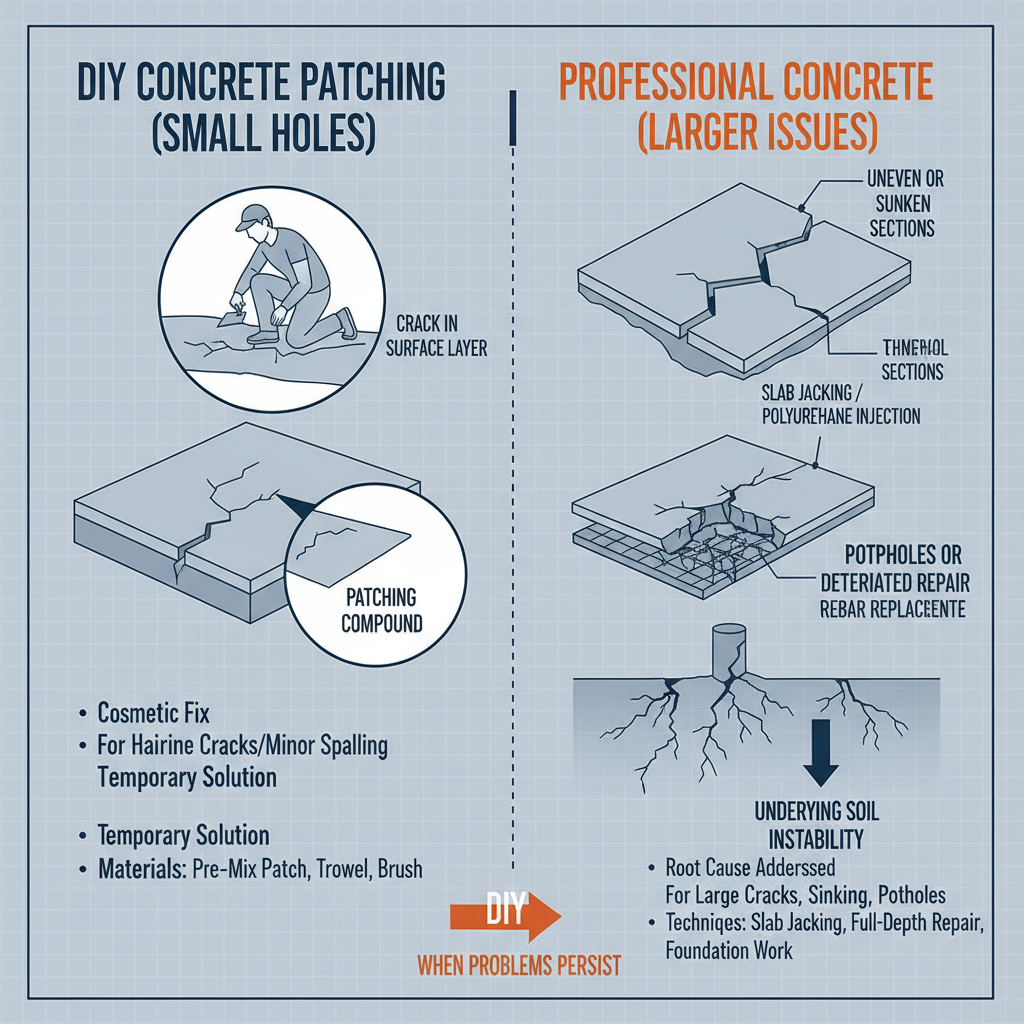
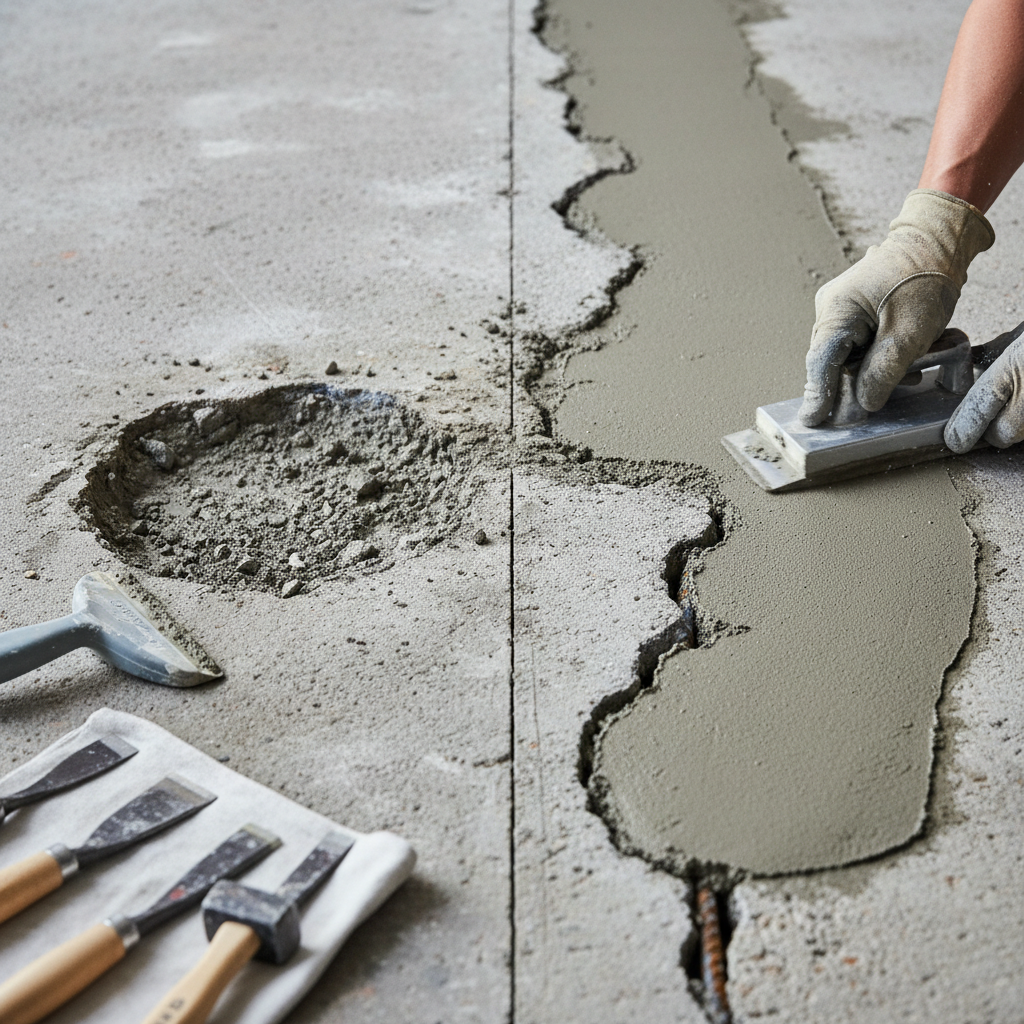
Okay, so here's the quick version. If you've got a tiny hairline crack or a small chip in your patio, go ahead and be a weekend warrior. Grab a tube of concrete caulk or a small tub of patch mix for maybe 20-50 bucks. It's an easy fix. But if your sidewalk is sinking, if a crack is big enough to lose a quarter in, or if the whole slab is shifting? That ain't a surface problem. That's a foundation problem. Trying to DIY that is like putting a band-aid on a broken arm. You're just wasting time and money before calling a pro.
Common Symptoms
Possible Causes
Step-by-Step Diagnosis
Step 1
Assess the size and depth of the damage. For cracks, use a credit card or ruler; if wider than 1/4 inch, it's typically significant.
Step 2
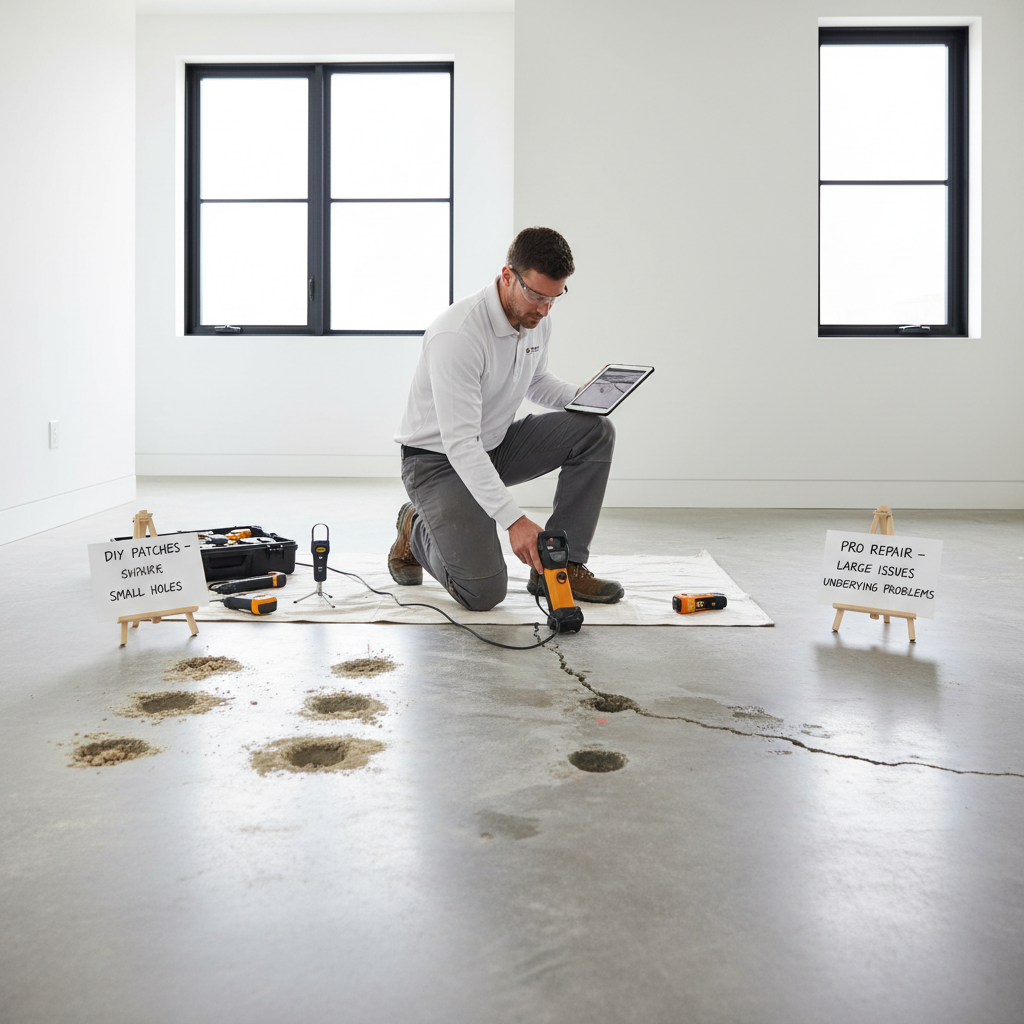
Determine if the concrete is stable or actively moving. Lay a long straight edge across the crack or uneven section to check for height differences and movement. Perform the 'quarter test' for active settlement.
Step 3
Tap the surface with a hammer around the problem area and listen for hollow sounds, which indicate voids or erosion underneath the slab.
Step 4
Look for the root cause. Inspect nearby drainage (downspouts, grading), presence of large tree roots, or signs of soil erosion along the edges of the slab.
Step 5
Evaluate the surrounding area for other signs of distress, which might point to a larger, systemic problem rather than an isolated crack. Check adjacent sections for similar damage.
Step 6
If possible, check the age of the concrete and original installation quality, as these can provide context for the current damage.
DIY vs Professional Costs
| Repair Type | DIY Cost | Professional Cost | Time Required |
|---|---|---|---|
Hairline Crack Patching (DIY) | $10-30 | N/A (typically below minimum charge) | Under 1 hour |
Small Hole/Spall Repair (DIY) | $25-75 | $300-700 | 1-3 hours |
Mudjacking/Slab Jacking | N/A | $700-2,500 | 2-5 hours |
Polyurethane Foam Injection | N/A | $800-4,000+ | 2-4 hours |
Full Slab Replacement | N/A | $3,000-15,000+ | 2-5 days |
When to Call a Professional Concrete
- Any cracks are wider than 1/4 inch, or you observe them actively growing wider/longer season over season.
- Concrete sections are uneven, creating a trip hazard (typically 1/2 inch difference or more in height).
- You find large, worrisome cracks on a structural element, such as your home's foundation wall or a load-bearing slab.
- A DIY repair you attempted has failed, and the crack has returned, indicating an unaddressed underlying problem.
- The concrete slab is visibly sunken, tilted, or a significant portion is unsupported (hollow sounds underneath).
- You cannot identify the root cause of the concrete damage, or you suspect complex soil/drainage issues.
- Water continually pools near the concrete, and you suspect poor drainage or subgrade issues are contributing to the damage.
- Tree roots are clearly lifting or cracking the concrete, requiring root barrier installation or specialized removal.
Prevention Tips
- Ensure all downspouts and sump pump discharge lines extend at least 6-8 feet away from concrete slabs and your foundation.
- Grade the soil around your patios and walkways to slope away from the concrete, preventing water from pooling against the edges.
- Seal concrete driveways, patios, and sidewalks every 2-4 years with a quality penetrating sealer to protect it from moisture and salt damage.
- Address small hairline cracks immediately with a flexible polyurethane sealant to prevent water from entering and causing freeze-thaw damage.
- Avoid parking excessively heavy vehicles, like loaded dump trucks or RVs, on a standard residential driveway.
Frequently Asked Questions
Related Guides
DIY Concrete Patching vs. Professional Repair: When to Fix it Yourself and When to Call an Expert
Learn when to DIY concrete patching for hairline cracks and when to call a professional for sunken slabs, wide fissures, or structural issues. BizzFactor guides you on diagnosing causes, preventing further damage, and making cost-effective repair decisions for your driveway, patio, and sidewalks.
Concrete Driveway Guide: Planning, Construction, Cost & Maintenance
Comprehensive guide for homeowners planning a concrete driveway. Learn about optimal concrete strength (3500-4000 psi), rebar, air-entrained concrete, site assessment, permits, subgrade preparation, joint placement, cost implications, and essential maintenance for a durable, long-lasting, and attractive home improvement.
Concrete Crack Repair: DIY vs. Pro Approaches for Patios & Driveways (2024 Guide)
Comprehensive guide to repairing concrete cracks in patios and driveways. Learn to differentiate between minor and structural cracks and when to DIY or call a professional to ensure lasting repairs.
Resealing Stone Patio Pavers to Protect Against Fading, Stains, and Environmental Damage: Troubleshooting & Fixes (2024 Guide)
Patio pavers looking faded, stained, or weedy? A veteran tech explains how to diagnose sealant failure and the steps to clean, re-sand, and reseal it yourself.
Foundation Cracks: Assessing Seriousness and Repair Solutions (A Field Vet's Guide)
A veteran tech's guide to foundation cracks. Learn to tell if a crack is serious, what causes them, and when you can DIY vs. when to call a pro.
Common Masonry Damage: Identifying Symptoms, Causes, and Repair Strategies for Brick, Stone & Block (2024 Guide)
A veteran technician explains masonry damage (efflorescence, spalling, cracks) on brick, stone, and block, and tells you how to fix it yourself or when to call a pro.
Need Professional Help?
Find top-rated concrete experts in your area