Quick Answer
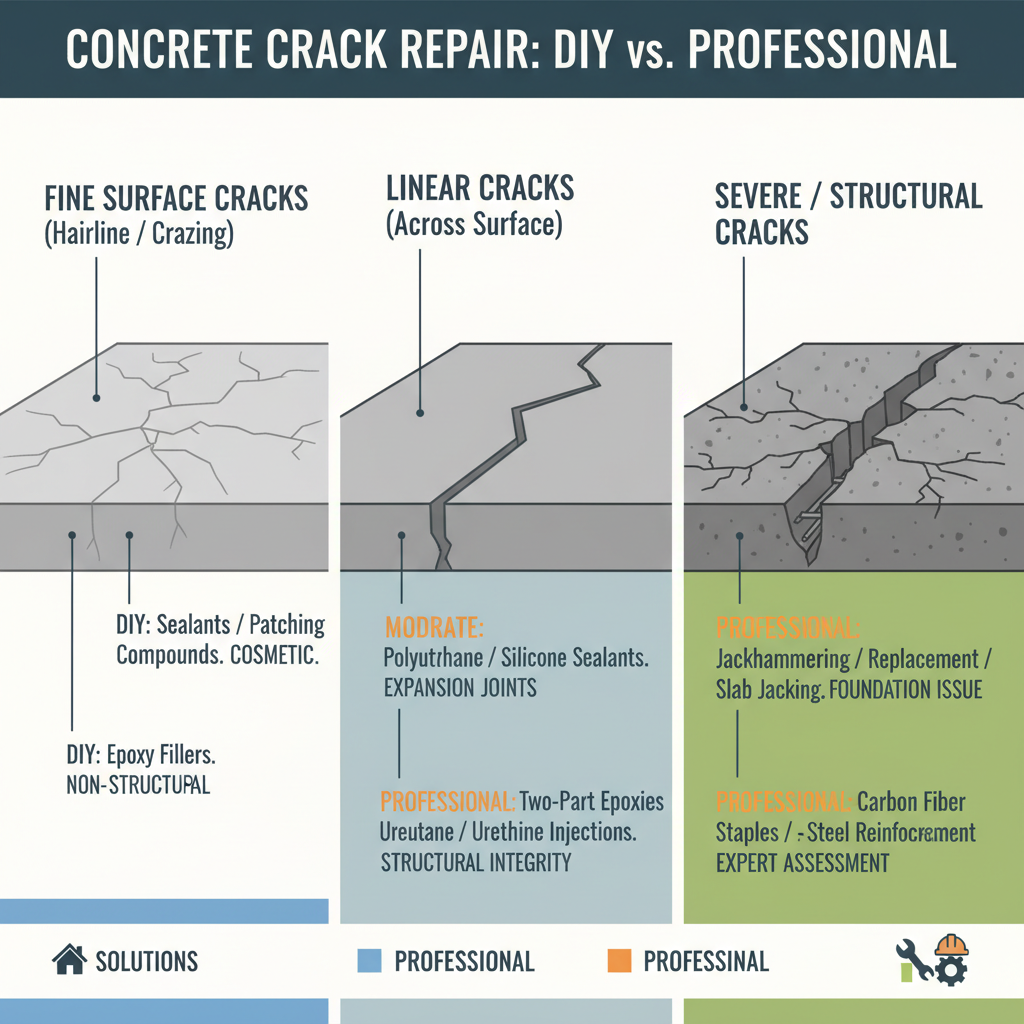
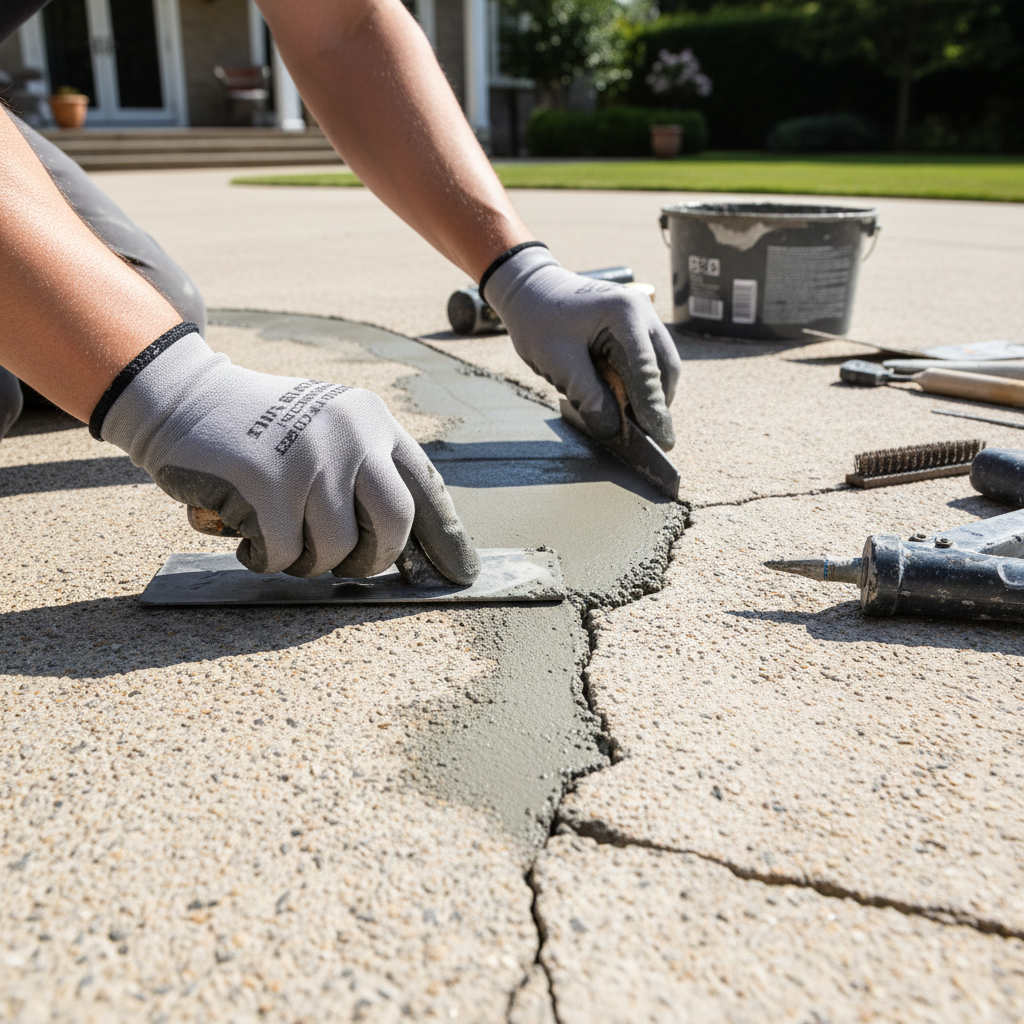
For hairline cracks (under 1/8 inch) without vertical displacement, a DIY repair using polyurethane sealant is effective and costs $20-$60. However, if cracks are wider than 1/8 inch, show vertical displacement (one side higher than the other), or reappear after repair, it indicates a structural issue. Professional intervention, such as slabjacking for settled concrete or epoxy injection for structural cracks, is necessary to prevent further damage. These professional repairs typically range from $500 for crack injection to $2,500+ for slab lifting, depending on severity and scope.
Common Symptoms
Possible Causes
Step-by-Step Diagnosis
Step 1
Inspect the crack type and pattern. Is it a fine hairline, a spiderweb, a straight line, or an irregular network?
Step 2
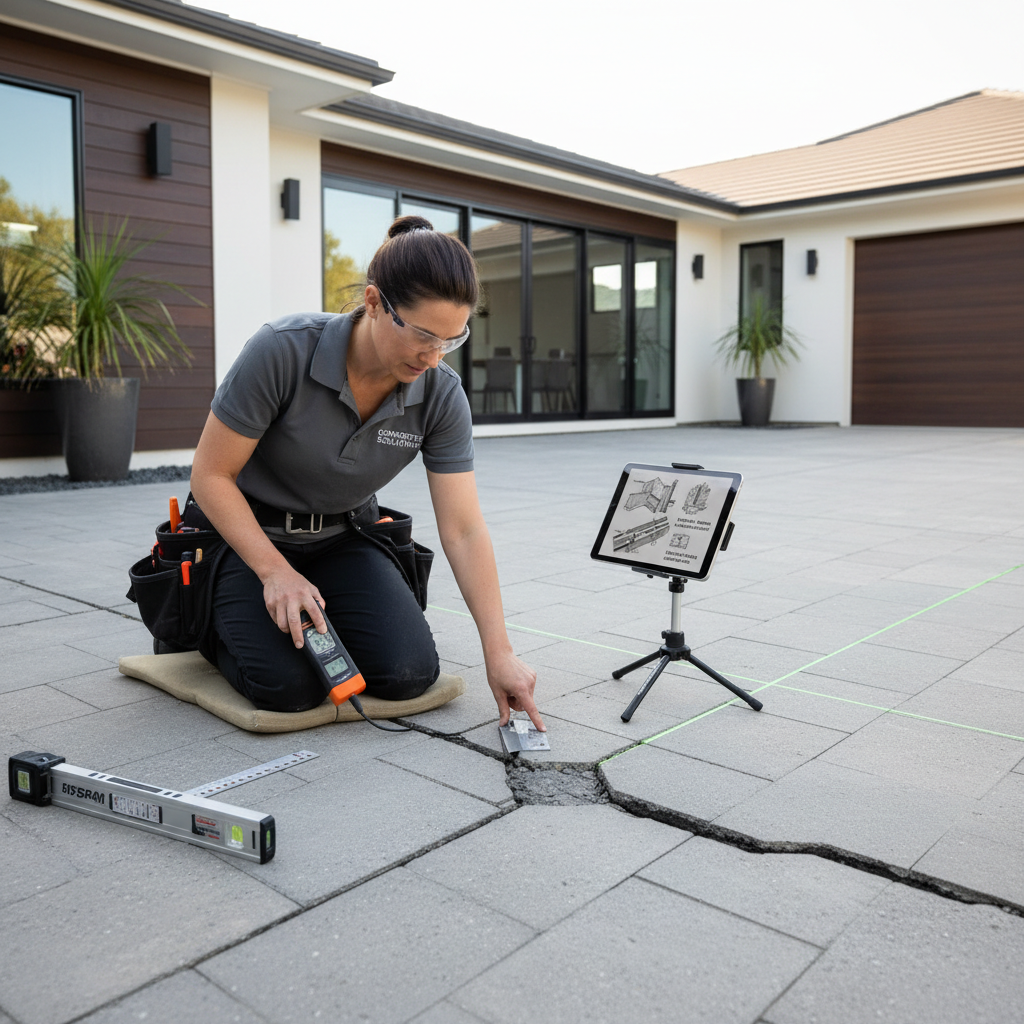
Measure the crack width and depth. Use a coin, ruler, or tape measure. Re-measure after a few months to check for widening.
Step 3
Check for vertical displacement (unevenness). Run your hand, foot, or a straightedge across the crack to see if one side is higher or lower than the other. This is a critical indicator of structural movement.
Step 4
Assess the surrounding area. Look for potential causes like poor drainage, nearby tree roots, heavy traffic patterns, or low spots where water collects.
Step 5
Tap the concrete near the crack with a hammer. A hollow sound suggests a void underneath the slab.
Step 6
Determine if the crack is active (widening, showing new displacement) or static (stable over time).
Step 7
Consider the crack's proximity to your home's foundation. Cracks within a few feet of the house can signal more serious foundation-related issues.
DIY vs Professional Costs
| Repair Type | DIY Cost | Professional Cost | Time Required |
|---|---|---|---|
Filling Hairline Cracks (< 1/8 inch) | $20-$60 | $250-$500 | 1-2 hours |
Filling Wider Cracks (1/8 to 1/2 inch) | $50-$150 | $500-$1,200 | 2-4 hours |
Slabjacking / Foam Injection (for settling) | N/A | $700-$2,500 | 4-8 hours (1 day) |
When to Call a Professional Concrete
- The crack is wider than 1/2 inch or you can't see the bottom.
- There's any vertical displacement—one side of the crack is higher than the other. This is a red alert for sub-base problems.
- You have a ton of interconnected cracks covering a large area, making it look like alligator skin.
- The crack is growing fast or reappears right after you've tried to fix it.
- You can see water seeping up through the crack, which means the ground underneath is probably washing away.
- The crack is within a foot or two of your home's foundation, as it could signal a more serious foundation issue.
Prevention Tips
- Ensure proper sub-base preparation and compaction during concrete installation.
- Confirm the presence of adequate control joints to guide expected shrinkage cracking.
- Maintain good drainage by ensuring gutters and downspouts direct water far away from concrete slabs.
- Apply a high-quality penetrating concrete sealer every 2-5 years to protect against moisture and freeze-thaw cycles.
- Address small, hairline cracks promptly with sealant to prevent water infiltration and further deterioration.
- Avoid parking excessively heavy vehicles (e.g., large RVs, commercial trucks) on residential driveways not designed for such loads.
- Manage tree roots by planting trees at an appropriate distance or installing root barriers near existing concrete.
Frequently Asked Questions
Related Guides
DIY Concrete Patching vs. Professional Repair: When to Fix it Yourself and When to Call an Expert
Learn when to DIY concrete patching for hairline cracks and when to call a professional for sunken slabs, wide fissures, or structural issues. BizzFactor guides you on diagnosing causes, preventing further damage, and making cost-effective repair decisions for your driveway, patio, and sidewalks.
Concrete Driveway Guide: Planning, Construction, Cost & Maintenance
Comprehensive guide for homeowners planning a concrete driveway. Learn about optimal concrete strength (3500-4000 psi), rebar, air-entrained concrete, site assessment, permits, subgrade preparation, joint placement, cost implications, and essential maintenance for a durable, long-lasting, and attractive home improvement.
Concrete Crack Repair: DIY vs. Pro Approaches for Patios & Driveways (2024 Guide)
Comprehensive guide to repairing concrete cracks in patios and driveways. Learn to differentiate between minor and structural cracks and when to DIY or call a professional to ensure lasting repairs.
Resealing Stone Patio Pavers to Protect Against Fading, Stains, and Environmental Damage: Troubleshooting & Fixes (2024 Guide)
Patio pavers looking faded, stained, or weedy? A veteran tech explains how to diagnose sealant failure and the steps to clean, re-sand, and reseal it yourself.
Foundation Cracks: Assessing Seriousness and Repair Solutions (A Field Vet's Guide)
A veteran tech's guide to foundation cracks. Learn to tell if a crack is serious, what causes them, and when you can DIY vs. when to call a pro.
Common Masonry Damage: Identifying Symptoms, Causes, and Repair Strategies for Brick, Stone & Block (2024 Guide)
A veteran technician explains masonry damage (efflorescence, spalling, cracks) on brick, stone, and block, and tells you how to fix it yourself or when to call a pro.
Need Professional Help?
Find top-rated concrete experts in your area