Quick Answer
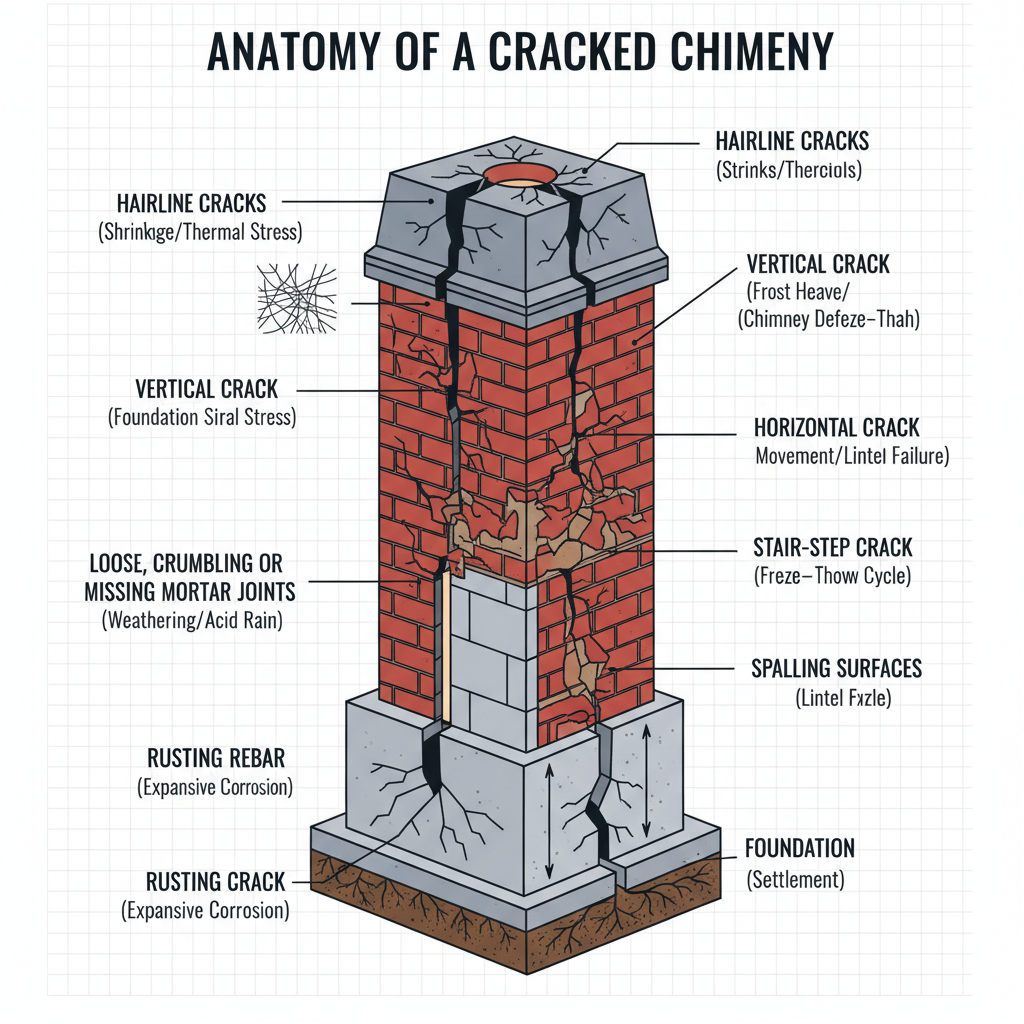
Okay so here's the quick version on cracked chimneys. Nine times out of ten, it’s water getting in and freezing, or the house settling. Don't ignore it. Even small cracks let in more water, which leads to bigger, more expensive problems. A tiny hairline crack might be a simple DIY sealant job for under $150. But bigger stair-step cracks could mean foundation trouble, and you're looking at calling a pro for anywhere from $2,000 to, well, a whole lot more if a rebuild is needed (potentially $15,000+). The key is figuring out *why* it's cracking.
Common Symptoms
Possible Causes
Step-by-Step Diagnosis
Step 1
Conduct a visual inspection from the ground with binoculars. Note the type, location, and pattern of cracks without getting on the roof.
Step 2
If safe, inspect the chimney up close from the roof. Check the condition of the chimney crown, mortar joints, and flashing seal.
Step 3
Examine the interior of the flue liner from above and below using a powerful flashlight, looking for cracks, gaps, or debris.
Step 4
Look for signs of water intrusion, such as stains in the attic near the chimney, on walls, or efflorescence (white powder) on the bricks.
Step 5
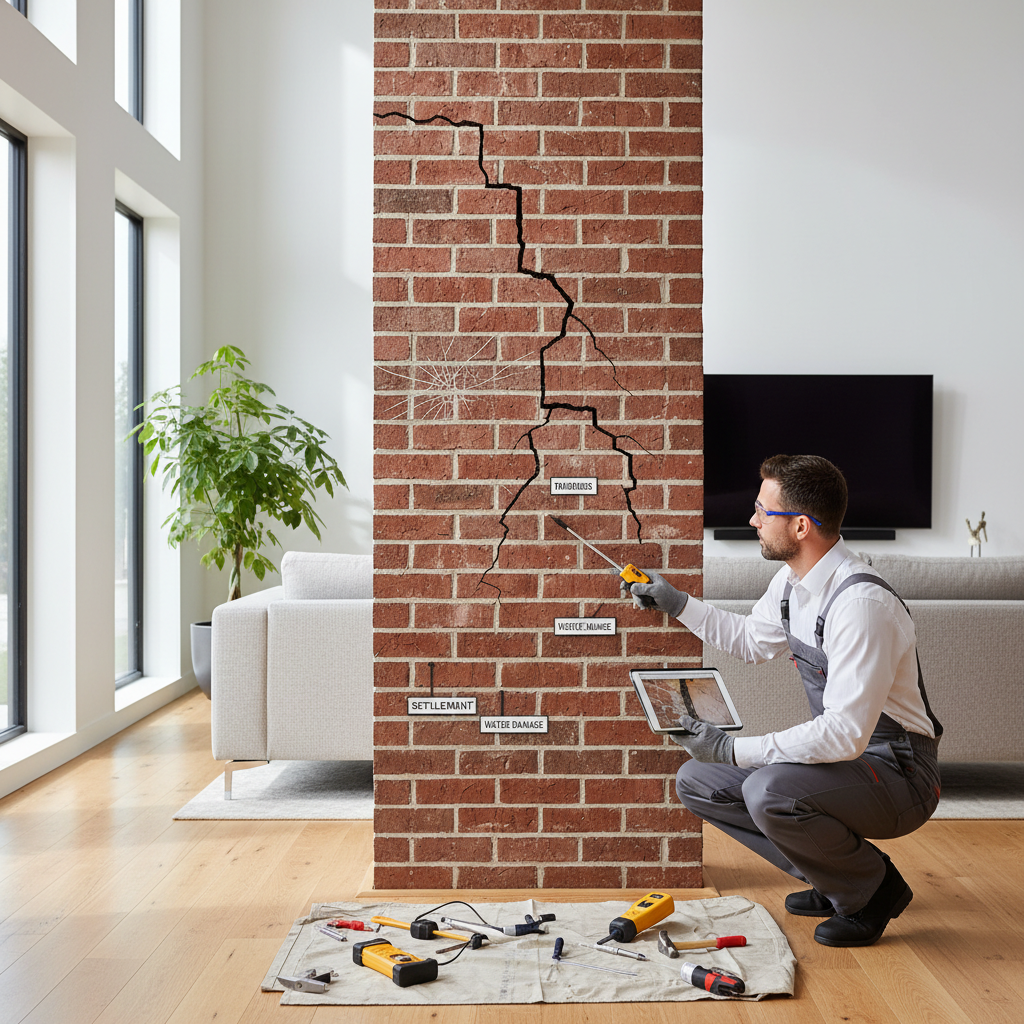
Assess the crack patterns. Stair-step cracks often indicate settling, while vertical cracks are typically from thermal stress. Wide cracks signal a more serious structural issue.
DIY vs Professional Costs
| Repair Type | DIY Cost | Professional Cost | Time Required |
|---|---|---|---|
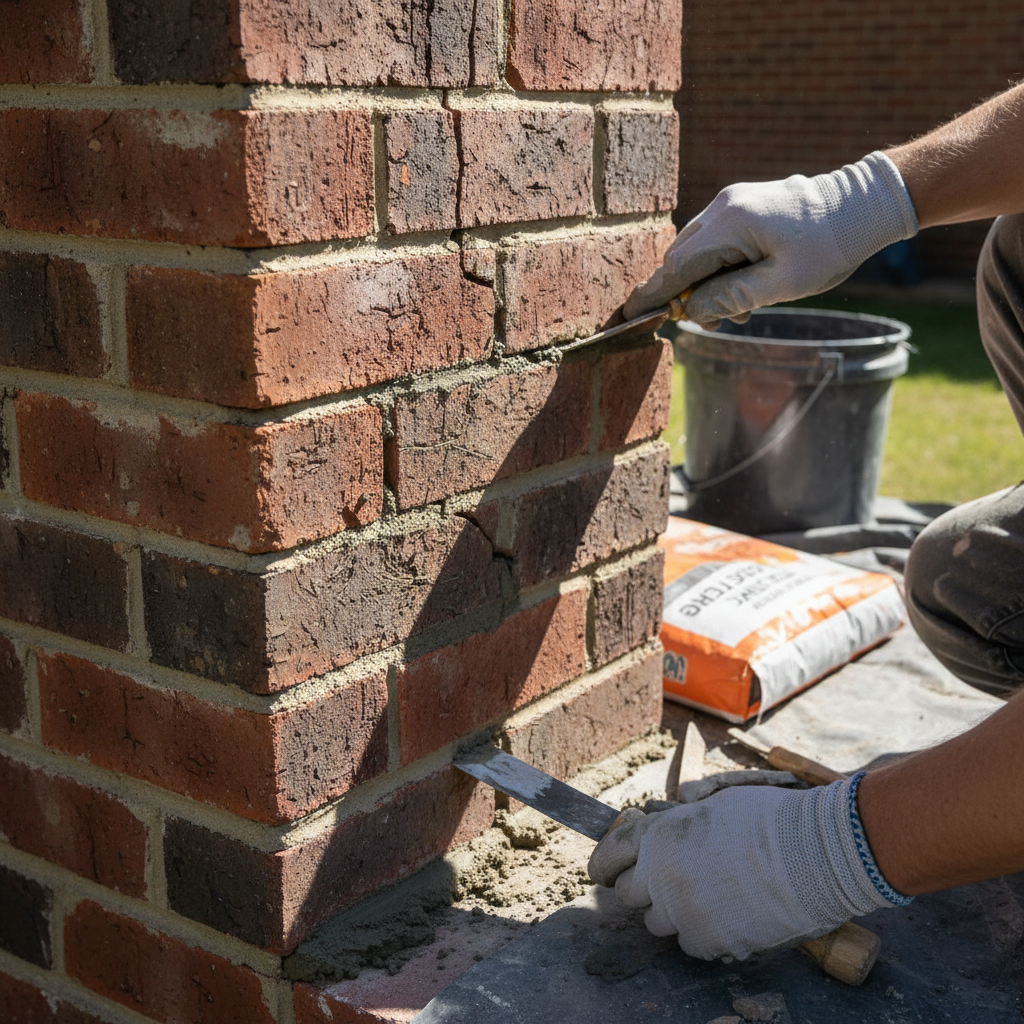
Minor mortar joint repair (tuckpointing localized hairline cracks) | $50-300 | $500-1,800 | A weekend |
Sealing small cracks in the chimney crown (using elastomeric sealant) | $40-150 | $300-1,000 | 1-2 hours |
Cleaning and applying a water repellent to the chimney exterior | $50-200 | $400-1,200 | 3-4 hours |
Extensive crack repair (structural, rebuilding sections) | Not Recommended | $2,000-15,000+ | Days to weeks |
When to Call a Professional Concrete
- If cracks are wide enough to fit a coin into, deep, or cut through the bricks themselves, indicating a structural problem.
- If you see horizontal or stair-step crack patterns, which strongly suggest foundation movement or a failing chimney footing.
- If the chimney is visibly leaning or separating from the house structure.
- If bricks are significantly crumbling, flaking apart (spalling), or falling out.
- Anytime after a suspected chimney fire, to have the hidden flue liner professionally inspected for damage.
- If you have persistent water leaks around the fireplace or in the attic that you can't solve with simple fixes.
- If you're unsafe or uncomfortable working on a roof or are unsure about the severity of the problem.
Prevention Tips
- Have your chimney professionally inspected and cleaned by a certified sweep at least once a year.
- Install a high-quality chimney cap to keep damaging rain, snow, and debris out of the flue.
- Apply a vapor-permeable water repellent to the exterior brick every 5-10 years to prevent moisture absorption.
- Regularly inspect the chimney crown for cracks and seal them immediately with a flexible crown sealant.
- Address deteriorating mortar joints promptly with tuckpointing before they allow significant water intrusion.
- Only burn seasoned wood and have your chimney swept regularly to prevent dangerous creosote buildup that can lead to chimney fires.
- Ensure the flashing at the base of the chimney is properly sealed to the roof to prevent leaks.
Frequently Asked Questions
Related Guides
Resealing Stone Patio Pavers to Protect Against Fading, Stains, and Environmental Damage: Troubleshooting & Fixes (2024 Guide)
Patio pavers looking faded, stained, or weedy? A veteran tech explains how to diagnose sealant failure and the steps to clean, re-sand, and reseal it yourself.
Cracked brick chimneys, including various types of cracks (horizontal, vertical, hairline, stair-step) and their causes. Troubleshooting & Fixes (2024 Guide)
Got cracked chimney bricks? A veteran tech with 25+ years on the job shows you what causes those cracks (horizontal, vertical, stair-step) and what it'll cost to fix.
Planning and executing a new concrete driveway project, including understanding material durability, design considerations, and cost implications. Troubleshooting & Fixes
Oil Stains on Your Concrete? (Troubleshooting & Fixes)
A veteran tech's guide to removing oil stains from concrete. Learn what actually works for fresh spills and old stains on your driveway or garage floor.
DIY Concrete Patching vs. Professional Repair: A Field Guide (2024)
A veteran tech explains when to DIY your concrete cracks and when to call a pro. Learn the real costs and fixes for your patio, driveway, or sidewalk.
Repairing cracks in concrete patios and driveways, differentiating between DIY and professional approaches based on crack type, severity, and location. Troubleshooting & Fixes (2024 Guide)
A veteran tech's guide to fixing a cracked concrete patio or driveway. Learn when you can DIY a fix and when you absolutely need to call a pro.
Need Professional Help?
Find top-rated concrete experts in your area