Quick Answer
null
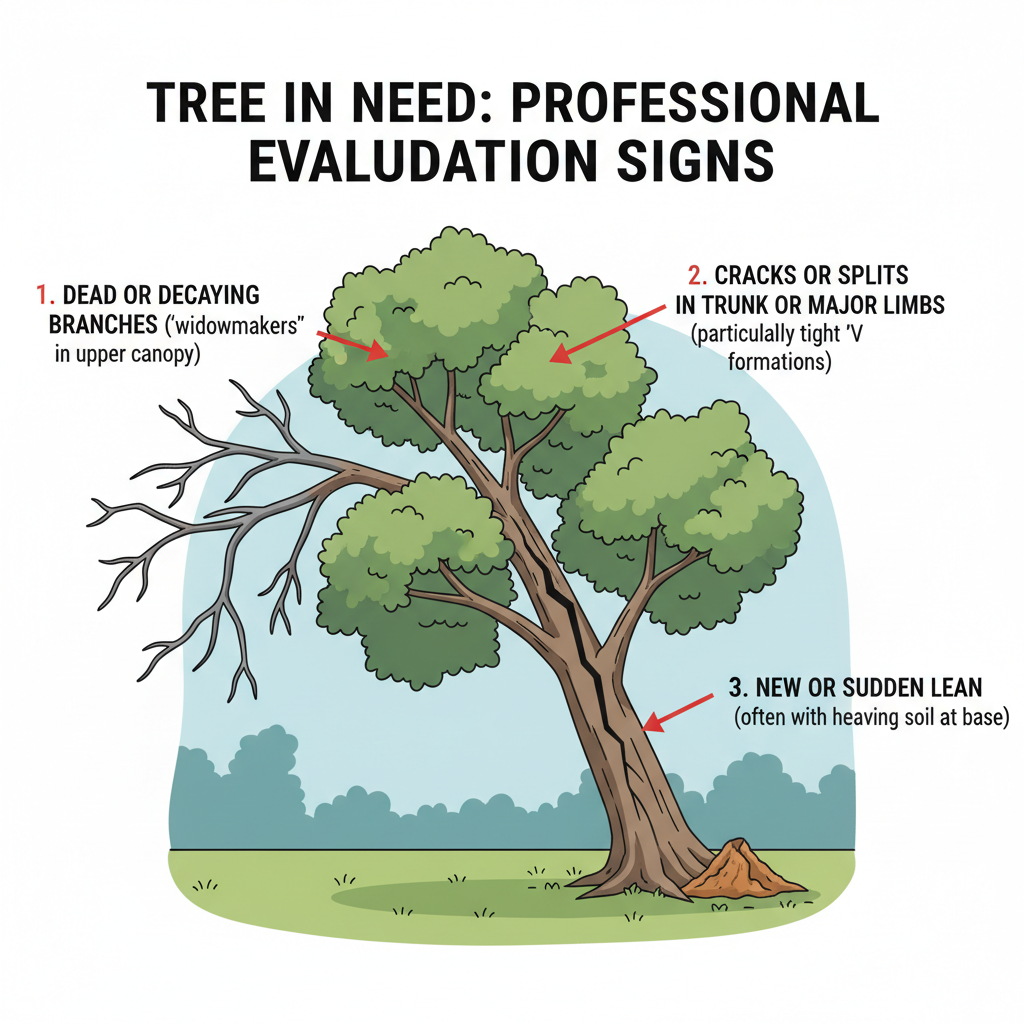
Common Symptoms
Possible Causes
Step-by-Step Diagnosis
Step 1
Observe the tree from a distance to assess its overall lean, shape, and foliage density.
Step 2
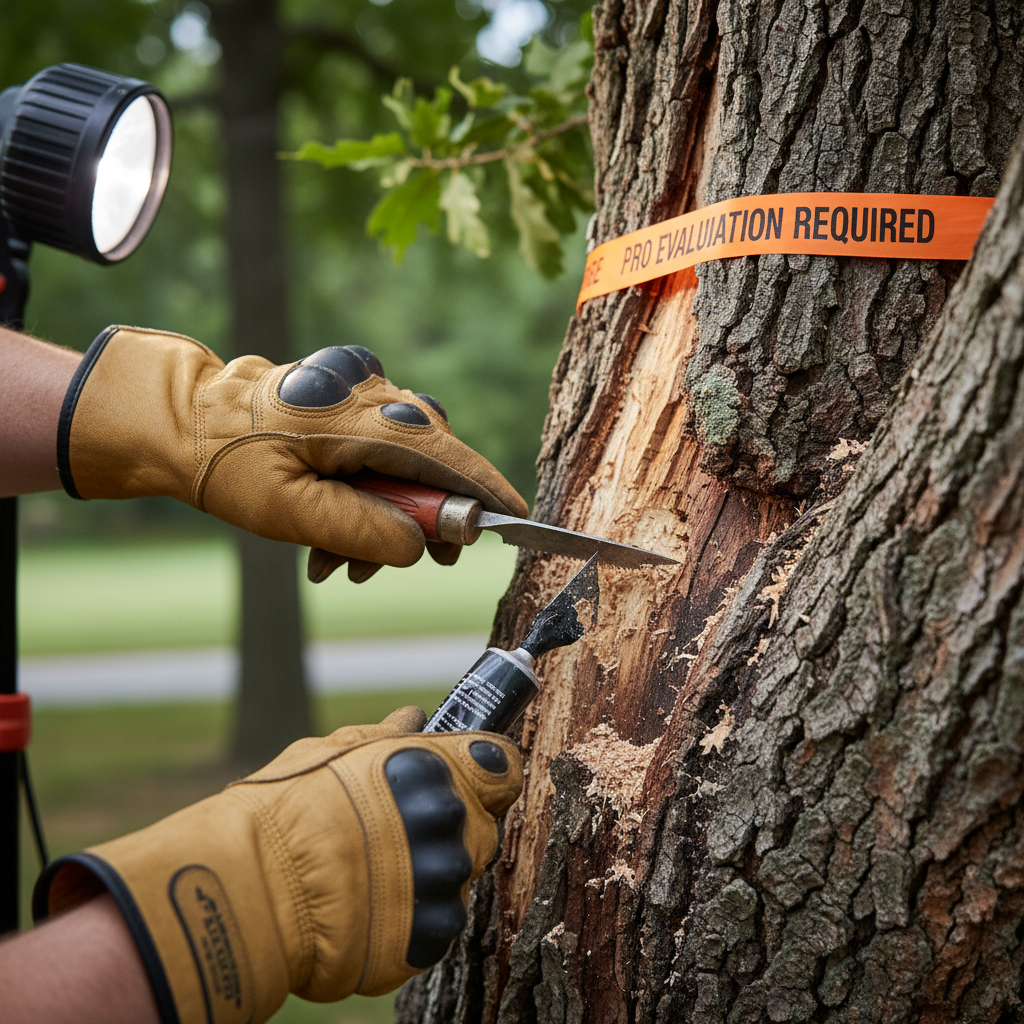
Inspect the trunk up close for deep cracks, cavities, peeling bark, and fungal growths.
Step 3
Tap the trunk with a rubber mallet, listening for hollow sounds that indicate internal decay.
Step 4
Examine the branches and leaves for deadwood, discoloration, wilting, or signs of insect damage.
Step 5
Check the base of the tree and root flare for decay, mushrooms, girdling roots, or heaving soil.
Step 6
Look carefully on the ground and in bark crevices for sawdust-like frass, a clear sign of boring insects.
DIY vs Professional Costs
| Repair Type | DIY Cost | Professional Cost | Time Required |
|---|---|---|---|
Arborist Consultation | $0 | $75 - $250 | 1 hour |
Pruning small branches (<2" thick) | $50 - $100 | $200 - $600 | 1-2 hours |
Pruning large branches (>3" thick) | N/A | $500 - $2,000 | 2-4 hours |
Pest/Disease Treatment | $20-100 | $100 - $500+ | 1 hour |
Full Tree Removal | N/A | $800 - $6,000+ | 4-8+ hours |
When to Call a Professional Tree Service
- When you see large, dead, or broken branches hanging in the tree.
- If the tree develops a sudden lean, especially after a storm.
- You discover large, deep cracks or hollow spots in the trunk or major limbs.
- There are shelf-like fungi (conks) or mushrooms growing on the trunk, a sign of internal rot.
- The tree is near power lines, your house, or a neighbor's property, and you suspect it's unstable.
- The foliage dies back suddenly or the tree defoliates completely out of season.
- The job requires a chainsaw and a ladder - a combination that should never be used.
Prevention Tips
- Water trees deeply but infrequently during dry periods to encourage deep root growth.
- Apply a 2-3 inch layer of mulch around the tree, but keep it from touching the trunk to prevent rot.
- Protect the trunk from damage by lawnmowers and string trimmers.
- Have young trees pruned by a professional to establish a strong, stable structure for the future.
- Avoid compacting the soil over the root zone with vehicles or heavy equipment.
- Schedule a professional check-up every 3-5 years for mature trees near your home.
Frequently Asked Questions
Related Guides
Fruit Tree Not Producing Fruit? A Practical Pruning Guide for Homeowners
Is your fruit tree a beautiful green giant, but barren? Learn expert pruning techniques to encourage abundant harvests, improve fruit quality, and maintain tree health. Get practical tips for DIY fruit tree care.
Preparing Trees for Winter Storms (Troubleshooting & Fixes)
A veteran arborist's guide to prepping your trees for winter. Learn how to spot risks and prevent storm damage before it costs you a new roof.
Tree Fell on My House? Immediate Steps & Expert Guide
Experiencing a tree falling on your house is an emergency. This comprehensive guide details immediate safety steps, who to call (911, insurance, emergency tree services), how to assess structural damage, and crucial prevention tips to mitigate risk.
Emergency Tree Service: How to Spot Scams and Hire a Reputable Professional
Don't fall victim to emergency tree service scams after a storm. Learn the red flags, vital questions to ask, and how to hire a qualified and insured arborist to protect your property and peace of mind.
Is Your Tree a Goner? Identifying Signs That a Tree Needs a Pro (Troubleshooting & Fixes)
Worried about a tree on your property? A 25-year vet explains the signs of a dying or dangerous tree and when you absolutely need to call an arborist.
Neglected Tree Maintenance and DIY Tree Work Risks (Troubleshooting & Fixes)
Learn to identify signs of neglected tree maintenance and the serious risks of DIY tree work. This guide from a veteran arborist helps homeowners spot hazards, understand causes, and know exactly when to call a professional tree service for safety and effective tree care.
Need Professional Help?
Find top-rated tree service experts in your area