Quick Answer
Okay, so here's the quick version. You've been ignoring that big tree in your yard, and now it's looking a little sketchy. Neglected trees are accidents waiting to happen. The most common fix is getting a professional arborist for proper pruning, which might run you $200 to $700. If you've let it go too long and the tree's gotta come down, you could be looking at thousands. Don't try to save a few bucks and end up with a branch through your roof or, worse, a serious injury. Always prioritize safety and call a certified arborist for any significant tree work.
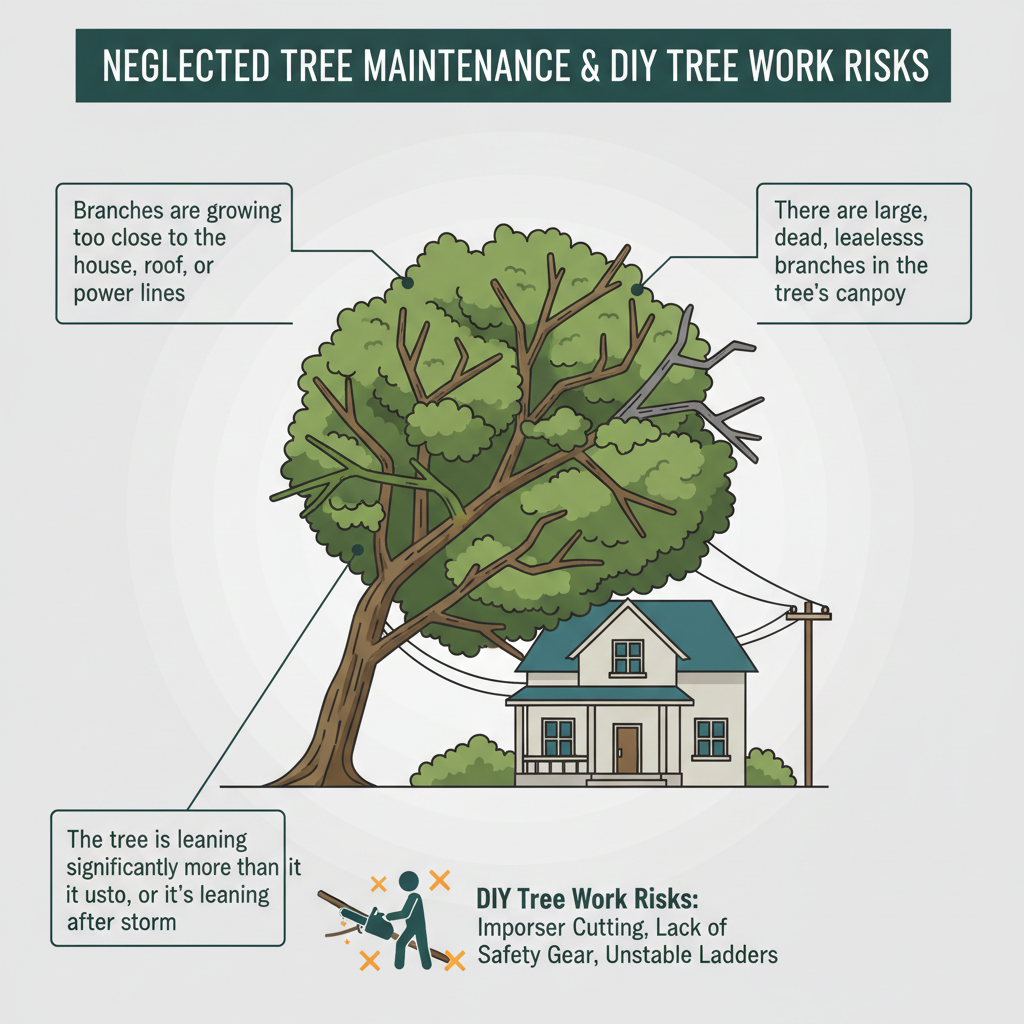
Common Symptoms
Possible Causes
Step-by-Step Diagnosis
Step 1
Stand far back from the tree (over 50 feet) to assess its overall lean, balance, and canopy health.
Step 2
Inspect the base of the trunk for fungal growth, deep cracks, exposed girdling roots, or signs of soil heaving.
Step 3
Examine the main trunk and branches for cavities, peeling bark, excessive sap drainage, and signs of decay or pest infestation (e.g., holes, frass).
Step 4
Look up into the canopy, using binoculars if necessary, for dead, broken, hanging, or rubbing branches.
Step 5
Check for unusual leaf symptoms such as discoloration, wilting, sparse foliage, or premature leaf drop.
Step 6
Assess the tree's stability, especially after heavy rain or high winds, by checking for any new shifting of the soil around the roots or fresh cracks in the trunk. Never stand under a potentially unstable tree.

DIY vs Professional Costs
| Repair Type | DIY Cost | Professional Cost | Time Required |
|---|---|---|---|
Small branch pruning (from ground) | $50-100 | $200-700 (as part of a full trim) | Under 1 hour |
Professional Tree Trimming/Pruning | N/A - Not recommended | $200-700+ | 2-4 hours |
Standard Tree Removal (Medium) | N/A - Not recommended | $400-1500 | 3-6 hours |
Hazardous or Emergency Tree Removal | N/A - Not recommended | $1500-6000+ | 4-8+ hours |
When to Call a Professional Tree Service
- Anytime you need to use a ladder to reach branches you want to cut.
- When branches are within 10 feet of power lines, touching your roof, or close to any structure.
- When a tree is visibly dead, diseased, has large cavities, shows significant decay, or is leaning unsafely.
- For any and all tree removals, especially large trees, those in tight spaces, or near valuable property.
- After a storm has caused significant damage like split trunks, large broken limbs, or root upheaval.
- If using a chainsaw is required to complete the job.
- When you need an accurate diagnosis of a potential tree disease, serious pest infestation, or structural instability.
- If you're unsure about the health, safety, or stability of any large tree on your property.
Prevention Tips
- Have a certified arborist inspect your trees every 3-5 years to identify and address problems early.
- When planting new trees, select appropriate species for your climate and property size, and ensure proper placement away from structures and utility lines.
- Prune trees when they are young (structural pruning) to develop a strong, stable framework and reduce future hazards.
- Address small issues like broken branches or minor pest/disease problems quickly before they escalate.
- Provide adequate water, especially during dry periods, and apply a layer of mulch around the base (keeping it away from the trunk) to promote tree health and vigor.
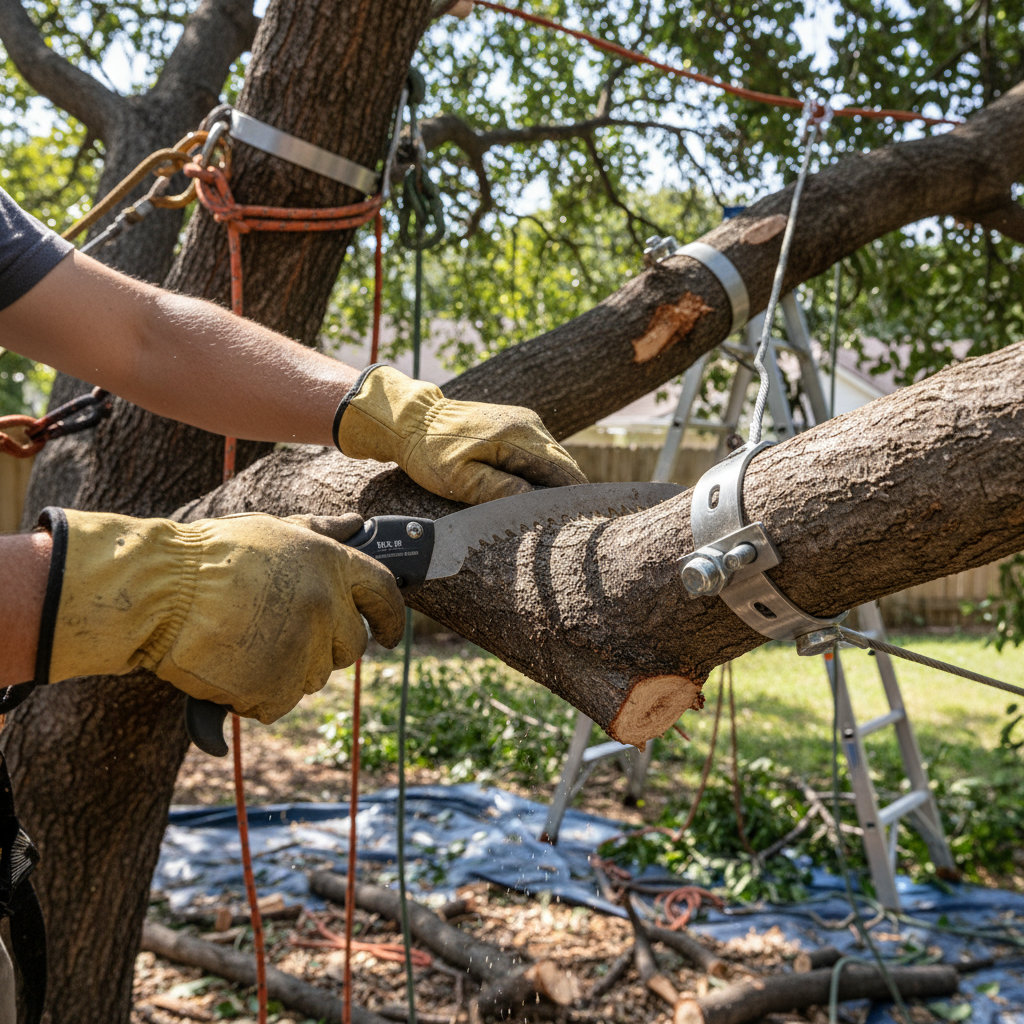
- Avoid making improper pruning cuts, 'topping' trees, or performing major tree work yourself if you lack professional training and equipment.
- Be cautious during construction or landscaping projects near trees to prevent root damage or bark injury.
Frequently Asked Questions
Related Guides
Fruit Tree Not Producing Fruit? A Practical Pruning Guide for Homeowners
Is your fruit tree a beautiful green giant, but barren? Learn expert pruning techniques to encourage abundant harvests, improve fruit quality, and maintain tree health. Get practical tips for DIY fruit tree care.
Preparing Trees for Winter Storms (Troubleshooting & Fixes)
A veteran arborist's guide to prepping your trees for winter. Learn how to spot risks and prevent storm damage before it costs you a new roof.
Tree Fell on My House? Immediate Steps & Expert Guide
Experiencing a tree falling on your house is an emergency. This comprehensive guide details immediate safety steps, who to call (911, insurance, emergency tree services), how to assess structural damage, and crucial prevention tips to mitigate risk.
Emergency Tree Service: How to Spot Scams and Hire a Reputable Professional
Don't fall victim to emergency tree service scams after a storm. Learn the red flags, vital questions to ask, and how to hire a qualified and insured arborist to protect your property and peace of mind.
Is Your Tree a Goner? Identifying Signs That a Tree Needs a Pro (Troubleshooting & Fixes)
Worried about a tree on your property? A 25-year vet explains the signs of a dying or dangerous tree and when you absolutely need to call an arborist.
Neglected Tree Maintenance and DIY Tree Work Risks (Troubleshooting & Fixes)
Learn to identify signs of neglected tree maintenance and the serious risks of DIY tree work. This guide from a veteran arborist helps homeowners spot hazards, understand causes, and know exactly when to call a professional tree service for safety and effective tree care.
Need Professional Help?
Find top-rated tree service experts in your area