Quick Answer
Okay, so here's the quick version. You planted the wrong tree and now it's a problem. A small, young tree (sapling), you might be able to move it yourself for under $100. However, if you have a larger tree causing issues like cracking sidewalks or interfering with utility lines, you'll need to call a professional. A simple pruning job for a small tree might be a few hundred dollars, but professional relocation of a sapling can range from $250-$700. A full removal for a badly placed mature tree can run anywhere from $500 to over $4,000, depending on size, location, and complexity. It's almost always cheaper to get it right the first time.
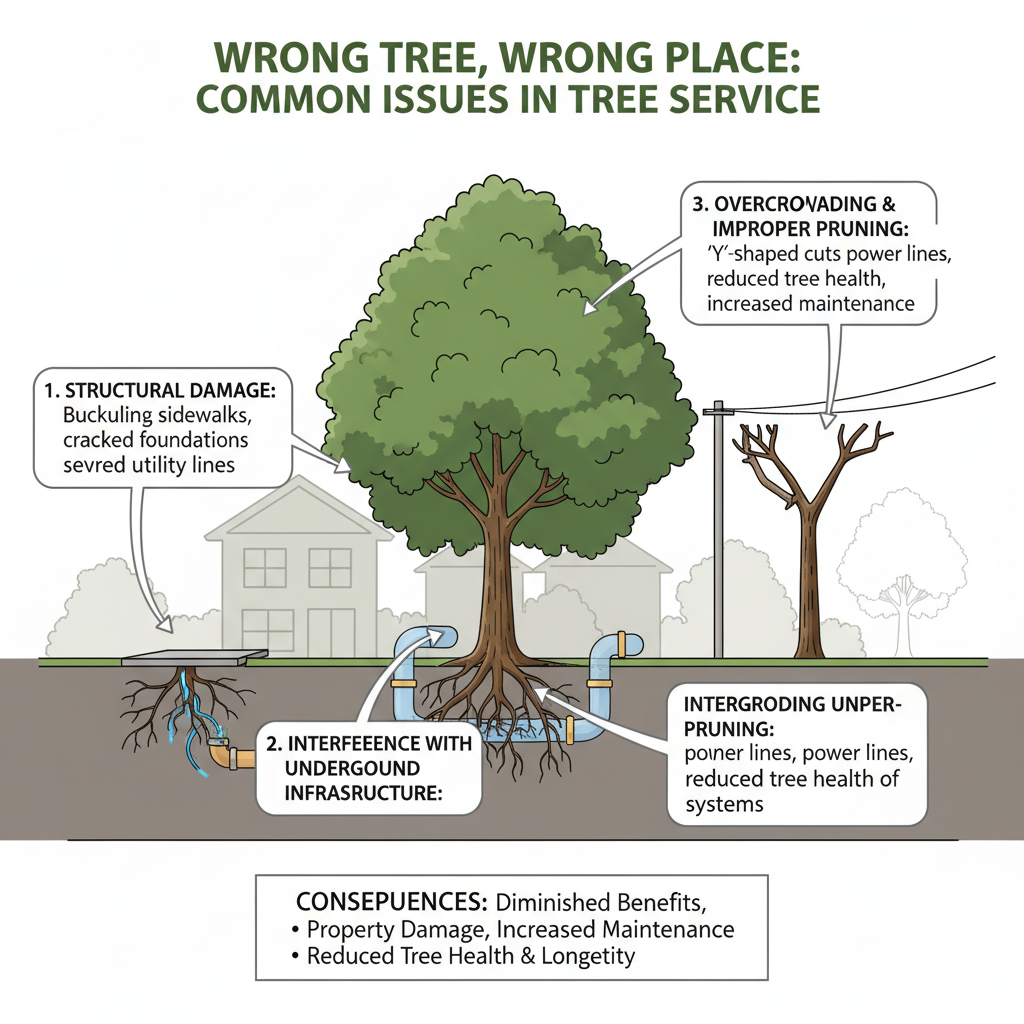
Common Symptoms
Possible Causes
Step-by-Step Diagnosis
Step 1
Assess the tree's current size, health, and growth habit relative to its surroundings.
Step 2
Identify any existing damage to structures, utilities, or the tree itself that can be attributed to its placement.
Step 3
Review local climate data and soil conditions to determine if the tree species is appropriate for the area.
Step 4
Research the typical mature size and characteristics (root system, canopy, fruit/debris) of the specific tree species.
Step 5
Evaluate the original planting goal (e.g., shade, windbreak) to determine if the tree is currently fulfilling or is likely to fulfill that goal effectively.
Step 6
Inspect for signs of stress or improper pruning that may be a direct result of being in the wrong location.
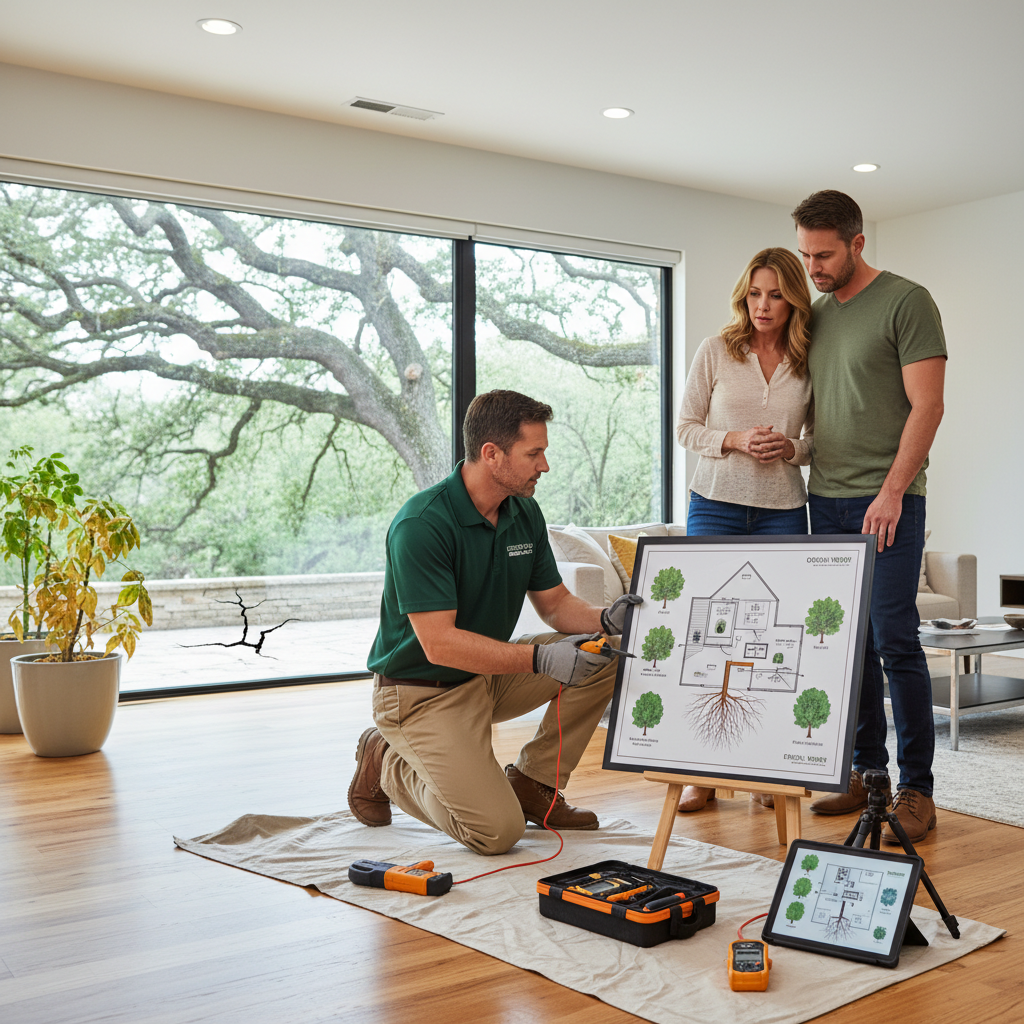
DIY vs Professional Costs
| Repair Type | DIY Cost | Professional Cost | Time Required |
|---|---|---|---|
Minor Pruning (small tree, no power lines) | $0-$50 | $150-$500 | 1-2 hours |
Relocating a SAPLING (under 6' tall) | $20-$100 | $250-$700 | 2-4 hours |
Root Barrier Installation (limited cases) | $50-$200 | $300-$1000 | 4-8 hours |
Mature Tree Removal | NOT a DIY job | $500-$4000+ | 3-8 hours |
When to Call a Professional Tree Service
- When a tree's mature size or root system is causing or has the potential to cause significant damage to property (foundations, utilities, driveways).
- If extensive pruning is required to keep a tree away from power lines or structures.
- When a large or established tree needs to be removed or relocated due to improper placement.
- For expert advice on species selection and optimal placement for new plantings to prevent future problems.
- If you are unsure about the best course of action for managing a tree that is clearly in the wrong place.
- When dealing with trees near overhead utility lines, which often require credentialed professionals.
- If you need to use a ladder and a chainsaw at the same time - just don't. Call a pro.
Prevention Tips
- Define the goal for planting the tree (shade, privacy, aesthetics, windbreak) before selecting a species.
- Always select tree species based on their mature height, canopy spread, and root system characteristics.
- Assess site conditions: Consider soil type, drainage, sun exposure (full sun, partial sun, shade), prevailing winds, and climate zone.
- Ensure adequate clearance from foundations, driveways, sidewalks, utility lines (overhead and underground), septic systems, and other structures.
- Consider fruit, nuts, leaves, or sap a tree might drop and its proximity to cars, patios, or pools.
- Utilize resources like local nurseries, arborists, or county extension offices for advice.
- Always call 811 before digging to locate underground utilities.
Frequently Asked Questions
Related Guides
Preparing Trees for Winter Storms (Troubleshooting & Fixes)
A veteran arborist's guide to prepping your trees for winter. Learn how to spot risks and prevent storm damage before it costs you a new roof.
Identifying common tree pests and diseases and their impact on tree health and longevity. Troubleshooting & Fixes
Identifying Diseased Tree Branches: A Homeowner's Visual Guide to Early Detection Troubleshooting & Fixes (2024 Guide)
Seeing sick branches on your tree? A veteran arborist explains how to spot disease, what it means, and when you can DIY the fix or need to call a pro.
Wrong Tree, Wrong Place Problems (Troubleshooting & Fixes)
Seeing property damage or have a sick tree? You might've planted the wrong tree in the wrong spot. Here's a veteran arborist's guide to fixing it.
Tree Fell on My House? (Here's What to Do NOW)
A tree fell on your house? Here's a no-nonsense guide from a 25-year veteran on what to do immediately, who to call, and how to handle the chaos.
Assessment and safe cleanup of trees damaged by storms, including fallen trees, broken limbs, split trunks, and leaning trees. Troubleshooting & Fixes (2024 Guide)
A storm just wrecked your yard? Here's my no-nonsense guide from 25+ years in the field on how to safely assess damaged trees and what you should—and shouldn't—tackle yourself.
Need Professional Help?
Find top-rated tree service experts in your area