Quick Answer
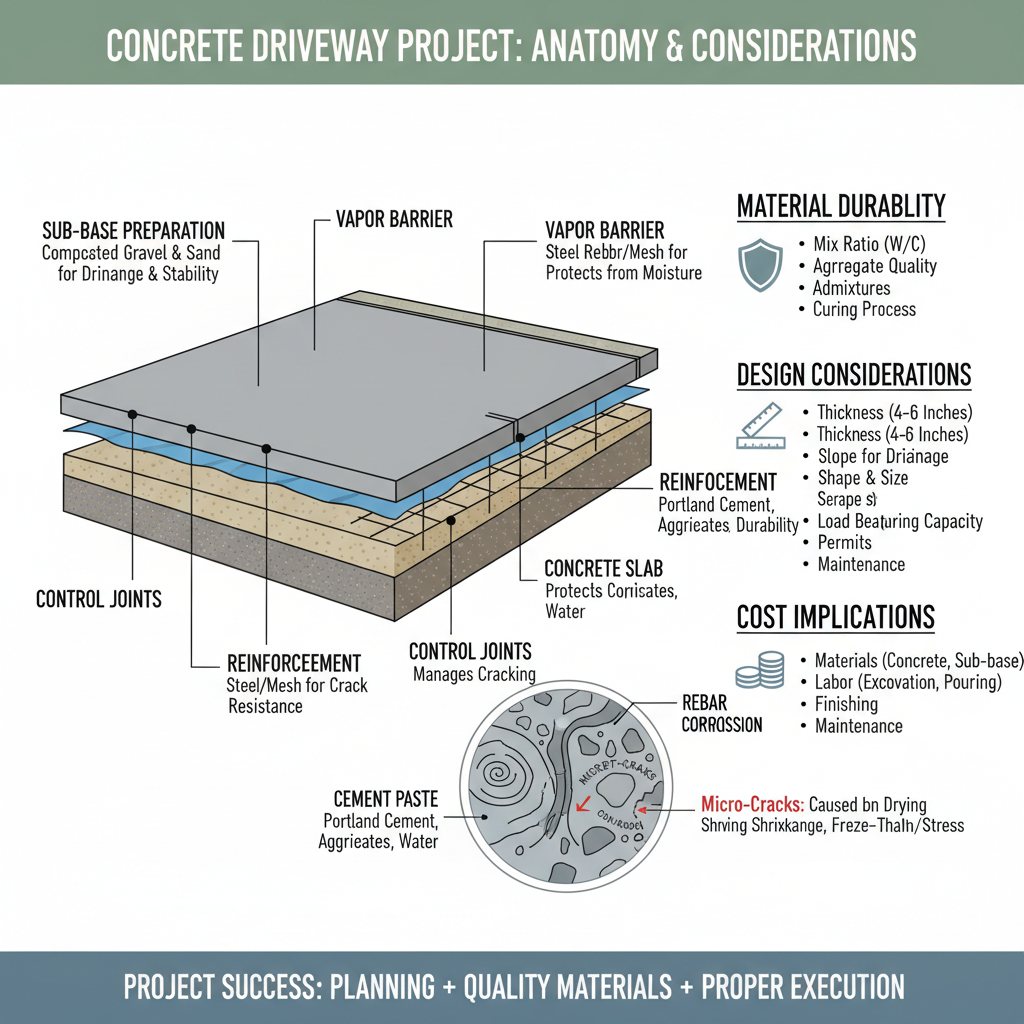
Planning a new concrete driveway involves understanding local regulations, assessing the site for drainage, selecting suitable concrete strength (3500-4000 psi) and reinforcement, and designing for aesthetics and function (e.g., appropriate thickness and joint placement). Costs vary by size, finish, and site preparation, with professional installation generally recommended for durability and to prevent common issues like cracking or settlement.
Common Symptoms
Possible Causes
Step-by-Step Diagnosis
Step 1
**Consult Local Building Department:** Start by visiting your local city or county building department website or office to understand specific regulations, permit requirements, and recommended concrete specifications for driveways in your area.
Step 2
**Perform a Site Reconnaissance:** Walk your property to identify existing structures, utility lines (call 811 to have them marked), slopes, and potential drainage issues. Note where water currently collects or flows.
Step 3
**Sketch and Measure:** Create a detailed sketch of your proposed driveway, including desired dimensions, curves, and any areas for additional parking. Measure the total square footage.
Step 4
**Evaluate Soil Conditions:** While a professional will do this in depth, observe your soil type. Clay soils, for example, require more attention to subgrade preparation due to expansion and contraction.
Step 5
**Request Multiple Quotes:** Obtain detailed bids from at least three reputable concrete contractors. Ensure each bid specifies concrete strength (PSI), thickness, type of reinforcement, base preparation, and finish.
Step 6
**Review Contractor Portfolios:** Ask to see examples of previous driveway projects by contractors and check references. Pay attention to the quality of workmanship, especially joint placement and finish.
Step 7
**Understand Concrete Specifications:** Discuss with contractors the recommended concrete mix (e.g., air-entrained for cold climates), slump, and curing methods for your specific project.
Step 8
**Walk Through the Design:** Have a contractor walk through your proposed design on-site to pinpoint potential issues with grading, drainage, or accessibility before work begins.
Step 9
**Check for Warranty and Insurance:** Verify that the contractor provides a warranty on their work and carries appropriate liability and workers' compensation insurance.
Step 10
**Budget Allocation:** Create a comprehensive budget that includes not just concrete and labor, but also permits, potential landscaping modifications, and contingency funds for unforeseen issues.

When to Call a Professional Concrete
- You are planning a new concrete driveway project, especially one with complex grading or decorative finishes.
- You lack experience with concrete work, excavation, or heavy machinery operation.
- Your project requires local permits, and you are unsure how to navigate the application process.
- Your site has significant slopes, drainage issues, or requires extensive soil stabilization.
- You want a stamped, colored, or exposed aggregate finish, which requires specialized skills.
- You observe significant cracking, spalling, or uneven settlement in an existing concrete driveway that needs professional assessment and repair.
- You need to remove an existing driveway, which involves heavy demolition and disposal.
- You require specific engineering for heavy vehicle loads or unique site conditions.
- You want guaranteed results and a warranty on the materials and workmanship.
- You need assistance selecting the correct concrete mix and reinforcement tailored to your climate and use.
Prevention Tips
- Thoroughly research and adhere to all local building codes and obtain necessary permits before commencing work.
- Conduct a detailed site assessment, including utility marking (call 811), grading for proper drainage, and soil analysis.
- Design the driveway with adequate width, sensible curves, and sufficient turning radii for all vehicles.
- Ensure the concrete mix has the recommended strength (3,500-4,000 psi) and is air-entrained in freeze-thaw climates.
- Specify and confirm the use of steel reinforcement (rebar or wire mesh) placed correctly within the slab.
- Insist on proper subgrade preparation and a well-compacted aggregate base (4-8 inches thick).
- Plan for and correctly install expansion and control joints at recommended intervals to manage cracking.
- Choose a reputable, experienced concrete contractor with a strong portfolio and positive references.
- Ensure proper curing of the concrete after pouring, which is critical for strength and durability.
- Apply a high-quality concrete sealer every 2-5 years to protect against moisture, stains, and de-icing salts (avoid harsh salts).
Frequently Asked Questions
Related Guides
DIY Concrete Patching vs. Professional Repair: When to Fix it Yourself and When to Call an Expert
Learn when to DIY concrete patching for hairline cracks and when to call a professional for sunken slabs, wide fissures, or structural issues. BizzFactor guides you on diagnosing causes, preventing further damage, and making cost-effective repair decisions for your driveway, patio, and sidewalks.
Concrete Driveway Guide: Planning, Construction, Cost & Maintenance
Comprehensive guide for homeowners planning a concrete driveway. Learn about optimal concrete strength (3500-4000 psi), rebar, air-entrained concrete, site assessment, permits, subgrade preparation, joint placement, cost implications, and essential maintenance for a durable, long-lasting, and attractive home improvement.
Concrete Crack Repair: DIY vs. Pro Approaches for Patios & Driveways (2024 Guide)
Comprehensive guide to repairing concrete cracks in patios and driveways. Learn to differentiate between minor and structural cracks and when to DIY or call a professional to ensure lasting repairs.
Resealing Stone Patio Pavers to Protect Against Fading, Stains, and Environmental Damage: Troubleshooting & Fixes (2024 Guide)
Patio pavers looking faded, stained, or weedy? A veteran tech explains how to diagnose sealant failure and the steps to clean, re-sand, and reseal it yourself.
Foundation Cracks: Assessing Seriousness and Repair Solutions (A Field Vet's Guide)
A veteran tech's guide to foundation cracks. Learn to tell if a crack is serious, what causes them, and when you can DIY vs. when to call a pro.
Common Masonry Damage: Identifying Symptoms, Causes, and Repair Strategies for Brick, Stone & Block (2024 Guide)
A veteran technician explains masonry damage (efflorescence, spalling, cracks) on brick, stone, and block, and tells you how to fix it yourself or when to call a pro.
Need Professional Help?
Find top-rated concrete experts in your area