Quick Answer
Okay, so here's the quick version. If you're seeing white stains, flaking brick, or cracked mortar, you've got masonry damage. Most often, water is the culprit. It gets in, freezes (in cold climates), and can break materials apart. For small DIY fixes like cleaning white stains (efflorescence) or filling a tiny crack, you might spend $20-$100 on materials. But if you see significant, scary stair-step cracks, large areas of spalling, or crumbling sections, don't attempt it yourself. Call a professional mason. Professional repair costs can range from a few hundred dollars for minor repointing to several thousand if widespread repointing, structural repairs, or foundation issues are involved.
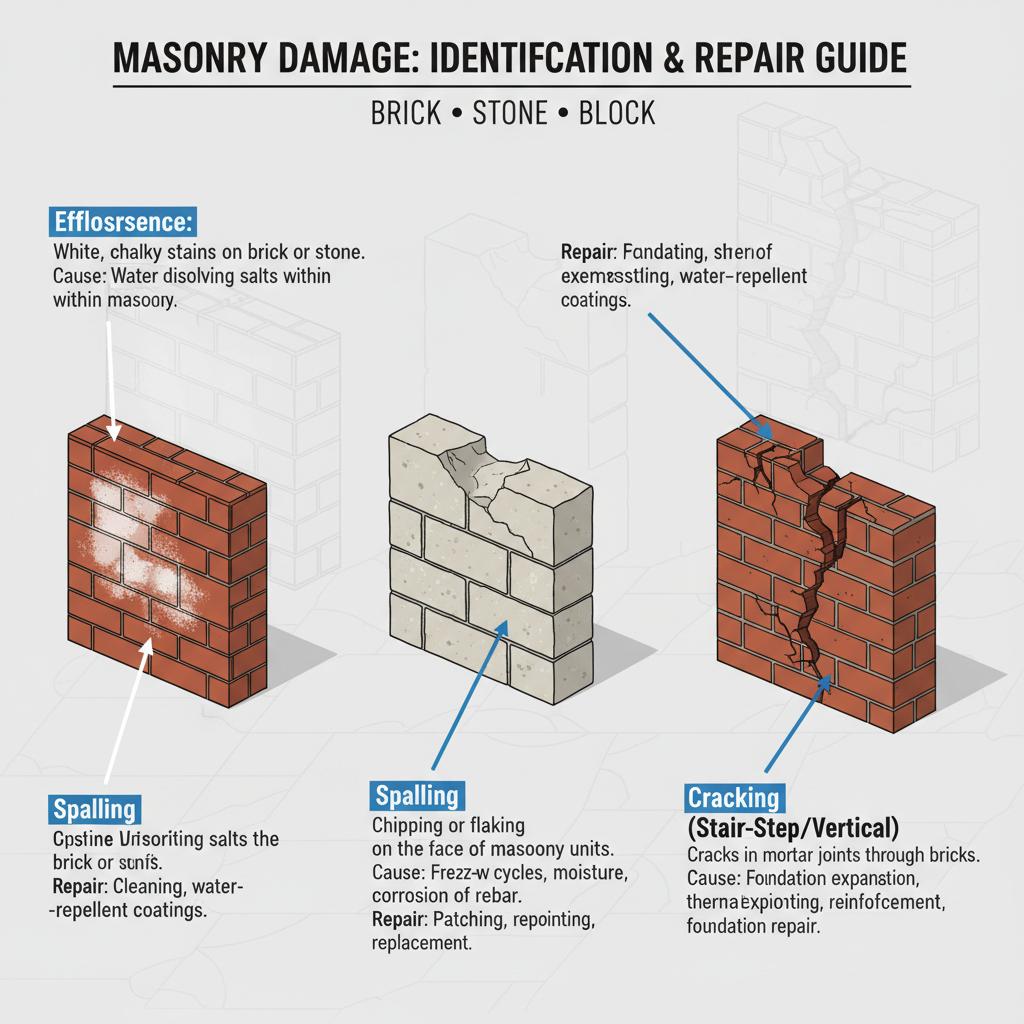
Common Symptoms
Possible Causes
Step-by-Step Diagnosis
Step 1
Stand back and perform a visual inspection of the entire structure. Look for patterns in the damage and note the location.
Step 2
Identify all potential moisture sources. Check gutters, downspouts, soil grading, and sprinkler systems to see where water is hitting the wall.
Step 3
Assess the mortar condition by scraping a joint with a screwdriver or key. If it crumbles easily, it has failed.
Step 4
Examine individual masonry units. Tap on suspect bricks with a hammer; a hollow 'thud' sound can indicate detachment or water saturation.
Step 5
Document the damage with photos and notes to track changes over time and to show a professional if needed.
Step 6
Determine if cracks are structural (wide, stairstepped, growing) or cosmetic (hairline, isolated) to decide if a professional engineer is needed.

DIY vs Professional Costs
| Repair Type | DIY Cost | Professional Cost | Time Required |
|---|---|---|---|
Efflorescence Cleaning (Dry Brushing) | $10-50 | $250-750 | 1-3 hours |
Minor Repointing (a few cracked joints) | $50-150 | $400-1000 | 4-8 hours |
Replacing a Single Loose Brick | $30-100 | $300-750 | 3-6 hours |
Structural Crack Repair (Stitching) | N/A | $2,000-5,000+ | 1-3 days |
When to Call a Professional Concrete
- If you find cracks that are wider than 1/4 inch, run horizontally, or follow a long stair-step pattern up the wall.
- When large areas of mortar are crumbling and require significant repointing work beyond a few feet.
- If multiple bricks are loose, severely spalled, or falling out of the wall, especially on a chimney or upper story.
- When you have persistent water infiltration issues that aren't solved by cleaning gutters or fixing obvious drainage problems.
- If you suspect the masonry damage is being caused by foundation movement or settlement.
- For any repair that requires working high up on a ladder or scaffolding that you're not comfortable or equipped for.
Prevention Tips
- Clean your gutters and downspouts every spring and fall to prevent water from overflowing and saturating walls.
- Ensure the ground around your foundation slopes away from the house, and that downspout extensions carry water at least 4-6 feet away.
- Conduct a visual inspection of your masonry at least twice a year, looking for new cracks or stains, and address small problems immediately.
- Avoid using film-forming, non-breathable sealants on brick unless you are certain it's the correct application. Trapped moisture is worse than no sealant at all.
- When making repairs, use materials that match the original in terms of permeability and strength, especially using softer lime-based mortars for older homes.
Frequently Asked Questions
Related Guides
DIY Concrete Patching vs. Professional Repair: When to Fix it Yourself and When to Call an Expert
Learn when to DIY concrete patching for hairline cracks and when to call a professional for sunken slabs, wide fissures, or structural issues. BizzFactor guides you on diagnosing causes, preventing further damage, and making cost-effective repair decisions for your driveway, patio, and sidewalks.
Concrete Driveway Guide: Planning, Construction, Cost & Maintenance
Comprehensive guide for homeowners planning a concrete driveway. Learn about optimal concrete strength (3500-4000 psi), rebar, air-entrained concrete, site assessment, permits, subgrade preparation, joint placement, cost implications, and essential maintenance for a durable, long-lasting, and attractive home improvement.
Concrete Crack Repair: DIY vs. Pro Approaches for Patios & Driveways (2024 Guide)
Comprehensive guide to repairing concrete cracks in patios and driveways. Learn to differentiate between minor and structural cracks and when to DIY or call a professional to ensure lasting repairs.
Resealing Stone Patio Pavers to Protect Against Fading, Stains, and Environmental Damage: Troubleshooting & Fixes (2024 Guide)
Patio pavers looking faded, stained, or weedy? A veteran tech explains how to diagnose sealant failure and the steps to clean, re-sand, and reseal it yourself.
Foundation Cracks: Assessing Seriousness and Repair Solutions (A Field Vet's Guide)
A veteran tech's guide to foundation cracks. Learn to tell if a crack is serious, what causes them, and when you can DIY vs. when to call a pro.
Common Masonry Damage: Identifying Symptoms, Causes, and Repair Strategies for Brick, Stone & Block (2024 Guide)
A veteran technician explains masonry damage (efflorescence, spalling, cracks) on brick, stone, and block, and tells you how to fix it yourself or when to call a pro.
Need Professional Help?
Find top-rated concrete experts in your area