Quick Answer
Okay, so here's the quick version. After a storm, the first thing you do is STOP. Look for downed power lines from a safe distance. If you see 'em, call the utility company, not me, not anyone else. For the tree, snap photos for your insurance. You can handle picking up small branches, anything you can drag without a struggle. Anything bigger than your arm, hanging up in the canopy, or leaning towards your house? That's a job for a pro. Don't be a hero. A simple cleanup might be a few hundred bucks, but a big dangerous removal can run into the thousands.
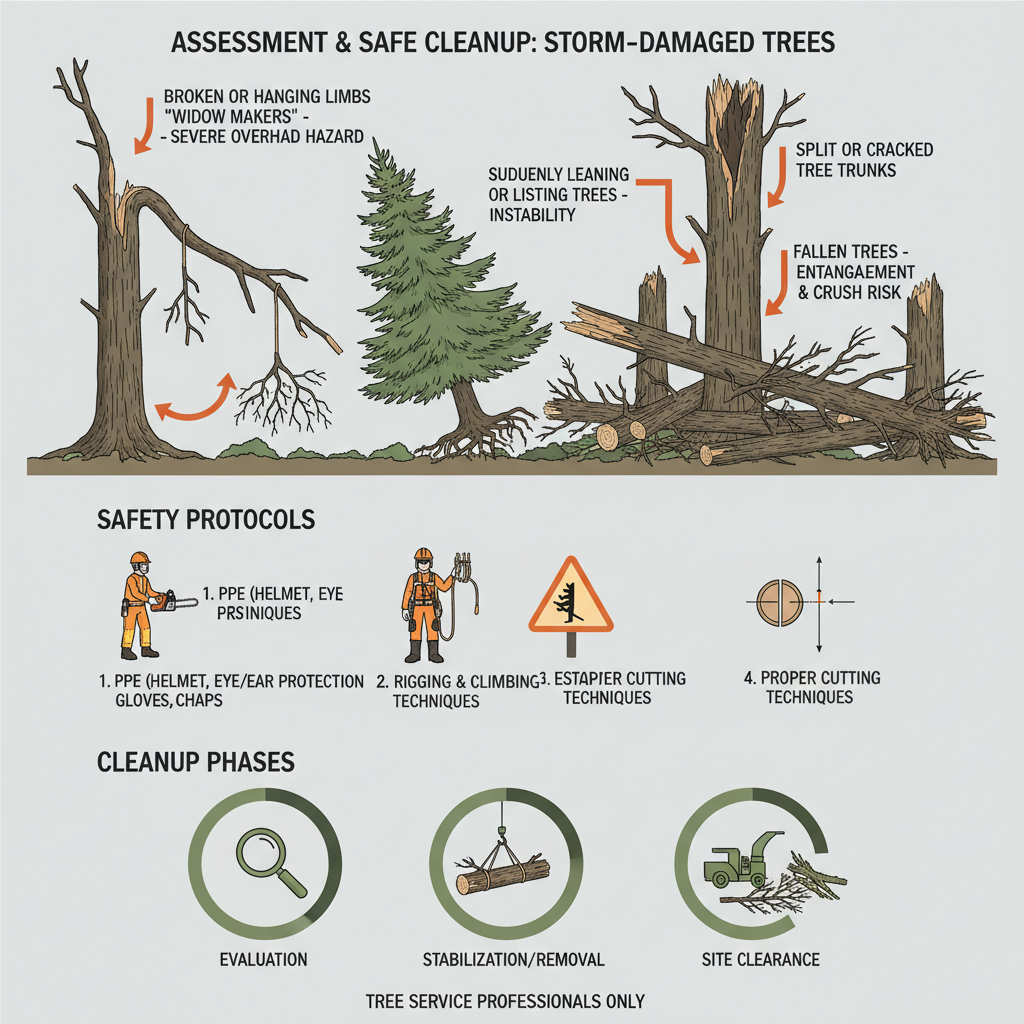
Common Symptoms
Possible Causes
Step-by-Step Diagnosis
Step 1
Immediately check for downed power lines from a safe distance. If you see any, call the utility company.
Step 2
Photograph all damage extensively from multiple angles for insurance claims.
Step 3
Assess for hidden dangers like hanging branches (widowmakers) or tension in bent logs (spring poles).
Step 4
Identify the specific type of damage: broken limbs, split trunk, leaning, or completely uprooted.
Step 5
Determine the immediate threat by noting the proximity of damaged trees to homes, vehicles, and high-traffic areas.

DIY vs Professional Costs
| Repair Type | DIY Cost | Professional Cost | Time Required |
|---|---|---|---|
Clearing small debris (<4" diameter) | $0-$50 | $250-$700 | 1-4 hours |
Large Limb or Leaning Tree Removal | Not Recommended | $1,500-$5,000+ | 4-16 hours |
Emergency Removal (Tree on House) | Not Recommended | $3,000-$10,000+ | 1-3 days |
When to Call a Professional Tree Service
- Anytime a tree or branch is on or near a power line (call utility company first).
- When a tree or large branch has fallen on your home, garage, or vehicle.
- If the main trunk of the tree is split or has a major crack.
- If the tree is suddenly leaning or the ground around the base is lifted.
- You see 'widowmakers'—large broken branches—hanging in the upper canopy.
- The work requires a chainsaw or working off the ground on a ladder.
- You feel uncertain or unsafe about the situation in any way.
Prevention Tips
- Proactively prune trees every few years with a certified arborist to remove weak points and thin the canopy.
- Plant the right tree species for your location, considering soil, climate, and mature size relative to structures.
- Annually inspect your trees for signs of disease, pests, rot, or structural cracks.
- Consider cabling or bracing for large, valuable trees with known structural weaknesses.
Frequently Asked Questions
Related Guides
Preparing Trees for Winter Storms (Troubleshooting & Fixes)
A veteran arborist's guide to prepping your trees for winter. Learn how to spot risks and prevent storm damage before it costs you a new roof.
Identifying common tree pests and diseases and their impact on tree health and longevity. Troubleshooting & Fixes
Identifying Diseased Tree Branches: A Homeowner's Visual Guide to Early Detection Troubleshooting & Fixes (2024 Guide)
Seeing sick branches on your tree? A veteran arborist explains how to spot disease, what it means, and when you can DIY the fix or need to call a pro.
Wrong Tree, Wrong Place Problems (Troubleshooting & Fixes)
Seeing property damage or have a sick tree? You might've planted the wrong tree in the wrong spot. Here's a veteran arborist's guide to fixing it.
Tree Fell on My House? (Here's What to Do NOW)
A tree fell on your house? Here's a no-nonsense guide from a 25-year veteran on what to do immediately, who to call, and how to handle the chaos.
Assessment and safe cleanup of trees damaged by storms, including fallen trees, broken limbs, split trunks, and leaning trees. Troubleshooting & Fixes (2024 Guide)
A storm just wrecked your yard? Here's my no-nonsense guide from 25+ years in the field on how to safely assess damaged trees and what you should—and shouldn't—tackle yourself.
Need Professional Help?
Find top-rated tree service experts in your area