DIY Tree Pruning Gone Wrong (How to Fix the Damage & Not Get Yourself Killed)
Did your DIY tree pruning go wrong? Learn to identify common mistakes, assess the damage, and discover how to fix minor issues. Crucially, find out when to call a certified arborist to save your stressed tree from serious damage or even death, and avoid costly safety hazards.
Quick Answer
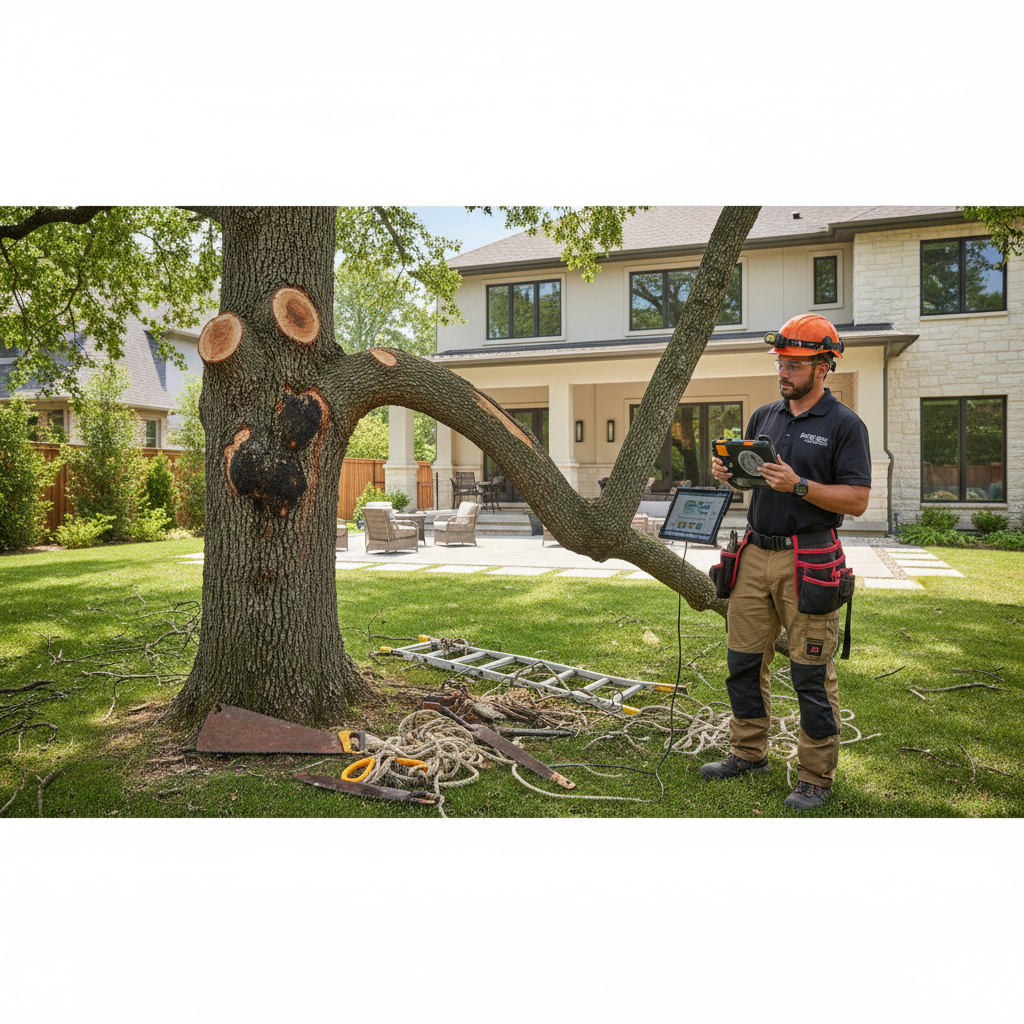
Okay, so here's the quick version. You got a little ambitious with the loppers, and now your tree looks like it lost a fight. Most DIY pruning mistakes come from cutting too much off ('topping'), making ugly cuts that won't heal, or using dull, cheap tools. The result? A stressed-out, ugly tree that's a magnet for bugs and disease. To fix minor mistakes yourself, you'll need good tools and to learn what a proper cut looks like. Anything major—big branches, high cuts, or a seriously damaged tree—and you need to stop and call a certified arborist. Trying to fix it yourself can cost you the whole tree.
Common Symptoms
- Visible damage like ripped bark, large jagged cuts, or stubs left behind.
- The tree appears stressed post-pruning, with wilting or discolored leaves.
- Weak, spindly branches (watersprouts) are growing in dense clusters around the cuts.
- The tree's natural shape is gone, often appearing flat-topped or 'lion-tailed'.
- Signs of new pest infestations or fungal growth (mushrooms) on or near the pruning wounds.
- Damage to your property from improperly felled branches.
- Personal injury from falls, cuts, or electrocution.
Possible Causes
- Lack of knowledge about proper pruning, especially the difference between topping a tree and making a proper reduction cut near the branch collar.
- Using incorrect or dull tools, which crush and tear wood fibers instead of making a clean cut that the tree can heal.
- Attempting to prune branches that are too high, too large, or too close to power lines without proper safety equipment and training.
- Ignoring the specific needs of the tree species or pruning at the wrong time of year, which can stress the tree or inhibit its ability to heal.
- Prioritizing a quick aesthetic 'fix' over the long-term health and structural integrity of the tree.
- Complete disregard for safety, like using a chainsaw on a ladder or not wearing basic gear like a helmet and safety glasses.
Step-by-Step Diagnosis
- Stand back from the tree to assess its overall shape and structure. Note any unnatural flattening or lopsidedness.
- Get close and examine the cuts. Look for clean, angled cuts made just outside the branch collar, not flush against the trunk or leaving long stubs.
- Identify any large stubs left from 'topping' and check them for signs of softness, decay, or fungus.
- Scan the trunk and branches around the cuts for evidence of pest entry, like sawdust, or fungal bodies like mushrooms.
- For smaller trees, carefully give the trunk a firm push to feel for instability, which could indicate root problems or structural weakness from excessive pruning.
- Note any dead, diseased, or crossing branches that were missed during the pruning attempt, as these are ongoing health and safety risks.
DIY vs Professional Costs
| Repair | DIY cost | Pro cost | Time |
|---|---|---|---|
| Corrective Pruning (to fix bad cuts) | $50-200 | $200-800 | 2-4 hours |
| Complex Pruning/Large Branch Removal | Not Recommended | $500-2000+ | 4-8 hours |
| Tree Removal (if irreparable) | Not Recommended | $500-5000+ | 1-2 days |
| Arborist Consultation & Assessment | N/A | $75-200 | 1 hour |
When to Call a Pro
- Anytime you are dealing with branches that are near, over, or even might touch a power line. Don't risk it.
- When the branch you need to cut requires you to use an extension ladder or leave the ground.
- If the job requires a chainsaw. These tools are extremely dangerous, especially when used overhead or on a ladder.
- If the tree is very large, shows signs of significant decay (like mushrooms on the trunk), or seems unstable.
- After you've already made significant pruning mistakes. Don't try to double down; get a professional opinion on how to salvage the tree.
- If you're unsure about what type of cut to make or how much to remove without harming the tree's long-term health.
Prevention Tips
- Educate yourself on basic tree biology, especially what a 'branch collar' is and how to make a proper three-point cut for larger limbs.
- Invest in quality, sharp bypass pruners (like Felco or ARS) and a good pruning saw (like a Silky). Don't use cheap, dull tools.
- Only prune during the correct season for your tree. For most deciduous trees, this is in the winter when they are dormant.
- Stick to the 'Three Ds': only remove branches that are Dead, Diseased, or Deranged (crossing/rubbing) and that you can reach safely from the ground.
- Never, ever stand on a ladder while operating a chainsaw. It's a recipe for a catastrophic accident.
- Wear appropriate safety gear, even for small jobs. This means gloves, sturdy shoes, and safety glasses at a minimum.
- If you have any doubt about a cut, a branch's stability, or your ability to do the job safely, stop and call a certified arborist.
FAQs
What are the most common DIY tree pruning mistakes?
The biggest one is 'topping'—just chopping the top off a tree. It's lazy, ugly, and it starves the tree. The other common ones are making cuts flush to the trunk, which creates a wound that can't heal, and using dull tools that tear the bark instead of cutting cleanly.
How can I tell if my tree has been improperly pruned?
Look for the telltale signs: large, flat-topped stubs; branches that look like they've been stripped bare except for little tufts at the end ('lion-tailing'); big, gaping wounds flush with the trunk; and torn, shredded bark. A properly pruned tree should look natural, just a bit tidier. It shouldn't look like it got in a fight with a machine.
What tools do I need for basic DIY tree pruning?
Honestly, a homeowner only needs two high-quality tools: a good pair of bypass pruners (not anvil style) for small twigs, and a sharp folding pruning saw for branches up to a few inches thick. Brands like Felco for pruners and Silky for saws are what the pros use, and they're worth the money. Anything more, and you're likely getting into a job you should hire out.
Is 'tree topping' always bad for a tree?
Yes. 100%. Don't let anyone tell you otherwise. It weakens the tree, invites disease and insects, and the new growth it creates is weakly attached and more likely to break in a storm. It's a short-term 'solution' that creates a long-term, dangerous problem. There are professional techniques like crown reduction, but that is NOT the same as topping.
How often should I prune my trees?
It completely depends on the tree's age, species, and location. There is no set schedule. A young tree might need a little structural pruning every other year, while a mature, healthy oak might not need any significant pruning for a decade. The best approach is to inspect your trees annually and only prune when you see a clear reason, like a dead, broken, or diseased branch you can safely reach.
What is a 'branch collar' and why is it important?
The 'branch collar' is the slightly swollen area at the base of a branch where it attaches to the trunk or a larger limb. It contains specialized cells that are crucial for the tree's ability to compartmentalize and heal pruning wounds. Cutting outside the branch collar allows the tree to seal off the wound effectively, preventing decay. Cutting flush with the trunk removes this collar, creating a large, open wound that may never heal properly.
My tree has been topped. Can it be saved?
If your tree has been severely topped, the best first step is to consult with a certified arborist. They can assess the extent of the damage, determine if the tree can be saved, and recommend specific restorative pruning techniques over several years to encourage healthier growth and structural integrity. Sometimes, unfortunately, removal is the only viable option for a severely damaged tree.
How much of a tree's canopy can I remove at once?
While it might seem efficient to remove a lot at once, it's generally recommended not to remove more than 25% of a tree's total living canopy within a single growing season. Exceeding this limit can severely stress the tree, reducing its ability to photosynthesize, leaving it vulnerable to pests and diseases, and potentially leading to decline or death.
Related guides
- Fruit Tree Not Producing Fruit? A Practical Pruning Guide for Homeowners
- Tree Fell on My House? Immediate Steps & Expert Guide
- Is Your Tree a Goner? Identifying Signs That a Tree Needs a Pro (Troubleshooting & Fixes)
- Neglected Tree Maintenance and DIY Tree Work Risks (Troubleshooting & Fixes)
- DIY Tree Pruning Gone Wrong (How to Fix the Damage & Not Get Yourself Killed)
- Hiring a Certified Arborist: How to Not Get Ripped Off (Questions & Fixes)