Quick Answer
Okay, so here's the quick version. You see water around your heater, first thing you do is shut off the power or gas, then shut off the water supply to the tank. Don't panic. Nine times out of ten it's a leaky valve or a loose fitting, which is a cheap fix, maybe $20-50 in parts. But if the water's coming from the tank itself, she's a goner. That means a full replacement is in your future, which isn't cheap. So, let's figure out which one it is first.
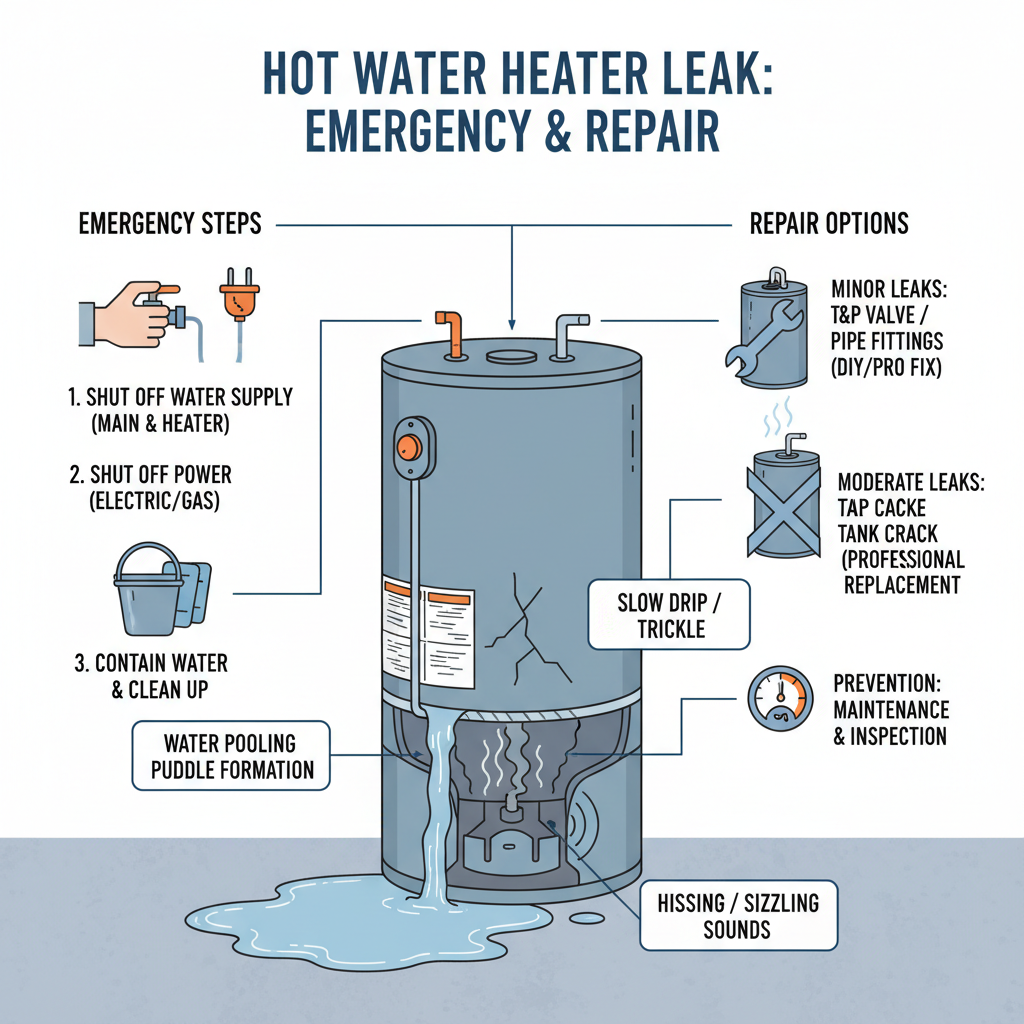
Common Symptoms
Possible Causes
Step-by-Step Diagnosis
Step 1
Immediately shut off the power at the circuit breaker (for electric) or the gas supply valve (for gas).
Step 2
Turn off the cold water supply using the shutoff valve on the pipe leading into the top of the tank.
Step 3
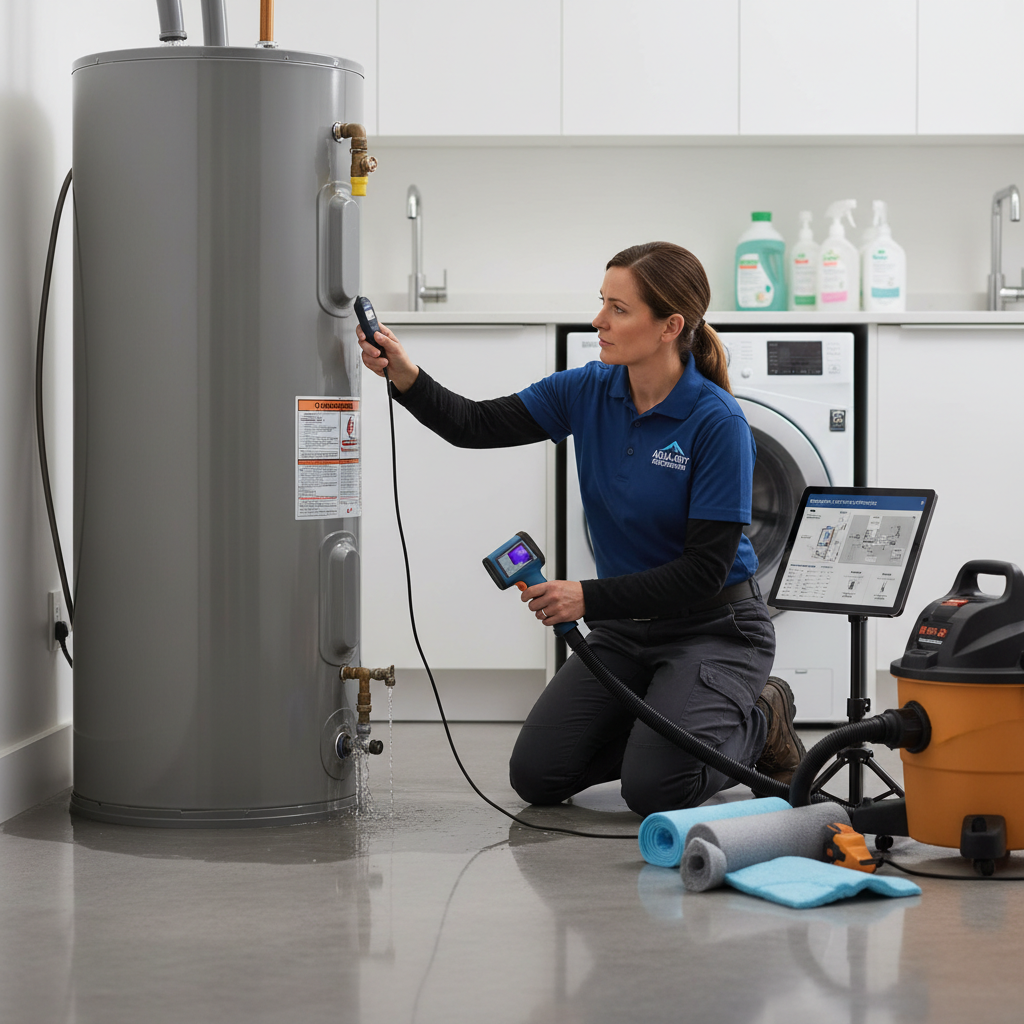
Thoroughly dry the entire exterior of the tank, pipes, and valves with a towel.
Step 4
Carefully inspect the heater from top to bottom, watching for the first sign of a new water droplet to pinpoint the exact source of the leak.
DIY vs Professional Costs
| Repair Type | DIY Cost | Professional Cost | Time Required |
|---|---|---|---|
Tightening loose fittings | $ 0-15 | $ 75-175 | 15 minutes |
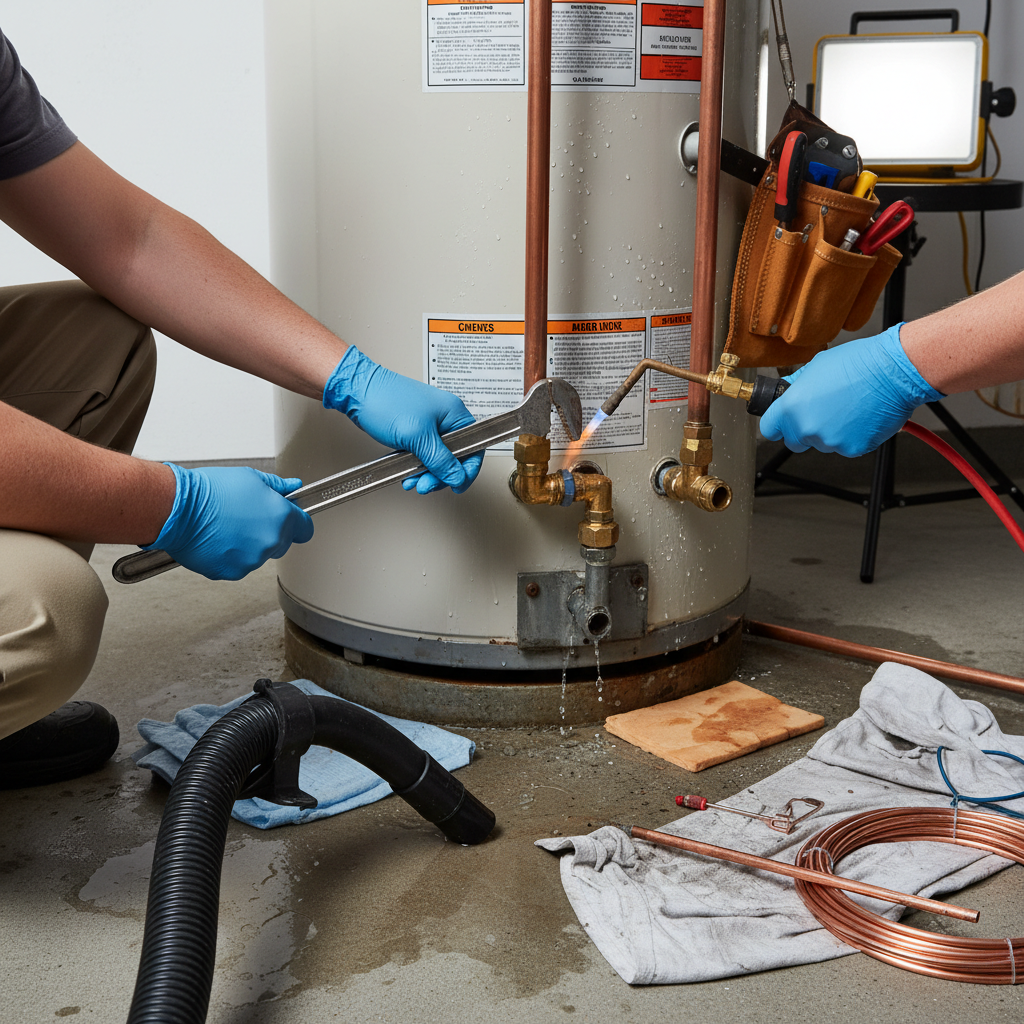
Replacing the T&P Relief Valve | $ 20-50 | $ 150-300 | 1 hour |
Replacing the Drain Valve | $ 15-40 | $ 150-250 | 1-2 hours |
Full Tank Replacement | Not Recommended | $ 1,000-3,000+ | 3-5 hours |
When to Call a Professional Water Damage
- If you smell gas anytime during your inspection. Get out and call the gas company immediately.
- If the leak is coming from a seam or the main body of the tank itself, as this requires a full replacement.
- If you are not 100% confident in shutting off and working with electrical components.
- When the water is actively spraying or gushing, creating an immediate flood risk.
Prevention Tips
- Flush the tank anually by connecting a hose to the drain valve to remove corrosive sediment.
- Inspect and replace the anode rod every 2-3 years to prevent the tank itself from rusting out.
- Test the T&P relief valve once a year by lifting the lever to ensure it functions and hasn't seized up.
Frequently Asked Questions
Related Guides
Sewage Backup in House: A Technician's Guide to Troubleshooting & Fixes (2024)
Seeing sewage backup in your tub or basement? A 25-year tech explains the causes (tree roots, clogs) and what to do *right now* to stop the damage.
Foundation Water Damage (Troubleshooting & Fixes)
A veteran tech's guide to foundation water damage. Learn to spot signs like musty smells and cracks, understand causes, and find DIY and pro solutions.
Comprehensive understanding of professional water damage restoration processes, including what experts look for, their procedures, and mitigation strategies for homes. Troubleshooting & Fixes
A veteran tech's guide to a pro water damage checklist. Find out what we look for, the real process, and how to know when to call for help.
Comprehensive water damage inspection checklist: What professionals look for, including common symptoms, causes, diagnostic procedures, repair options, costs, and prevention. Troubleshooting & Fixes
A veteran tech's no-nonsense water damage inspection checklist. Learn what pros look for, how to spot trouble, and what it'll really cost to fix.
Hot Water Heater Leaking Troubleshooting & Fixes (From a 25-Year Pro)
Water heater leaking? A veteran tech shares emergency steps to stop the water damage now. Find out if it's a simple DIY fix or time to call a pro.
Ice Dam Prevention (Troubleshooting & Fixes)
Tired of ice dams wrecking your roof and leaking into your house? Here's a no-nonsense guide from a 25-year vet on how to fix 'em and stop 'em for good.
Need Professional Help?
Find top-rated water damage experts in your area