Quick Answer
Okay, so here's the quick version on ice dams. They happen 'cause your attic's too warm, melting snow that then refreezes at your cold gutters. It's a mess. For a quick, temporary fix, you can use a roof rake to pull snow off the edge or toss some calcium chloride socks up there. That's a $50 fix, tops. The real solution? Fixing your attic insulation and ventilation so the whole roof stays cold. That's a permanent fix, but you're looking at a pro job, probably costing a few thousand bucks. Don't ignore it, water damage gets expensive fast.
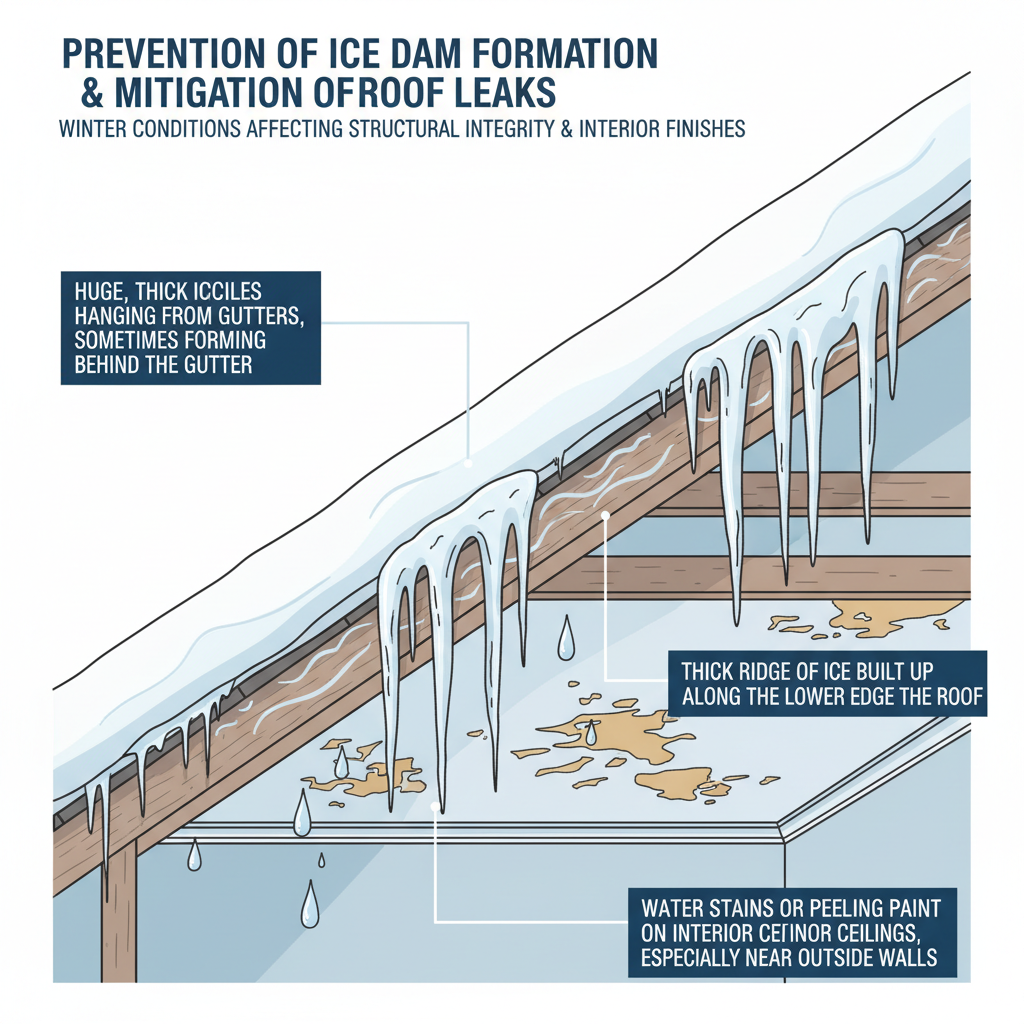
Common Symptoms
Possible Causes
Step-by-Step Diagnosis
Step 1
From the ground, visually inspect the roof edges for a ridge of ice and abnormally large icicles.
Step 2
Carefully access the attic and look for signs of moisture, like frost on the underside of the roof deck or on roofing nails.
Step 3
While in the attic, examine the insulation depth. It should be thick and uniform, typically over a foot deep, with no gaps or compressed areas.
Step 4
Check for air leaks from the house below, paying close attention to areas around light fixtures, exhaust fans, and plumbing vents.
Step 5
Inspect exterior soffit vents to ensure they are not blocked by insulation or debris, and confirm you have adequate exhaust vents (like a ridge vent).
Step 6
Use a moisture meter on any interior water stains to determine if the leak is active.

DIY vs Professional Costs
| Repair Type | DIY Cost | Professional Cost | Time Required |
|---|---|---|---|
Manual Snow Removal (Roof Rake) | $40-100 | $200-500+ | 1-3 hours |
Ice Dam Removal (Steaming) | Not DIY | $500-1,500+ | 2-5 hours |
Attic Air Sealing | $50-150 | $500-1,500+ | 1-2 days |
Attic Insulation Upgrade | $500-2,500 | $1,500-7,000+ | 2-3 days |
Ventilation Improvement | $100-500 | $700-3,500+ | 1-2 days |
When to Call a Professional Water Damage
- If you see water actively leaking or dripping inside your home.
- The ice dam is extremely large, heavy, or covers a large portion of the roof.
- You have a steep or multi-story roof that is unsafe to access.
- You can see clear signs of structural damage, like sagging gutters or a bowed roofline.
- You want a permanent fix for the underlying heat loss issue and are not an expert in insulation and ventilation.
Prevention Tips
- Use a roof rake to remove the first 3-4 feet of snow from your roof eaves after each major snowfall.
- Seal all air leaks between your heated living space and the attic using caulk and spray foam.
- Upgrade your attic insulation to a minimum of R-38, or R-49 to R-60 in very cold climates.
- Ensure your attic has balanced ventilation, with clear soffit vents for intake and ridge vents for exhaust.
- Keep your gutters clean to allow meltwater to drain away freely.
Frequently Asked Questions
Related Guides
Sewage Backup in House: A Technician's Guide to Troubleshooting & Fixes (2024)
Seeing sewage backup in your tub or basement? A 25-year tech explains the causes (tree roots, clogs) and what to do *right now* to stop the damage.
Foundation Water Damage (Troubleshooting & Fixes)
A veteran tech's guide to foundation water damage. Learn to spot signs like musty smells and cracks, understand causes, and find DIY and pro solutions.
Comprehensive understanding of professional water damage restoration processes, including what experts look for, their procedures, and mitigation strategies for homes. Troubleshooting & Fixes
A veteran tech's guide to a pro water damage checklist. Find out what we look for, the real process, and how to know when to call for help.
Comprehensive water damage inspection checklist: What professionals look for, including common symptoms, causes, diagnostic procedures, repair options, costs, and prevention. Troubleshooting & Fixes
A veteran tech's no-nonsense water damage inspection checklist. Learn what pros look for, how to spot trouble, and what it'll really cost to fix.
Hot Water Heater Leaking Troubleshooting & Fixes (From a 25-Year Pro)
Water heater leaking? A veteran tech shares emergency steps to stop the water damage now. Find out if it's a simple DIY fix or time to call a pro.
Ice Dam Prevention (Troubleshooting & Fixes)
Tired of ice dams wrecking your roof and leaking into your house? Here's a no-nonsense guide from a 25-year vet on how to fix 'em and stop 'em for good.
Need Professional Help?
Find top-rated water damage experts in your area