Quick Answer
Okay, so here's the quick version. Your carpet's soaked. First, find a way to stop the leak. Period. After that, you've got a critical 24-48 hour window before mold starts to grow. For a small area with clean water, you *might* be able to tackle it yourself with a good wet/dry vacuum and powerful fans. This could cost you under $100 for equipment rental or purchase if you don't already own it. However, if the area is large, the carpet pad is saturated, or the water is contaminated (from a drain backup, toilet overflow, or outside flooding), do NOT attempt to clean it yourself. Call a professional water damage restoration service immediately. This will likely cost anywhere from $500 to several thousand dollars, but it's essential to prevent extensive mold growth, structural damage, and potential health hazards.
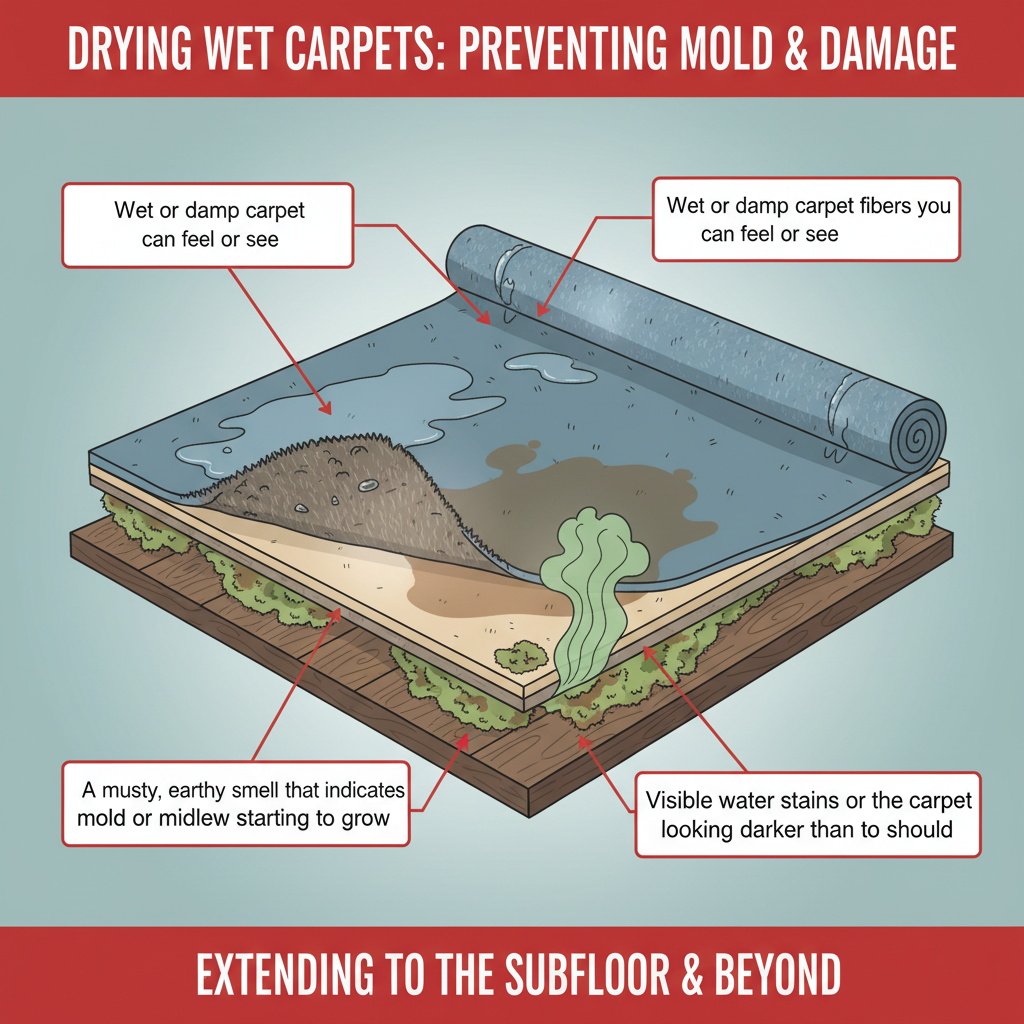
Common Symptoms
Possible Causes
Step-by-Step Diagnosis
Step 1
Stop the leak. Find the shutoff valve for the fixture or use the main water shutoff for the house. Nothing else matters until the water stops.
Step 2
Identify the water type. Is it clean (supply line), gray (drainage), or black (sewage/flood)? Your entire approach depends on this.
Step 3
Check the padding. Pull up a corner of the carpet and see how wet the pad is. A saturated pad almost always needs to be removed.
Step 4
Assess the subfloor. While the carpet is up, check the plywood or concrete underneath for moisture, discoloration, or softness.
Step 5
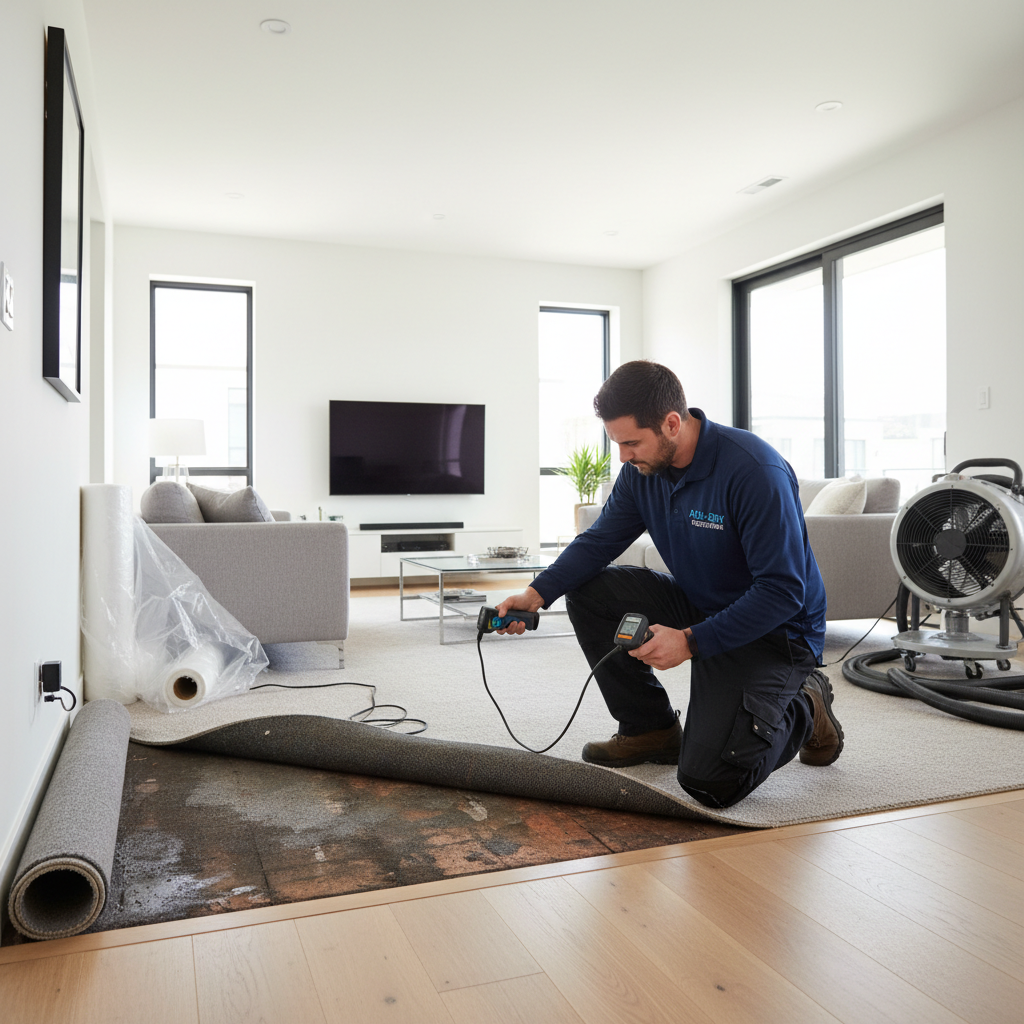
Use a moisture meter if you have one. It's the only way to know for sure how far the water has spread into baseboards and drywall.
Step 6
Clock the time. If the carpet has been wet for more than 48 hours, you must assume mold is present and act accordingly.
DIY vs Professional Costs
| Repair Type | DIY Cost | Professional Cost | Time Required |
|---|---|---|---|
Water Extraction | $40 - $75 | $200 - $800 | 2-4 hours |
Carpet & Pad Drying | $60 - $150 | $500 - $2,000 | 2-5 days |
Antimicrobial Treatment | $20 - $40 | (Included or $50-$200 if separate) | 1 hour |
Subfloor Drying/Repairs | $100+ | $1,000 - $5,000+ | 1-7 days |
When to Call a Professional Water Damage
- The water is from a sewage backup, toilet overflow, or outside flood (black water).
- The affected area is large, covering more than just a small section of a room.
- The carpet has been wet for more than 48 hours.
- The carpet padding is completely saturated.
- You can see or smell mold.
- The subfloor underneath the carpet feels soft, spongy, or is visibly damaged.
Prevention Tips
- Replace all your rubber appliance hoses with braided stainless steel lines. It's the best $50 you'll ever spend.
- Locate and test your main water shutoff valve so you know where it is in an emergency.
- Install water leak alarms under sinks, behind toilets, and near your water heater and washing machine.
- Regularly inspect areas where water is used. Look for small drips, corrosion, or stains.
- Keep your gutters and downspouts clean to prevent water from pooling against your foundation.
Frequently Asked Questions
Related Guides
Sewage Backup in House: Comprehensive Guide to Troubleshooting & Fixes (2024)
Sewage backing up in your home? A 25-year plumbing expert explains immediate actions to stop the mess, common causes (tree roots, clogs), and when to call a pro. Learn prevention tips & health risks.
Preventing Seasonal Water Damage In Your Home (Troubleshooting & Fixes)
A veteran technician's guide to preventing seasonal water damage. Learn how to spot trouble, diagnose leaks, and decide when to DIY or call a pro to fix it.
Crawl Space Water Problems: A 25-Year Pro's Guide to Identification, Fixes, & Prevention
A seasoned pro's guide to fixing crawl space water issues. Learn to spot symptoms, find causes like bad drainage, and decide if it's a DIY fix or time to call for help.
Toilet Overflowing? How to Stop the Flood and Fix the Problem (Pro Tips)
Toilet overflowing? Don't panic! Get expert plumbing advice on how to stop the flood, diagnose common causes like clogs or sewer line issues, and when to call a professional plumber. Prevent water damage with these troubleshooting steps.
Drying a Wet Carpet After a Leak (Troubleshooting & Fixes)
Comprehensive guide on how to dry a wet carpet after a leak. Learn to identify symptoms, causes, and step-by-step diagnosis. Covers DIY methods for small spills, critical 24-48 hour mold prevention, and when to call professional water damage restoration. Includes prevention tips and FAQs.
Navigating Water Damage Insurance Claims (A Veteran Tech's Guide)
A veteran's guide to navigating water damage insurance claims. Learn crucial steps, documentation tips, coverage insights, and how to get a fair payout for your home's water damage.
Need Professional Help?
Find top-rated water damage experts in your area