Quick Answer
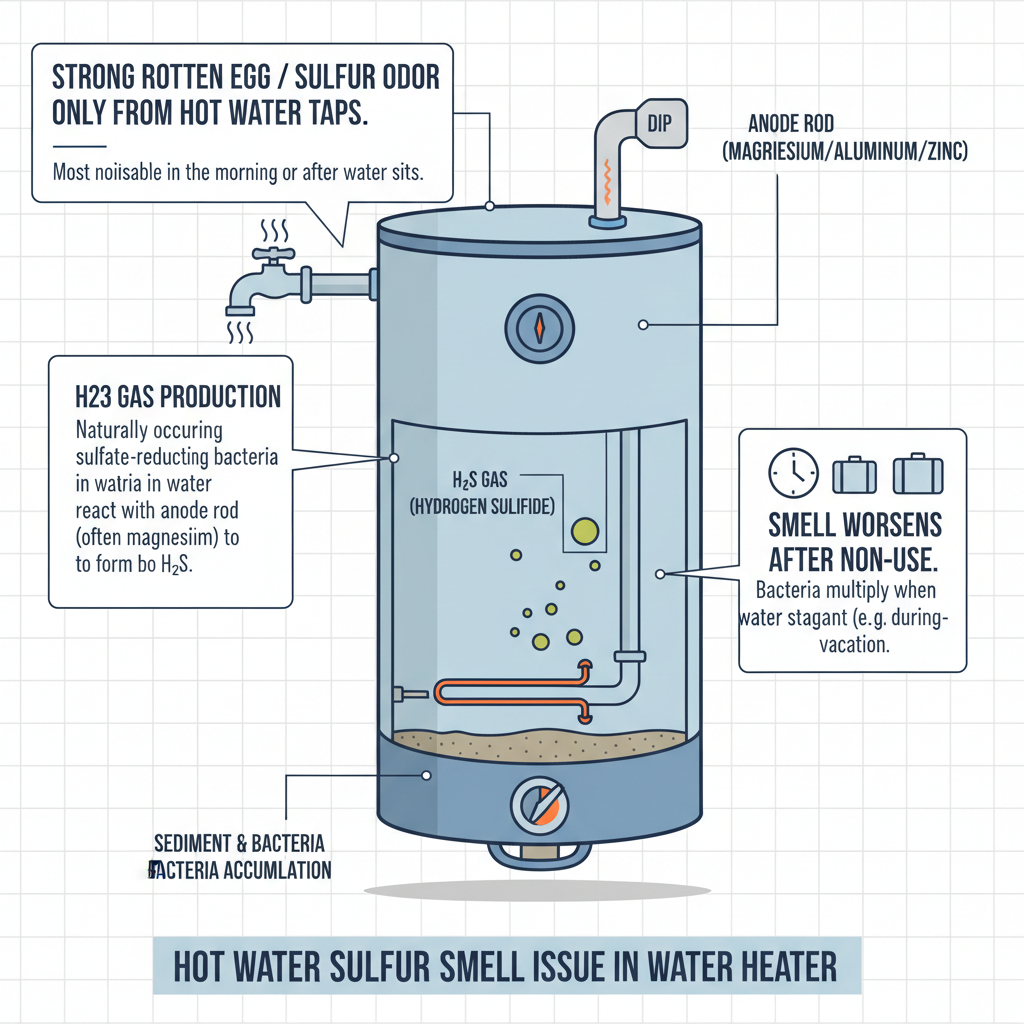
Okay so here's the quick version. That rotten egg smell is almost always hydrogen sulfide gas. You've got harmless little bacteria having a party inside your water heater, feeding on sulfates in your water and reacting with the anode rod. The fix is usually to flush the tank, maybe shock it with some bleach, and if it comes back, you'll want to swap out that standard magnesium anode rod for an aluminum/zinc one. You can DIY this for under $100, but a pro will run you anywhere from $150 to $450 depending on what exactly needs doing.
Common Symptoms
Possible Causes
Step-by-Step Diagnosis
Step 1
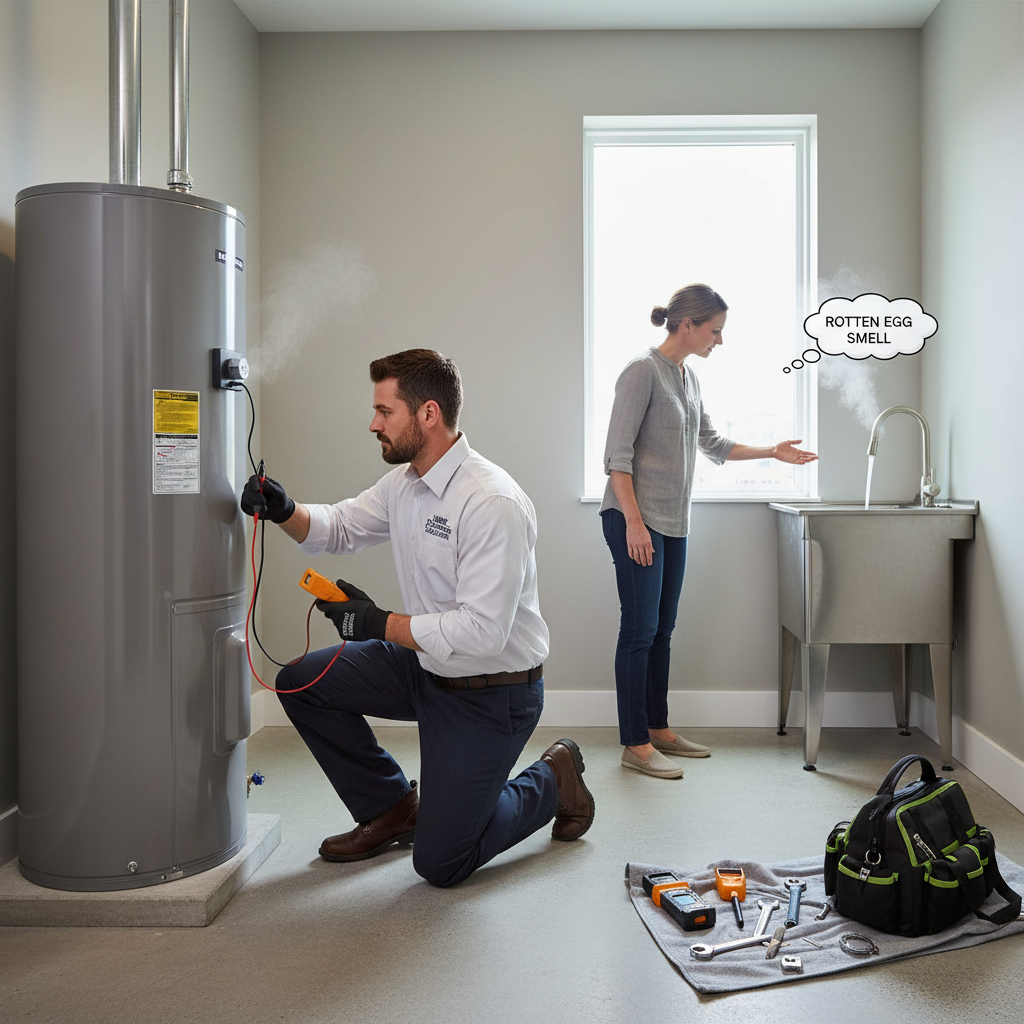
Isolate the source. Run cold water into a glass, then hot water into another. If only the hot water glass smells, the problem is your water heater.
Step 2
Check the water heater's temperature setting. Make sure it's set to at least 120°F (49°C). Temporarily turning it up to 140°F for a few hours can sometimes kill off a minor bacterial colony.
Step 3
Flush the water heater tank to remove sediment and bacterial sludge from the bottom.
Step 4
If flushing doesn't work, perform a shock chlorination by adding household bleach to the tank, letting it sit, and then flushing it thoroughly until the bleach smell is gone.
Step 5
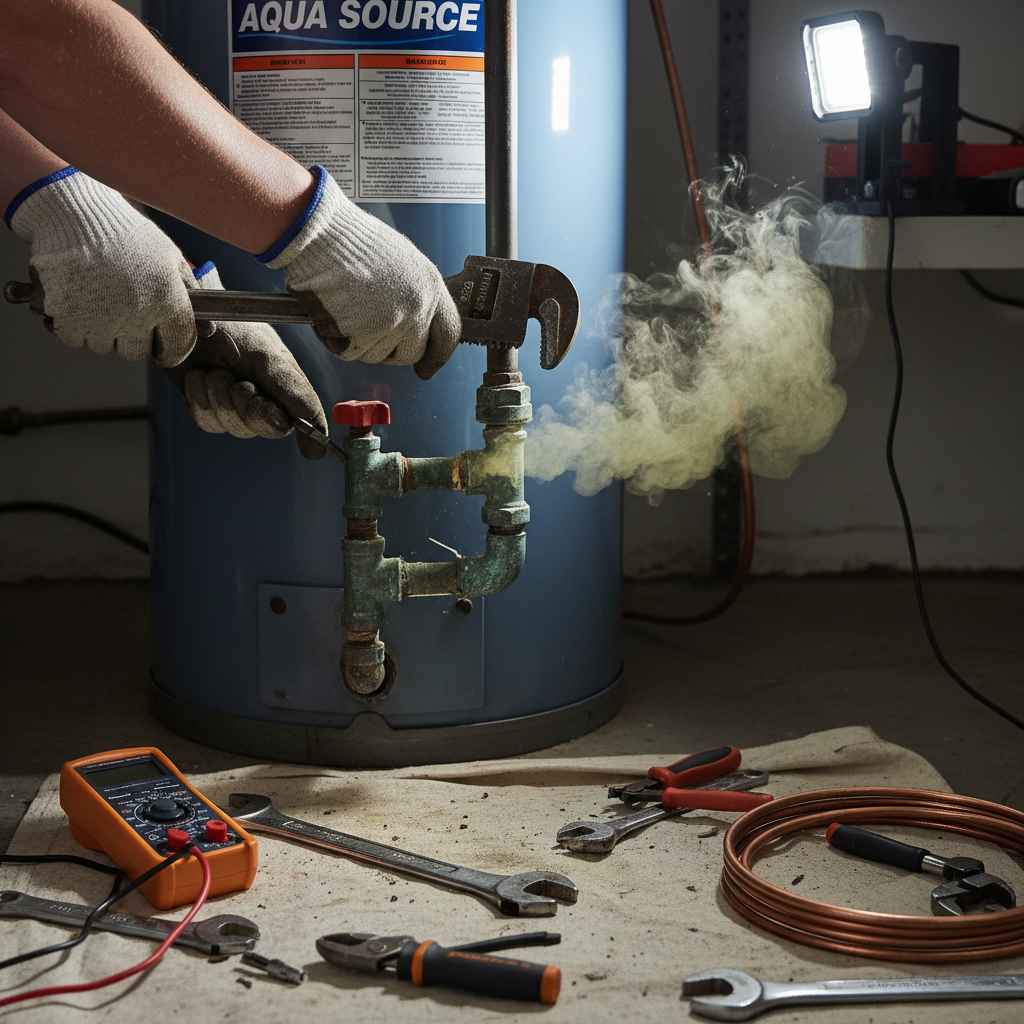
If the smell returns, the final step is to replace the existing magnesium anode rod with an aluminum/zinc alloy anode rod, which is designed to prevent the chemical reaction that causes the smell.
DIY vs Professional Costs
| Repair Type | DIY Cost | Professional Cost | Time Required |
|---|---|---|---|
Water Heater Flushing | $0 - $15 | $100 - $250 | 1-2 hours |
Shock Chlorination (Bleach Treatment) | $5 - $20 | $150 - $350 | 2-3 hours |
Anode Rod Replacement | $30 - $100 | $150 - $450 | 1-3 hours |
When to Call a Professional Water Heater
- If the rotten egg smell is present in both your hot AND cold water. This indicates a larger problem with your water supply, not just the water heater.
- If you try to replace the anode rod and it's seized or won't budge. Applying too much force can break the tank connections and cause a major leak.
- If you're not comfortable with any part of the process, like shutting off the gas/electricity, draining the tank, or using chemicals.
- If your water heater is very old, leaking, or showing significant signs of rust. In that case, it's best to get a professional assessment before you start wrenching on it.
Prevention Tips
- Flush your water heater at least once a year to clear out sediment where bacteria can thrive.
- Keep your water heater's temperature set to a minimum of 120°F (49°C) to make the environment less hospitable for bacteria.
- If you have recurring sulfur smell issues, proactively replace your standard magnesium anode rod with an aluminum/zinc alloy rod or a powered anode rod.
- If you're on well water, get it tested for sulfates and bacteria. You might need a water treatment system at the source.
- If you have a vacation home or don't use hot water often, try to run the hot taps for a few minutes every week to prevent water from stagnating in the tank.
Frequently Asked Questions
Related Guides
Hot Water Smells Like Rotten Eggs? Here's How to Fix It (Troubleshooting & Fixes)
Stop the rotten egg smell in your hot water! This guide identifies the causes (bacteria, anode rod, water quality) and provides DIY fixes, from flushing and shock chlorination to anode rod replacement. Learn when to call a pro.
Water Heater Expansion Tank Problems: Diagnosis, Fixes & Prevention Guide
Is your water heater's T&P valve dripping or pipes banging? Our expert guide helps you diagnose and fix common water heater expansion tank problems, including waterlogging and pressure issues. Learn how to prevent leaks and significantly extend the life of your plumbing system.
Water Heater Inefficiency: Diagnosing and Fixing Poor Insulation for Lower Energy Bills
Stop energy waste and high utility bills! Learn to diagnose and fix inefficient water heater insulation with our expert guide. Discover easy DIY steps to insulate your tank and pipes for significant savings. Find out when to call a professional.
Tankless Water Heater Installation: DIY vs. Professional Guide (2024)
Considering a tankless water heater? This guide explains the significant challenges and dangers of DIY installation compared to hiring a professional, covering gas line upgrades, venting, electrical demands, and code compliance for safe and efficient operation.
Water Heater Not Hot Enough: Troubleshooting & Fixes (2024 Guide)
Tired of lukewarm showers? A veteran tech explains why your water heater isn't hot enough and how you can fix it. Troubleshooting tips for gas and electric.
Water Heater Leaking from Top: Troubleshooting & Fixes from a 25-Year Pro
Water heater leaking from the top? Learn to diagnose common culprits like T&P valves, loose connections, or the anode rod. Expert tips for DIY fixes and when to call a pro.
Need Professional Help?
Find top-rated water heater experts in your area