Granite Countertop Sealing: Your Guide to Preventing Stains and Water Damage (2024)
Comprehensive guide to maintaining and restoring your granite countertop's protective seal. Learn how to diagnose a failing seal, apply new sealer, prevent stains, and when to call a professional for stone care.
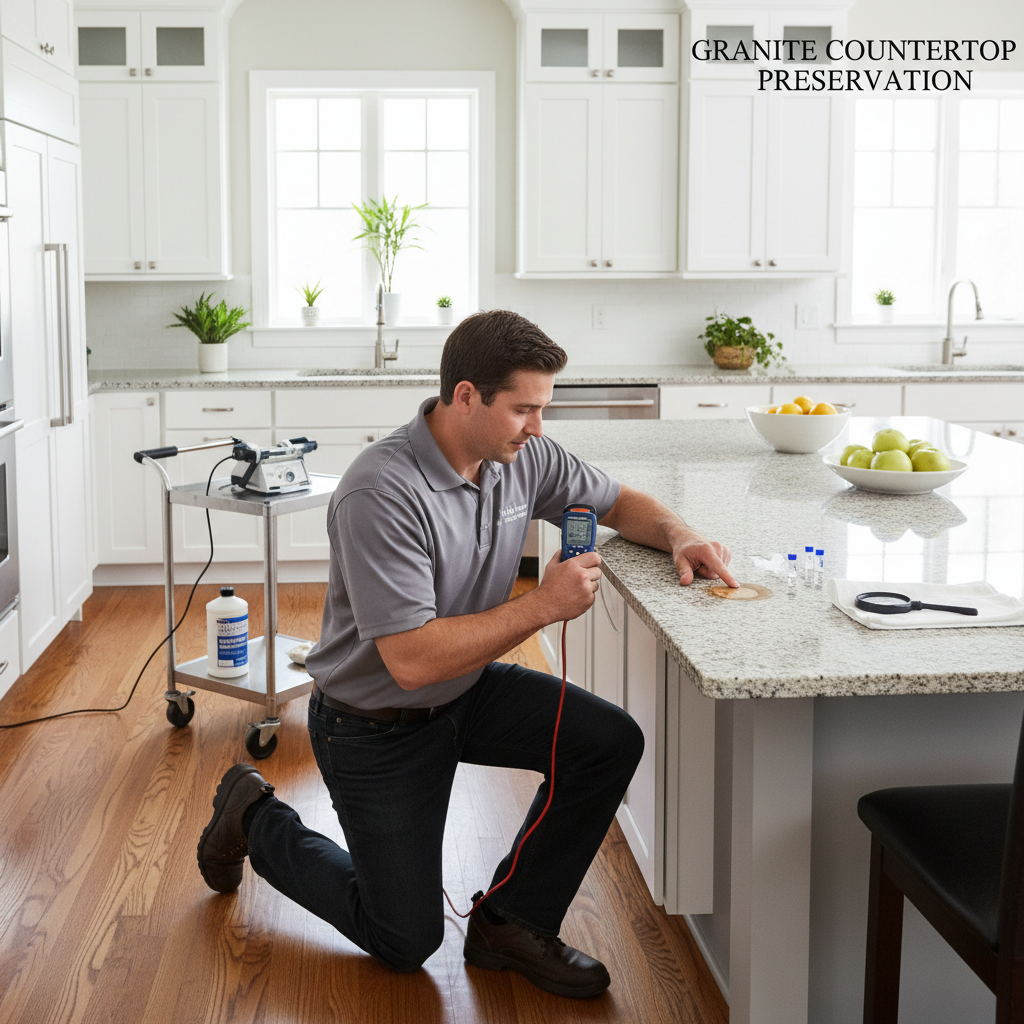
Quick Answer
Okay so here's the quick version. Your granite countertop is like a sponge, a really, really hard sponge. The sealer is what keeps stuff like wine and oil from soaking in and making a permanent mess. If water darkens the stone or doesn't bead up, it's time to reseal. You can do it yourself for about $30-50 and an afternoon. It's mostly just wiping stuff on and wiping it off. If you want a pro to do it, you're probably looking at $200-600, depending on how big your kitchen is. Don't put it off, it's cheap insurance.
Common Symptoms
- Water soaks in and leaves a dark spot that takes a while to evaporate.
- Water doesn't bead up into tight droplets on the surface anymore.
- The countertop is getting stained much more easily from things like oil or coffee.
- The finish looks dull, hazy, or has lost its original deep, rich look.
Possible Causes
- Normal wear and tear from daily use and cleaning slowly erodes the sealant over time.
- Using harsh or acidic cleaners (like vinegar, Windex, or bleach-based products) which actively strip the sealer off the stone.
- The stone's natural porosity varies; some types of granite are naturally more absorbent and require more frequent sealing.
- Not re-sealing it often enough based on the needs of your specific stone and household usage.
Step-by-Step Diagnosis
- Thoroughly clean a small, less-visible area of the countertop with a pH-neutral stone cleaner or denatured alcohol (for greasy spots) and let it dry completely (allow several hours, stone must be bone-dry).
- Pour about a 1/4 cup of clean water onto that prepared, dry spot.
- Let the water sit undisturbed for approximately 15-20 minutes.
- Wipe the water away completely with a clean, dry cloth. Observe the granite surface where the water was. If the stone looks visibly darker, indicating water absorption, it's a clear sign that the seal has failed and needs to be reapplied. If the stone's appearance remains unchanged, and the water beaded up, the seal is still performing well in that area.
DIY vs Professional Costs
| Repair | DIY cost | Pro cost | Time |
|---|---|---|---|
| Basic Re-Sealing (Standard Kitchen) | $30-60 | $200 - $600 | 2-4 hours |
| Deep Cleaning & Sealing | $70-100 | Included in the $200-600 price | 3-5 hours |
| Minor Stain Removal, Polishing, & Sealing | Not a DIY job | $500 - $1,500+ | 1-2 days |
When to Call a Pro
- When you have deep, embedded stains (oil, rust, organic) that DIY poultices or cleaners cannot remove, as professionals have access to stronger, specialized treatments.
- If the granite surface has been etched by acidic substances, leaving dull, rough patches or visible damage that requires honing or re-polishing.
- When there are chips, cracks, or significant scratches that need expert repair and blending, which goes beyond simple sealing.
- If you have an exceptionally large kitchen or unique stone varieties and prefer the peace of mind and expertise of a professional application and assessment.
- For complex stone issues where you're unsure of the cause or the best course of action.
Prevention Tips
- Perform the water bead test every 6-12 months in a few different areas to proactively monitor your sealer's effectiveness.
- Wipe up ALL spills (especially acidic liquids like wine, citrus, coffee, vinegar, and highly pigmented foods) immediately to prevent them from penetrating the stone.
- Always use pH-neutral cleaners specifically designed for natural stone. Avoid abrasive cleaners, bleach, ammonia, vinegar, Windex, or acidic/alkaline cleaning products.
- Use cutting boards for all food preparation and trivets or hot pads for hot pots and pans to protect the surface from scratches and direct heat.
- Avoid dragging heavy or abrasive items across the countertop surface.
- Regularly clean with a clean, damp microfiber cloth and dry thoroughly to prevent water spots and mineral buildup.
FAQs
How often should I seal my granite countertops?
There's no single answer, as it depends on your specific type of granite (some are naturally more porous) and how heavily the countertop is used. As a general rule, perform the 15-minute water test (as described in the diagnosis steps) every 6-12 months. If the stone darkens when water sits on it, it's time to reseal.
Can I seal my granite countertops myself?
Yes, sealing granite is a very manageable DIY project for most homeowners. The key steps are a thorough cleaning beforehand, choosing a quality impregnating sealer, applying it evenly, and most importantly, wiping off ALL excess sealer immediately and thoroughly after the recommended dwell time.
What kind of sealer should I use for granite countertops?
Always choose a high-quality, penetrating (impregnating) sealer designed for natural stone. These sealers soak into the microscopic pores of the granite. Look for solvent-based options from reputable brands like Tenax, Miracle Sealants, Dry-Treat (STAIN-PROOF™), or StoneTech. Avoid topical sealers that sit on the surface, as they can peel or yellow.
What happens if I don't seal my granite?
If you don't seal your granite, it will be highly susceptible to staining from everyday spills like coffee, wine, oil, and food dyes. These liquids will absorb directly into the stone's pores, leading to permanent discoloration that can be difficult or impossible to remove. The stone may also lose its luster and appear dull over time.
Should I apply sealer liberally or sparingly?
Yes, you should apply sealer generously, ensuring the surface remains 'wet' with the product for the manufacturer's recommended dwell time (usually 10-20 minutes) to allow it to fully penetrate the stone's pores. However, it's crucial to wipe off ALL excess sealer completely before it dries. Any sealer left on the surface will cure to a sticky, hazy film that is very hard to remove.
What if I accidentally left streaks or a haze after sealing?
If you missed wiping off some excess sealer and it has dried to a haze, you might be able to remove it using a specialized sealer haze remover (check with your sealer's manufacturer for recommendations) and a clean, dry microfiber cloth. Sometimes a light application of fresh sealer and then immediate, rigorous wiping can reactivate and remove the old haze. In tougher cases, professional help might be needed.
Related guides
- Troubleshooting & Fixing Deteriorated Countertop Caulk and Grout: A Comprehensive Guide
- Granite Countertop Sealing: Your Guide to Preventing Stains and Water Damage (2024)
- Troubleshooting & Fixing Porous Concrete Countertops (Sealing Guide)
- Kitchen Countertop Installation Prep Checklist: Avoid Delays & Extra Costs (2024 Guide)