Troubleshooting & Fixing Porous Concrete Countertops (Sealing Guide)
Comprehensive guide to troubleshooting and fixing porous concrete countertops. Learn to diagnose failing seals, remove stains, and re-seal concrete surfaces for enhanced durability and stain resistance.
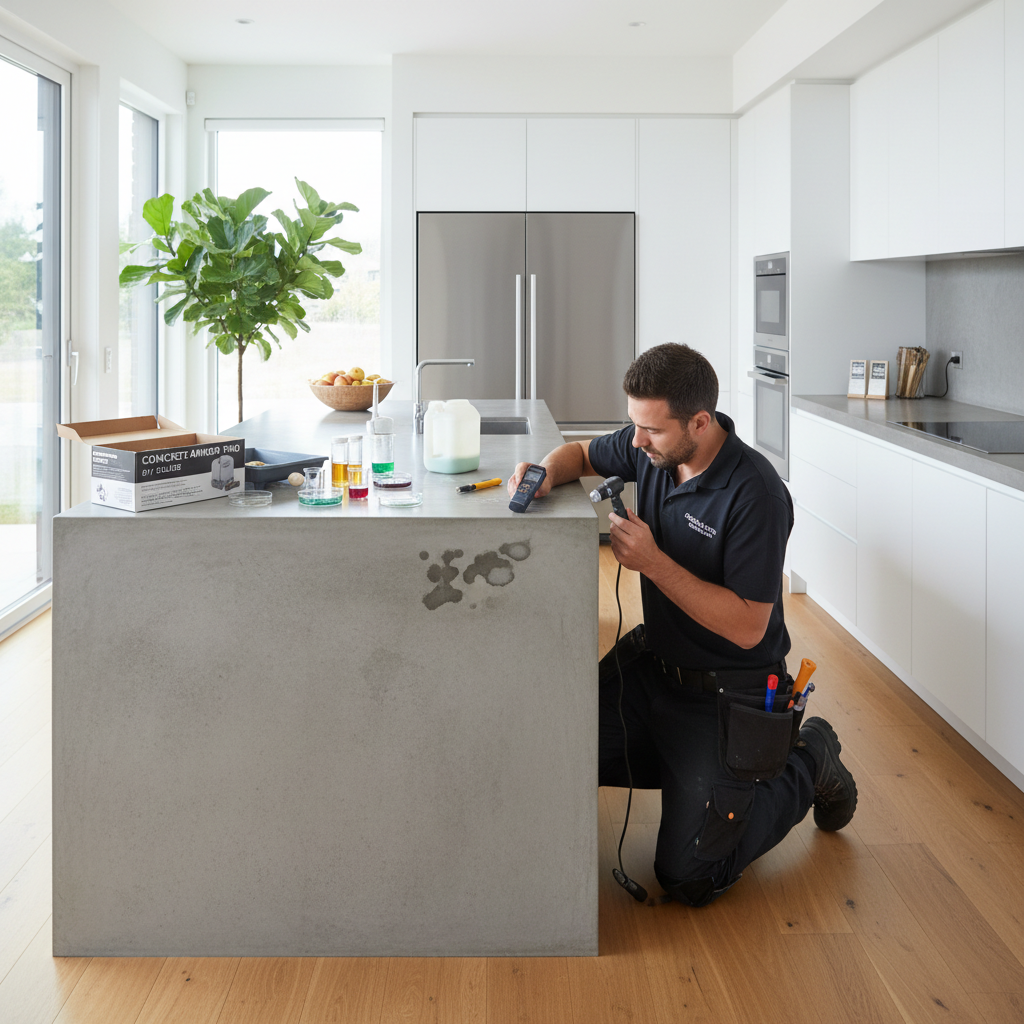
Quick Answer
Concrete countertops are porous and require regular sealing to prevent stains, etching, and absorption. If water no longer beads on the surface and liquids absorb, your sealer has failed. The fix involves thoroughly cleaning the countertop and applying 2-4 thin, even coats of a high-quality, food-safe concrete sealer, allowing proper cure time. This DIY project typically costs $50-$130 in materials, while professional re-sealing ranges from $200-$500.
Common Symptoms
- Countertop easily stains from liquids like wine, coffee, or acidic foods.
- Liquids (e.g., water, oil) soak into the surface and darken the concrete instead of beading up.
- Dull, chalky, or faded appearance, losing its original luster.
- Surface shows signs of etching or minor scratches from normal use.
- Noticeable discoloration or uneven darkening in high-use areas.
Possible Causes
- Concrete's natural porosity: Unsealed concrete is like a sponge, readily absorbing liquids.
- Lack of initial sealing: Countertops were never properly sealed after fabrication or installation.
- Degradation of existing sealer: The current sealer has worn off or broken down over time due to age, heavy use, or harsh cleaning products.
- Improper sealer application: Sealer was applied incorrectly (e.g., too thin, unevenly, or not enough coats) or the wrong type of sealer was used for the specific concrete mix or environment.
- Environmental factors: Exposure to acidic foods, hot items, or abrasive cleaning can accelerate sealer breakdown.
Step-by-Step Diagnosis
- Visual Inspection - Examine the countertop for visible stains, dull spots, etching, or areas where the color appears uneven or darker than others.
- Water Bead Test - Sprinkle a few drops of water onto different areas of the countertop surface. Observe if the water beads up (indicating an effective seal) or if it soaks into the concrete and darkens the surface within a few minutes (indicating the need for re-sealing).
- Oil Absorption Test - In a discreet area, apply a small drop of cooking oil. If the oil quickly darkens the concrete, it confirms high porosity and a compromised or absent seal.
- Assess Usage - Consider the age of the existing sealer (if any) and the frequency of use and cleaning to estimate sealer wear.
DIY vs Professional Costs
| Repair | DIY cost | Pro cost | Time |
|---|---|---|---|
| Sealing Concrete Countertops | $43 - $135 | $200 - $500 | 2 days (mostly drying) |
When to Call a Pro
- If the concrete countertop has significant existing damage such as deep stains, extensive etching, or cracks that require repair before sealing.
- If you are uncomfortable with DIY tasks, lack the necessary tools or time, or prefer the assurance of professional workmanship.
- If a specialized, high-performance, or industrial-grade food-safe sealer is desired that may require specific application techniques.
- For very large or complex countertop installations where precise, even application is critical and difficult for a DIYer.
- If the countertop is newly installed and professional sealing is required to maintain a warranty.
Prevention Tips
- Regularly clean spills immediately, especially acidic liquids (e.g., lemon juice, vinegar, wine, coffee) to prevent etching and staining.
- Use pH-neutral cleaners designed for sealed surfaces; avoid harsh chemicals, abrasive pads, or ammonia/bleach-based products that can degrade the sealer.
- Always use cutting boards for chopping and trivets or hot pads for hot pots and pans to protect against scratches and heat damage.
- Perform the water bead test periodically (e.g., every 6-12 months) and reapply sealer as needed, typically every 1-3 years depending on usage and sealer type.
- Consider applying a food-safe wax or polish periodically for an extra layer of protection and to enhance the shine of the countertop.
FAQs
How often do concrete countertops need to be re-sealed?
It really depends on usage. For a busy kitchen, plan on every 1-3 years. A bathroom you barely use might go 5 years. The best way to know for sure is to do the water bead test every six months. The counter will tell you when it's thirsty.
What type of sealer is best for concrete kitchen countertops?
You need a high-quality, food-safe sealer. Don't just grab any old concrete sealer from the hardware store. Look for one specifically made for countertops. It should ideally be a penetrating sealer that also leaves a protective film on top. I've used brands like Tuff-Duck and Ghostshield with good results, but always read the label to make sure it's right for your situation and intended use.
What should I do if my concrete countertop already has stains before sealing?
You have to try and get those stains out *before* you seal, or you'll lock them in forever. For food or wine stains, a poultice paste of baking soda and peroxide left overnight can work. For oil, a poultice with acetone might be needed (always test in an inconspicuous area first). If the stains are really deep and old, or if you have significant etching, you might need to call a pro for a more serious restoration or light sanding before attempting to re-seal.
Can I fix this myself?
Yes, sealing a countertop is a manageable DIY project if you're patient and follow the steps carefully. The key is proper cleaning and prep, and applying multiple thin, even coats. If you rush it, you'll get streaks and blotches. If you have deep stains, cracks, or a huge, complex kitchen, it might be better to hire a professional, but for most homeowners, it's a very achievable task.
How long does a concrete countertop sealer typically last?
The lifespan of a concrete countertop sealer varies depending on the type of sealer, the amount of use the countertop receives, and how well it's maintained. Generally, you can expect a good quality sealer to last anywhere from 1 to 5 years. Kitchen countertops usually require re-sealing more frequently (every 1-3 years) than bathroom counters due to higher traffic and exposure to food and cleaning products.
What kind of cleaning products should I avoid on sealed concrete countertops?
You should strictly avoid harsh, abrasive, or acidic cleaning products. This includes cleaners with ammonia (like Windex), bleach, vinegar, lemon-based cleaners, or abrasive scrubbing pads. These can strip away the sealer, cause etching, and dull the surface. Stick to pH-neutral cleaners specifically designed for sealed natural stone or concrete surfaces, or simply use mild dish soap and water.
Related guides
- Troubleshooting & Fixing Deteriorated Countertop Caulk and Grout: A Comprehensive Guide
- Granite Countertop Sealing: Your Guide to Preventing Stains and Water Damage (2024)
- Troubleshooting & Fixing Porous Concrete Countertops (Sealing Guide)
- Kitchen Countertop Installation Prep Checklist: Avoid Delays & Extra Costs (2024 Guide)