Quick Answer
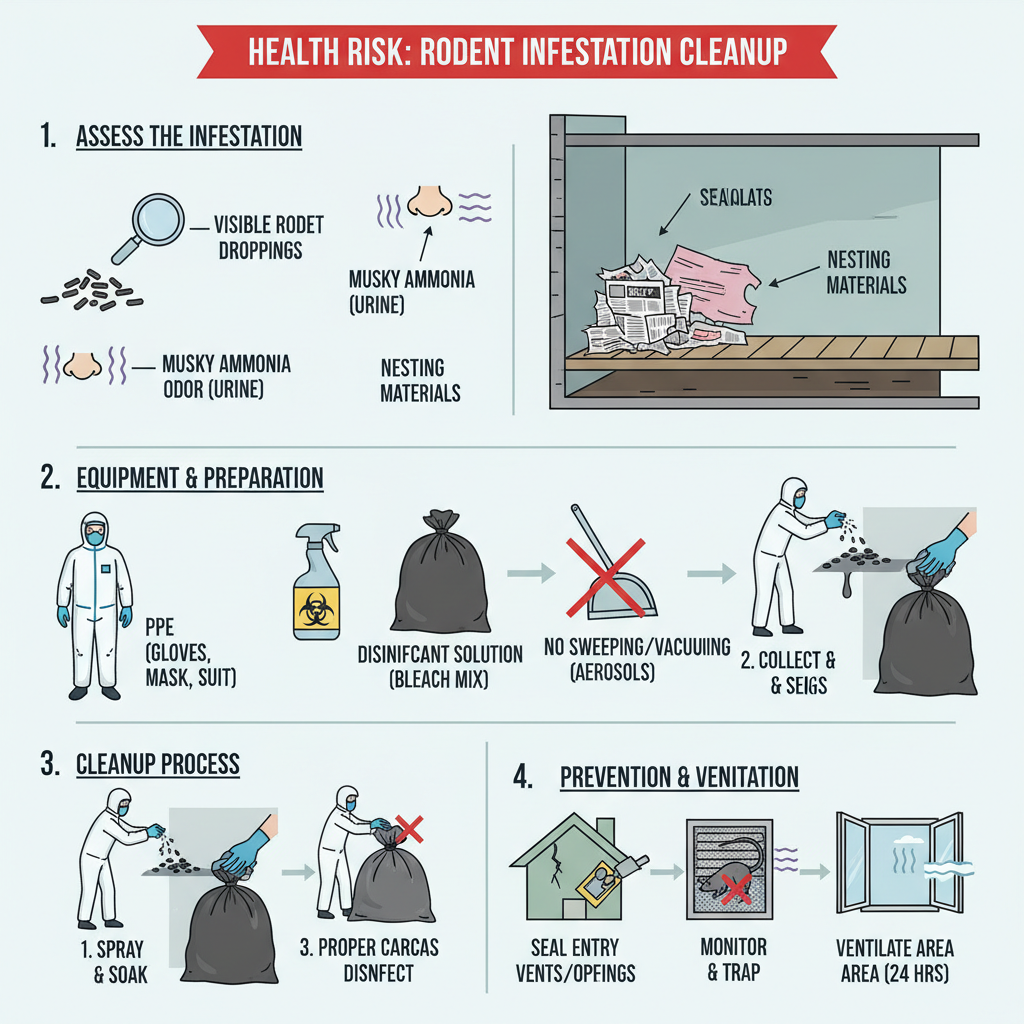
Safely cleaning rodent infestation aftermath involves critical safety precautions. **Never dry sweep or vacuum** droppings, as this aerosolizes hazardous particles like Hantavirus. Always wear a P100 respirator, thick gloves, and eye protection. First, ventilate the area for 30 minutes, then thoroughly spray all contaminated areas with a 1:10 bleach-to-water solution, letting it sit for 5-10 minutes. Gently wipe up materials with paper towels, double-bag them, and dispose of them in outdoor trash. Disinfect surfaces again and deodorize. For large infestations, contaminated insulation, HVAC involvement, or if deer mice are suspected, professional biohazard cleanup is recommended, costing anywhere from $500 for minor cleanups to $2,000-$7,000+ for extensive work.
Common Symptoms
Possible Causes
Step-by-Step Diagnosis
Step 1
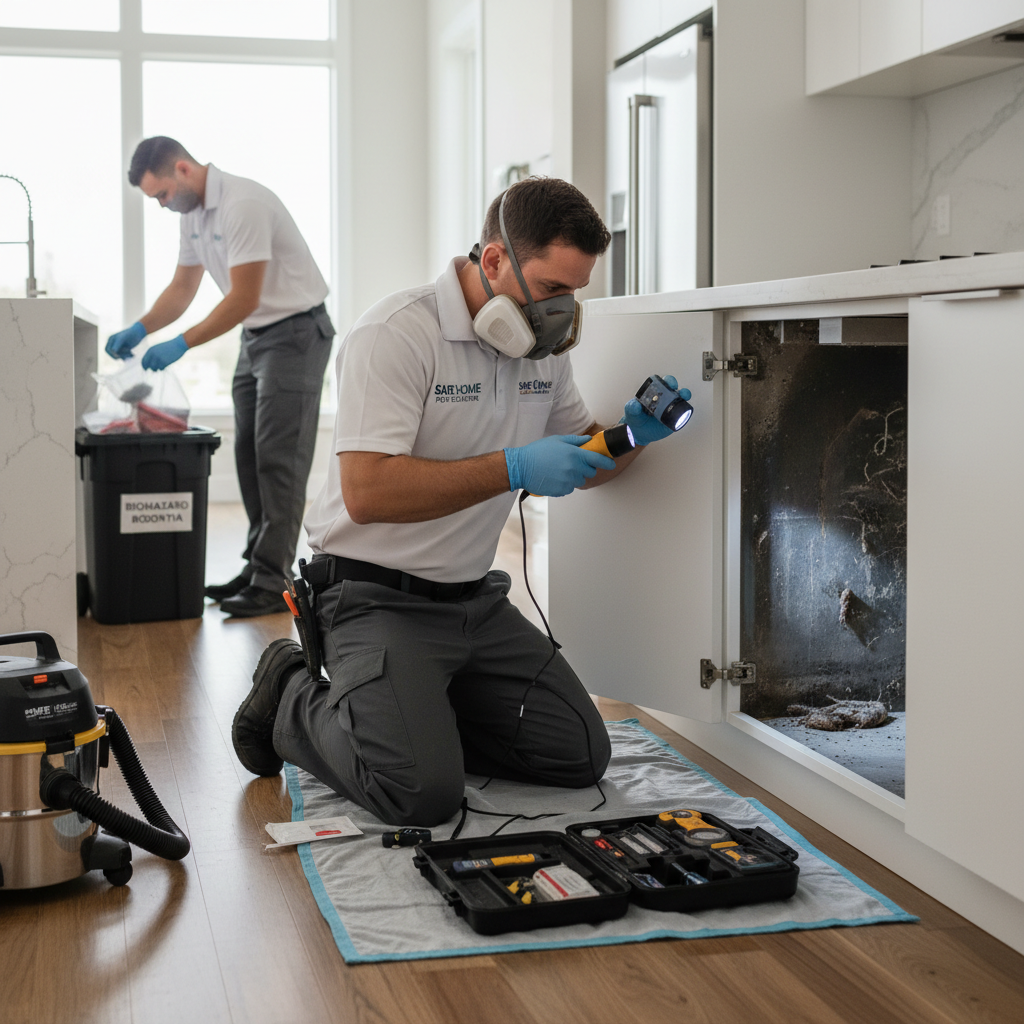
Gear up with proper personal protective equipment (PPE), including a P100 respirator, gloves, and goggles.
Step 2
Visually inspect the property for droppings, nests, and gnaw marks to identify high-traffic areas and the extent of the contamination.
Step 3
Use a UV blacklight in a dark room to identify hidden urine stains on floors, walls, and other surfaces.
Step 4
Determine if the infestation is active by looking for fresh, shiny droppings or using tracking powder to check for new tracks.
Step 5
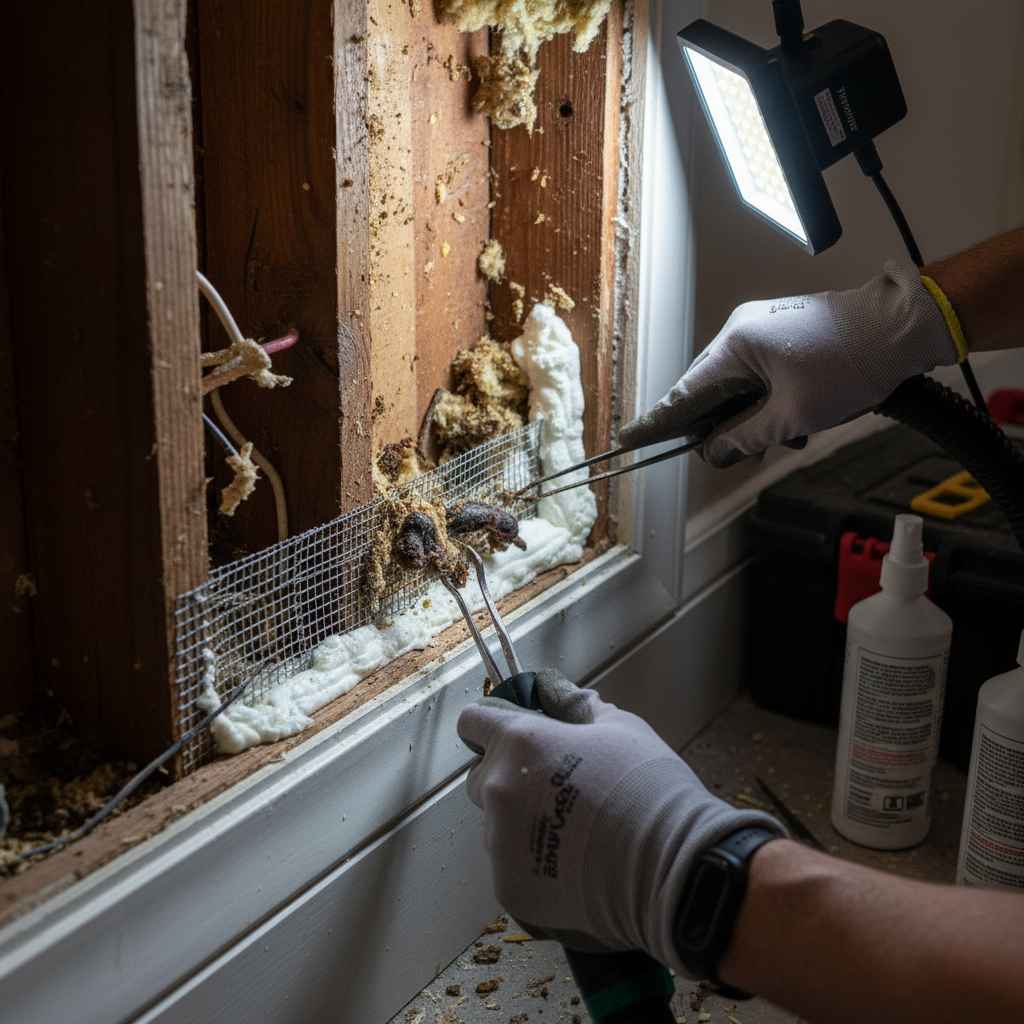
Thoroughly inspect the home's exterior and interior for entry points and seal them with steel wool and caulk.
DIY vs Professional Costs
| Repair Type | DIY Cost | Professional Cost | Time Required |
|---|---|---|---|
Small Cleanup (e.g., under a sink) | $50 - $100 | $250 - $500 | 1-2 hours |
Medium Cleanup (e.g., closet, section of basement) | $100 - $250 | $500 - $2,000 | 4-8 hours |
Large/Biohazard Cleanup (attic insulation, crawlspace) | Not Recommended | $2,000 - $7,000+ | 1-3+ days |
Sealing Entry Points (Exclusion) | $25 - $75 | $200 - $1,000+ | 2-4 hours |
When to Call a Professional Pest Control
- The contamination covers a large area, such as an entire attic or crawlspace.
- You suspect deer mice are present, which increases the risk of Hantavirus.
- Contamination is found within your HVAC ductwork.
- Someone in your household has a compromised immune system, asthma, or other respiratory conditions.
- A persistent, strong musky odor remains after you have attempted to clean the area yourself.
Prevention Tips
- Seal all holes and cracks in your foundation and walls larger than a dime using steel wool and caulk.
- Store all food, including pet food and birdseed, in heavy-duty, airtight containers made of glass or metal.
- Maintain a clean kitchen by promptly wiping up spills and crumbs and not leaving dirty dishes out.
- Keep the area around your foundation clear of clutter, firewood, and overgrown vegetation.
- Ensure outdoor trash cans have tight-fitting lids and are emptied regularly.
Frequently Asked Questions
Related Guides
Safe Rodent Cleanup: How a Pro Handles Droppings & Nests (Troubleshooting & Fixes)
A veteran tech's guide to safely cleaning rodent droppings and nests. Learn what gear to use, the risks of diseases like Hantavirus, and when to call a pro.
Termite Damage vs. Water Damage: How to Tell the Difference (Troubleshooting & Fixes)
A veteran tech explains how to tell termite damage from water damage. Learn the signs, from mud tubes to mushy wood, and what to do next to protect your home.
Emergency Pest Control: When to Call a Professional Immediately
Learn when a pest problem becomes an emergency. Identify dangerous pests, signs of structural damage, or health risks that demand immediate professional pest control. Expert advice from a 25-year veteran.
Horrible Smell in House: Dead Animal Odor Troubleshooting
Comprehensive BizzFactor guide to diagnosing and completely eliminating foul odors from dead animals in your home. Learn how to locate the source, safely remove carcasses, disinfect, neutralize lingering smells, and prevent future pest infestations with practical tips and expert advice.
Bed Bug, Flea, or Mosquito Bites? (Troubleshooting & Fixes)
Are those itchy red spots bed bug, flea, or mosquito bites? This expert guide helps you identify the culprit with detailed descriptions, patterns, and infestation signs. Learn effective diagnosis steps, DIY fixes, and when to call a pro for each pest.
Keeping Critters Out: A Year-Round Pest Control Checklist (Troubleshooting & Fixes)
A seasoned tech's guide to a seasonal pest prevention checklist. Learn the signs, causes, and DIY fixes to keep your home pest-free all year long.
Need Professional Help?
Find top-rated pest control experts in your area