Quick Answer
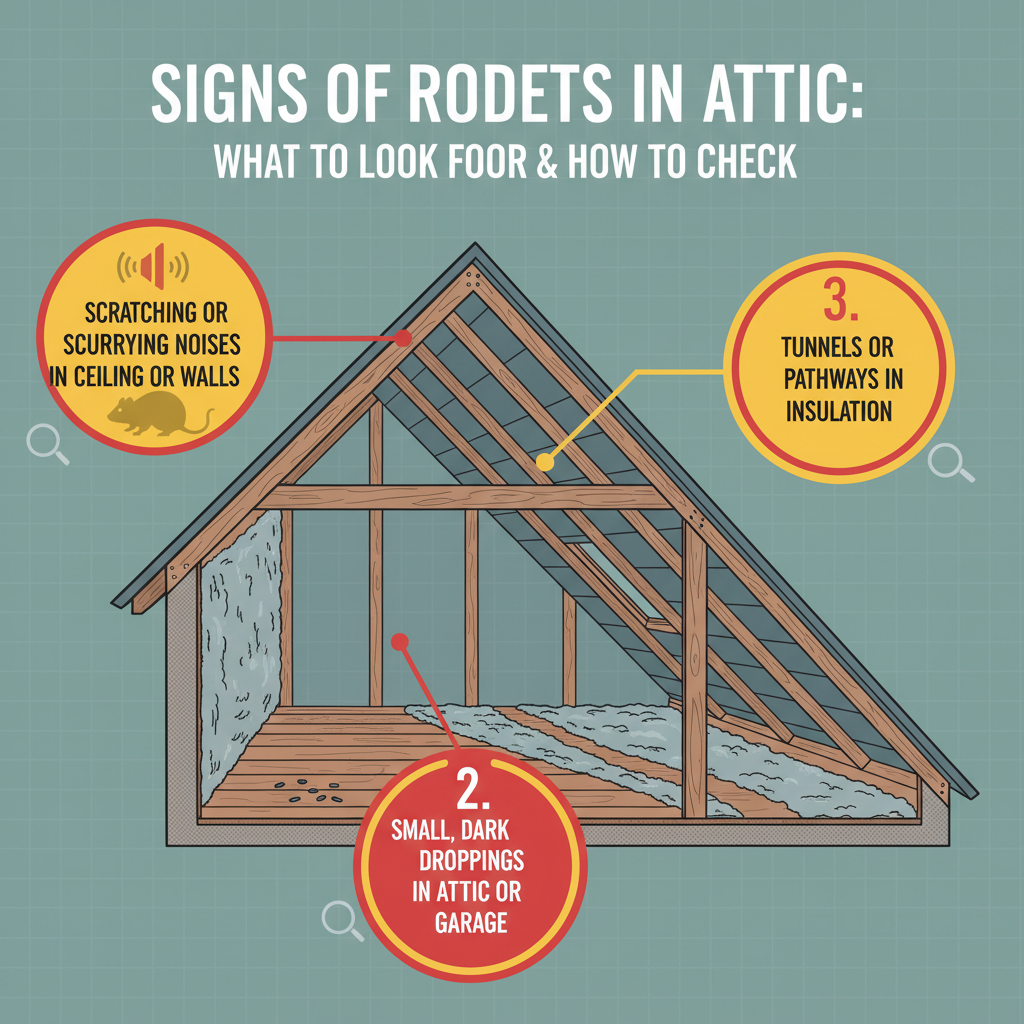
Okay, so here's the quick version. If you're hearing scratching or scurrying noises in the attic, you've probably got unwelcome guests. The biggest signs are rodent droppings, tunnels in your insulation, and gnaw marks on wood or wires. The fix? It’s a three-step dance: inspect to find how they're getting in, seal up every single entry point (this is the most important part!), and then trap the ones already inside. You can DIY the trapping for maybe $20-$100, but a professional exclusion and removal job will run you anywhere from $500 to $2,500+, depending on the extent of the infestation and damage, possibly more if extensive cleanup is needed.
Common Symptoms
Possible Causes
Step-by-Step Diagnosis
Step 1
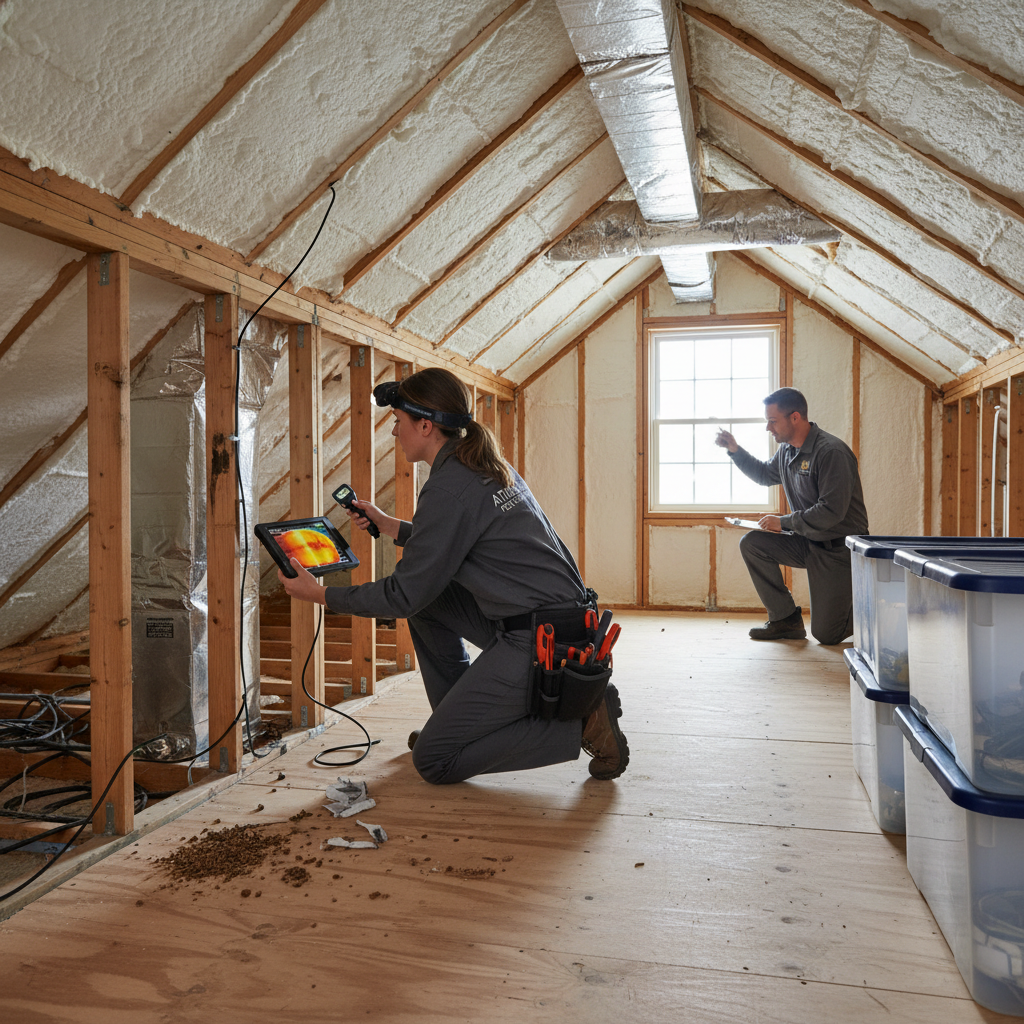
Safety First: Gear up with an N95 mask, gloves, and a good headlamp.
Step 2
Initial Check: Pop the attic hatch and just listen and smell for a moment before entering.
Step 3
Perimeter Sweep: Carefully inspect the edges of the attic for droppings and tunnels in the insulation.
Step 4
Follow the Trails: Trace the rodent runways back to discover potential nests and entry points, especially around vents and utility penetrations.
Step 5
Damage Assessment: Look closely for gnaw marks on wooden beams, PVC pipes, and especially electrical wiring.
DIY vs Professional Costs
| Repair Type | DIY Cost | Professional Cost | Time Required |
|---|---|---|---|
Trapping & Removal | $20 - $100 | $250 - $600 | Ongoing |
Exclusion (Sealing Holes) | $50 - $200 | $500 - $2,500+ | 4-8 hours |
Attic Cleanup/Decontamination | N/A | $1,500 - $5,000+ | 1-3 days |
When to Call a Professional Pest Control
- If you discover any chewed electrical wires - call an electrician immediately, then pest control.
- If the infestation is large, indicated by a strong odor and visible droppings.
- If you've been trapping for several weeks with no end in sight, as this means you haven't found the entry point.
- If you're not comfortable getting on a ladder or on your roof to perform exclusion work safely.
- If the problem involves larger animals like squirrels or raccoons.
Prevention Tips
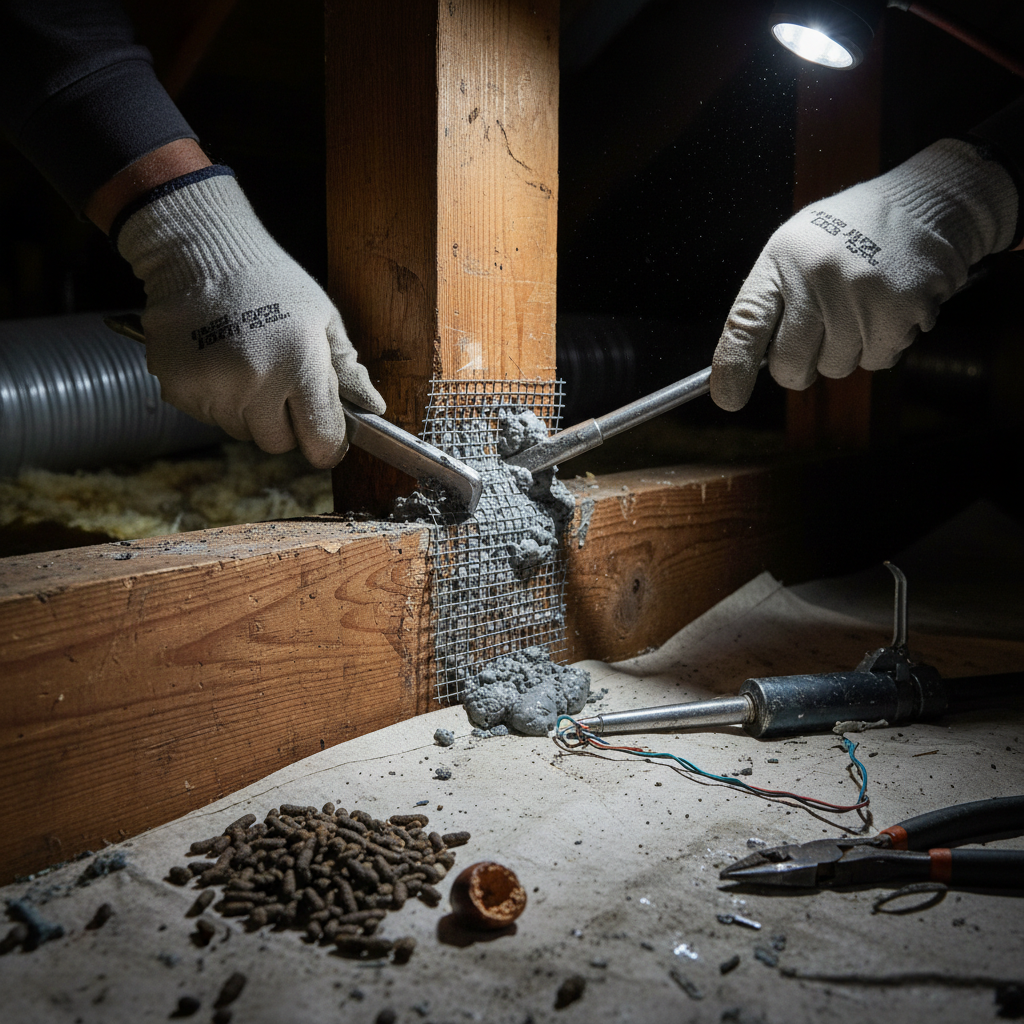
- Seal every gap on your home's exterior larger than a dime using steel wool and sealant.
- Trim all tree branches at least 6 feet away from your roofline.
- Store all trash and recycling in sealed bins and don't leave pet food outside.
- Avoid ineffective gimmicks like ultrasonic repellents and rely on exclusion.
Frequently Asked Questions
Related Guides
Hiring an Exterminator? Let's Talk About Chemical Safety (My Troubleshooting Guide)
A veteran exterminator's guide to asking the right questions about pest control chemicals. Learn how to ensure your family's safety and get a treatment that actually works.
Safe Rodent Cleanup: How a Pro Handles Droppings & Nests (Troubleshooting & Fixes)
A veteran tech's guide to safely cleaning rodent droppings and nests. Learn what gear to use, the risks of diseases like Hantavirus, and when to call a pro.
Preparing Your Home for Pest Control Treatment (for effective and safe application) Troubleshooting & Fixes (2024 Guide)
A veteran pest technician explains how to prep your home for pest control so it actually works. Learn the simple steps to make your treatment effective.
Emergency Pest Control: When to Call a Pro Right Now (Troubleshooting & Fixes)
Seeing a swarm of pests or property damage? Some situations are pest emergencies. Learn from a 25-year vet when to stop DIY and call a pro immediately.
Bed Bug, Flea, or Mosquito Bites? (Troubleshooting & Fixes)
Waking up with itchy bites? This guide from a 25-year pest control vet helps you identify bed bug, flea, or mosquito bites and shows you what to do next.
Termite Damage vs. Water Damage: How to Tell the Difference (Troubleshooting & Fixes)
A veteran tech explains how to tell termite damage from water damage. Learn the signs, from mud tubes to mushy wood, and what to do next to protect your home.
Need Professional Help?
Find top-rated pest control experts in your area