Quick Answer
Okay, so you want to tile over existing vinyl flooring. While it's sometimes technically possible, it's generally not recommended for a durable, long-lasting tile installation. The primary reason is that vinyl is a flexible material, and tile and grout are rigid. This incompatibility often leads to cracks in grout and tiles, and delamination of the tile from the vinyl, especially with foot traffic or temperature changes. Issues like an unstable subfloor or residues on the vinyl surface can further exacerbate these problems. For a truly stable and long-lasting tile floor, removing the old vinyl and properly preparing the subfloor is the recommended approach. While it involves more initial effort, it prevents costly repairs and ensures the integrity of your new tile installation.
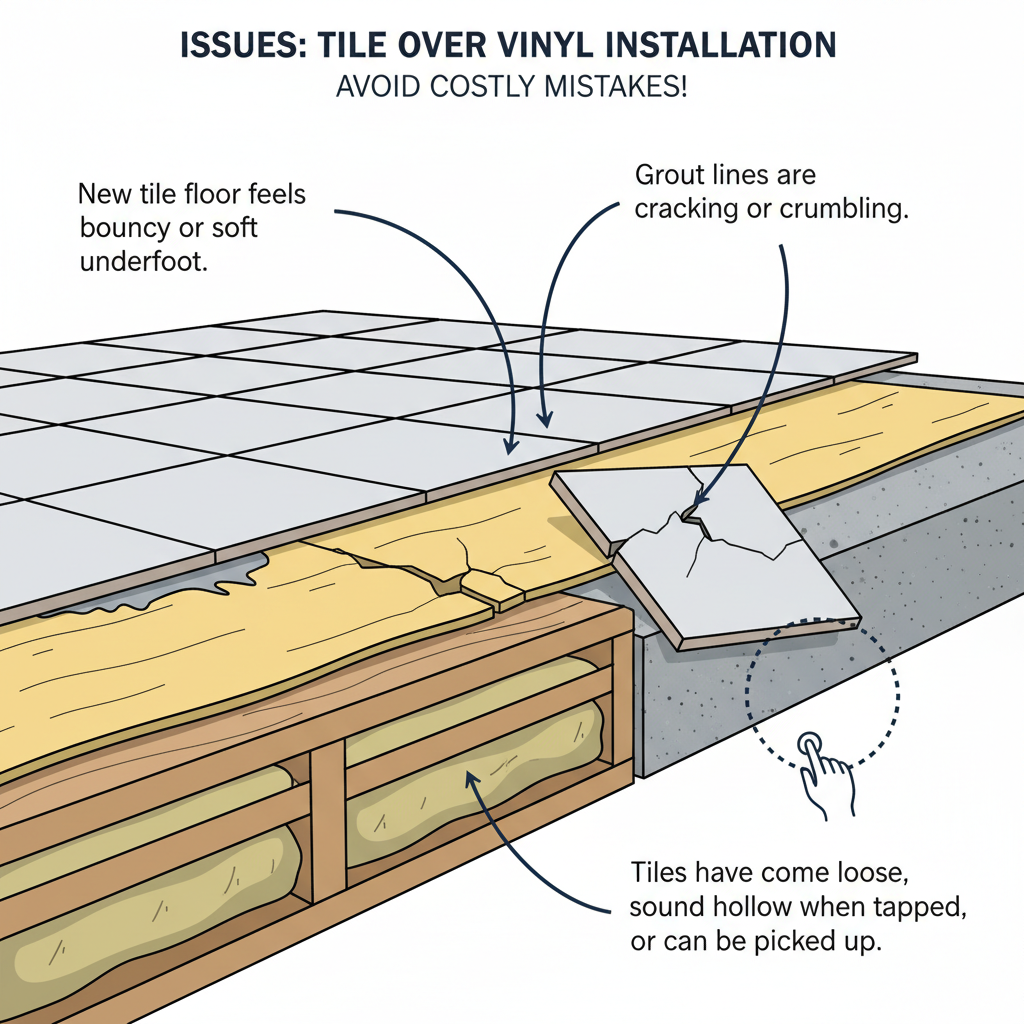
Common Symptoms
Possible Causes
Step-by-Step Diagnosis
Step 1
Get on your hands and knees to inspect the vinyl. Look for the type (sheet, VCT, peel-and-stick) and check for any bubbles, soft spots, or peeling edges.
Step 2
Walk across the entire floor, bouncing on your heels. Feel for any 'give', sponginess, or listen for squeaks that indicate subfloor problems.
Step 3
Check for the number of flooring layers. In a discreet spot, determine if you're dealing with a single layer or a stack of old floors.
Step 4
Evaluate the potential height increase. Consider how adding cement board and tile (approx. 3/4" to 1") will affect doorways, transitions, and appliances.
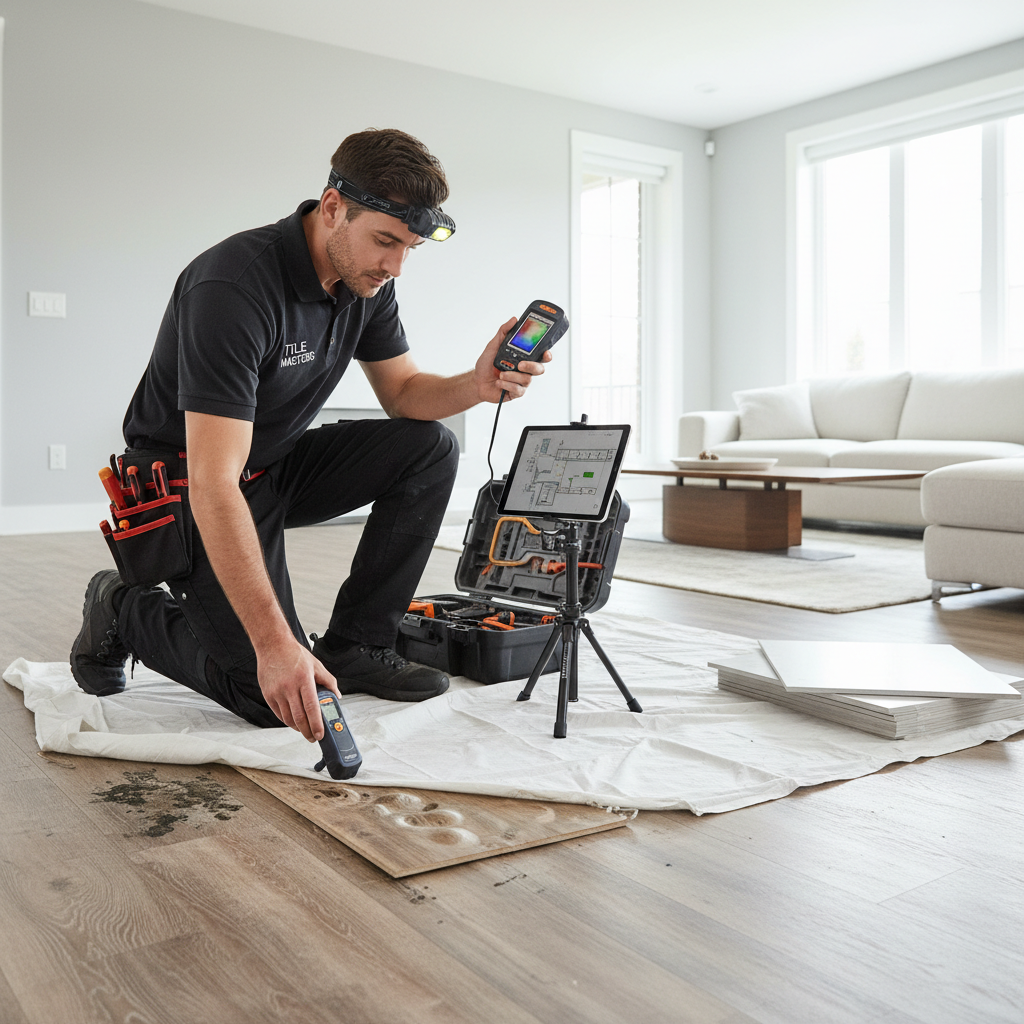
DIY vs Professional Costs
| Repair Type | DIY Cost | Professional Cost | Time Required |
|---|---|---|---|
The Wrong Way: Tiling Over Vinyl | $1-$3/sqft (primers) + materials | N/A - a reputable pro would not typically guarantee this method, but if coerced, costs would be substantially higher due to increased risk and liability. | Varies |
The Right Way: Vinyl Removal & Subfloor Prep | $50-$200 (tools, adhesives/cleaners, patch material if needed) | $2-$8/sqft (depending on vinyl type, condition, and subfloor repair needs) | 4-8 hours |
The Right Way: New Tile Install (on proper subfloor) | $5-$15/sqft (materials only, higher for complex designs/premium tiles) | $5-$14/sqft (labor only, higher for intricate patterns, small tiles, or difficult layouts) | 1-3 days |
When to Call a Professional Tile
- If the existing vinyl flooring is loose, damaged, bubbling, or peeling in any way.
- If the subfloor beneath the vinyl is bouncy, squeaky, or feels unstable when you walk on it.
- If you're dealing with a cracked or damp concrete subfloor that requires specialized preparation.
- If you're unsure about any step of the process. A small consultation fee is much cheaper than paying to have a failed tile job torn out and redone.
Prevention Tips
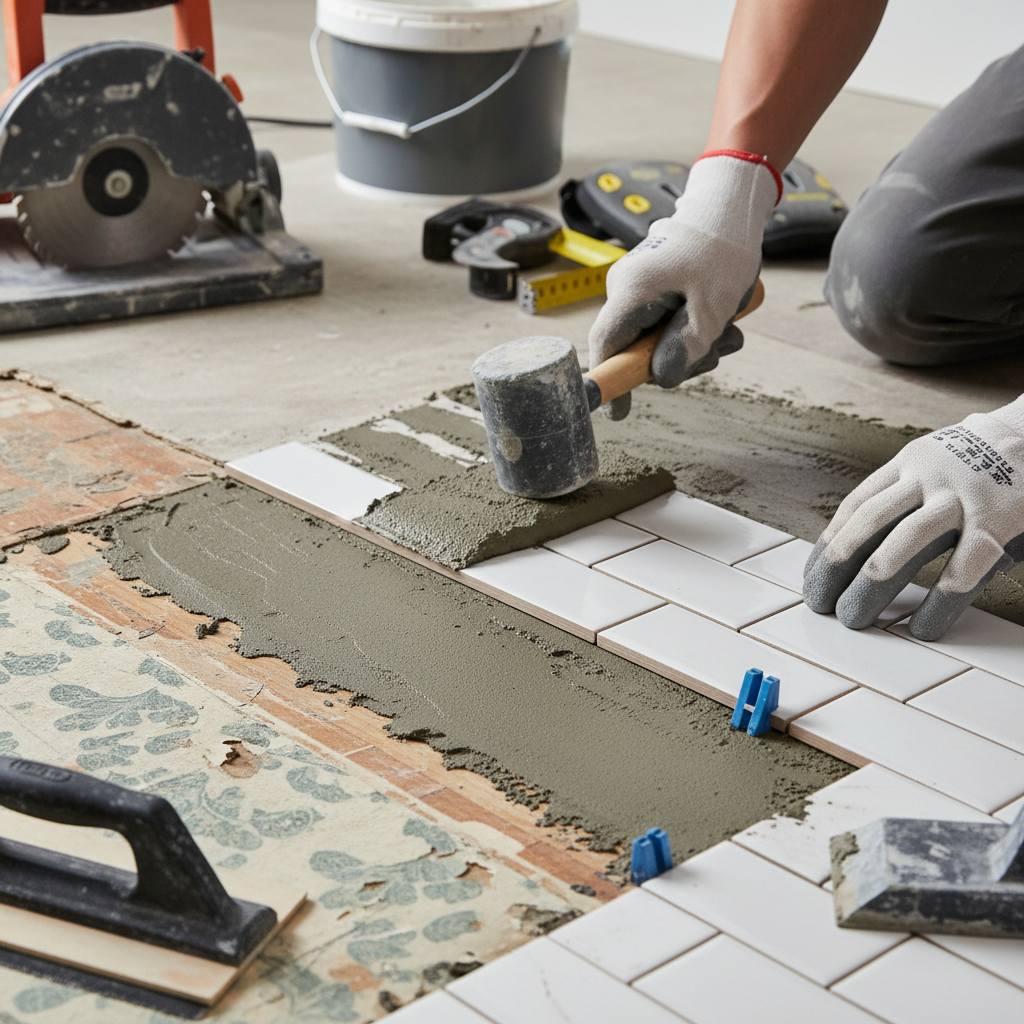
- Always remove the existing vinyl flooring completely before installing new tile. Get down to the subfloor.
- Thoroughly clean the subfloor after vinyl removal, scraping off all old adhesive and debris.
- Ensure the subfloor is perfectly flat and level, using a long level to check and self-leveling compound if necessary.
- Use a high-quality uncoupling membrane (like Schluter-DITRA) over the prepared subfloor to prevent cracks from movement.
Frequently Asked Questions
Related Guides
Tile Tenting or Bulging: Troubleshooting & Fixes (From a Guy Who's Seen It All)
Are your floor tiles popping up? A 25-year vet explains why tiles tent and bulge, how to fix small problems, and when to call a pro before it gets worse.
Hiring a Tile Guy: How to Not Get Ripped Off (Troubleshooting & Fixes)
A veteran tech's guide on hiring a great tile installer. Learn the red flags, what questions to ask, and how to avoid a disastrous, expensive tile job.
Mold in Shower Grout (Troubleshooting & Fixes)
A veteran tile tech's guide to killing mold in your shower grout for good. Learn how to identify, clean, and prevent that nasty black stuff from coming back.
Cracked Floor Tile (Troubleshooting & Fixes)
Got a cracked floor tile? Here's the no-BS guide from a 25-year tech on how to fix it yourself with epoxy or when you absolutely need to call a pro.
Cleaning Your Patio Tiles and Slabs (Troubleshooting & Fixes)
A veteran tech's guide to cleaning outdoor patio tiles. Learn how to remove moss, algae, and tough stains yourself and when it's time to call in a pro.
Tackling Old Grout Removal (Troubleshooting & Fixes)
A veteran tile tech's guide to removing old, cracked, or moldy grout. Learn the right tools, troubleshooting steps, and when to call a pro.
Need Professional Help?
Find top-rated tile experts in your area