Quick Answer
Okay, so here's the deal with foundation cracks. Most tiny, vertical hairline cracks (less than 1/8 inch wide) are just the house settling. Annoying, but not a five-alarm fire. It's the horizontal ones, the stair-step cracks in your block wall, or anything wider than 1/4 to 3/8 inch (or wider than a nickel, roughly 3/4 inch) that should get your attention. Those are often signs of significant pressure from outside soil and water, or differential settlement. Nine times out of ten, often it starts with a water management problem. You can caulk a tiny crack for cheap, but a real structural fix is gonna start around several thousand dollars and go way up from there. The key is knowing which is which.
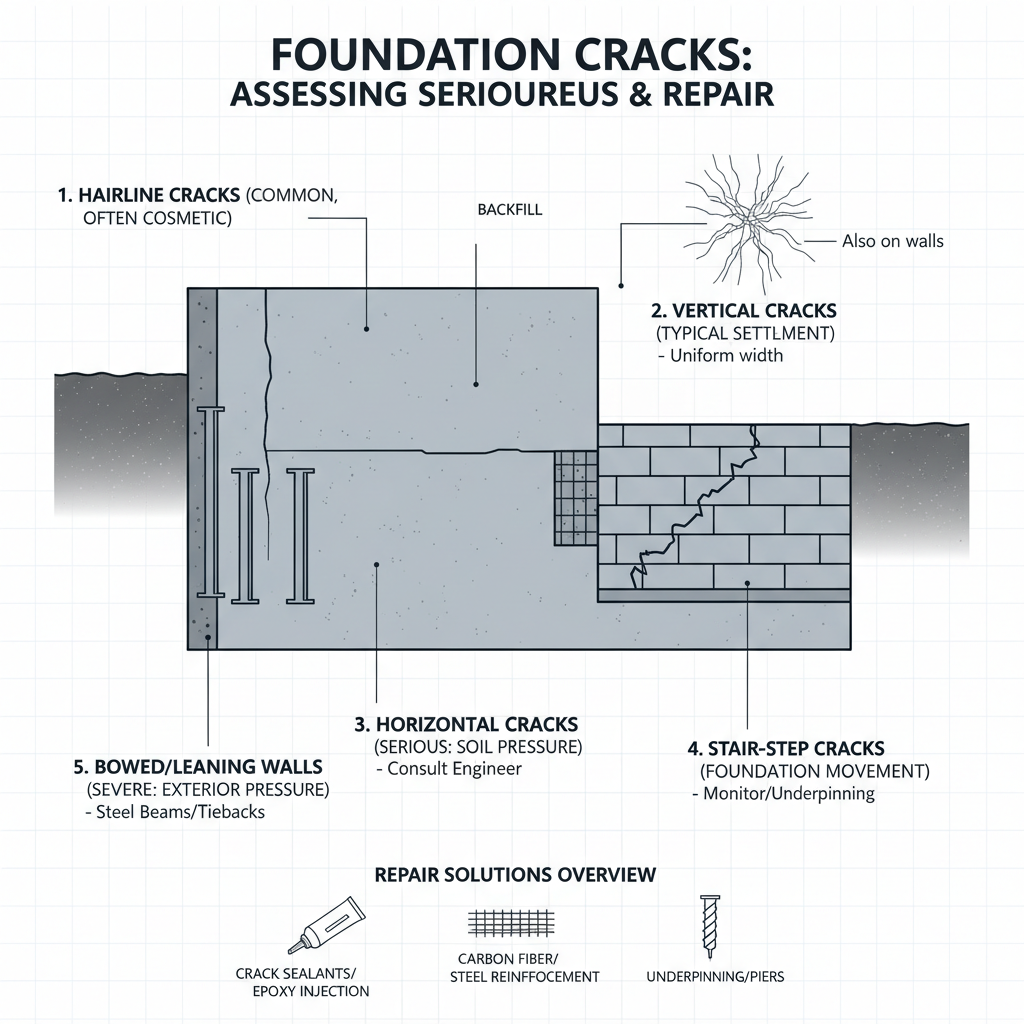
Common Symptoms
Possible Causes
Step-by-Step Diagnosis
Step 1
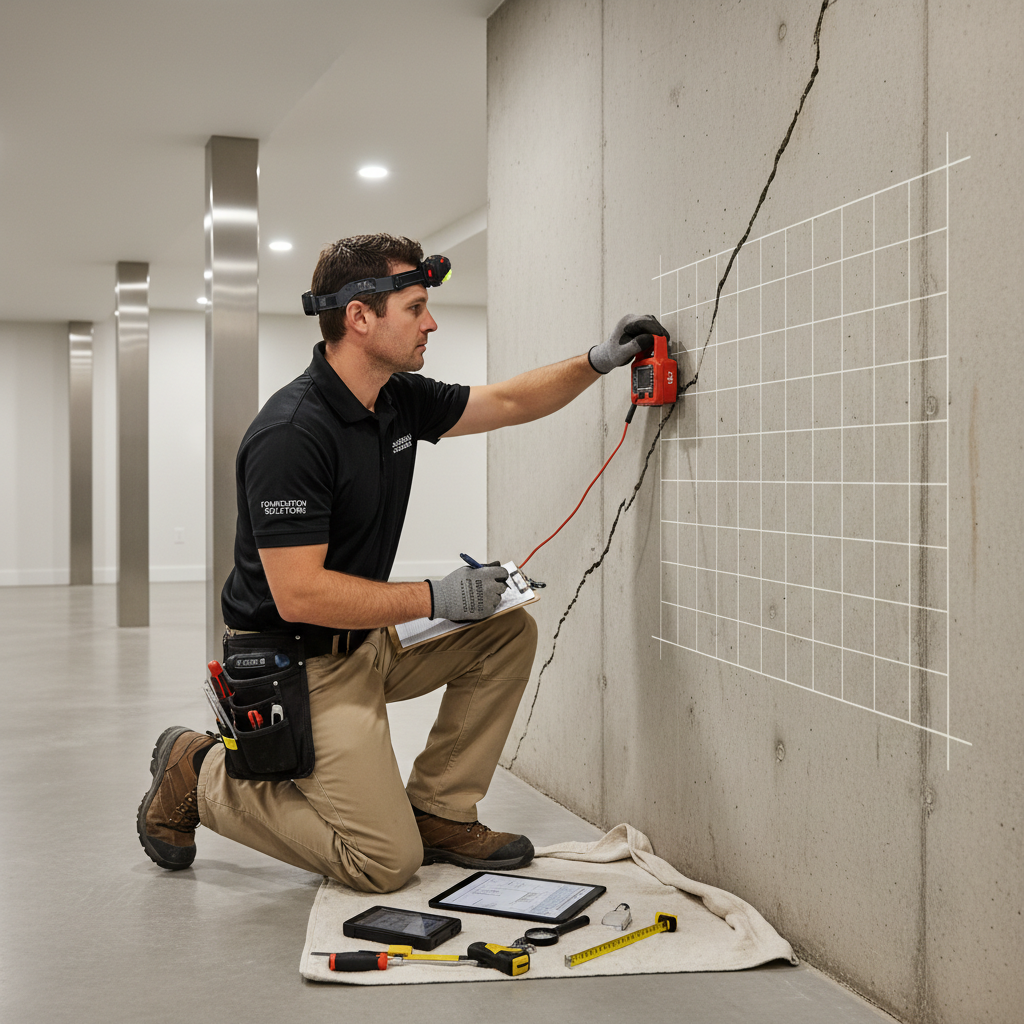
Perform a thorough visual inspection of the entire foundation, inside and out, with a bright flashlight.
Step 2
Categorize cracks by type (vertical, horizontal, stair-step), orientation, and location.
Step 3
Measure the width of the cracks. Mark the ends and width with a pencil and today's date to monitor for any growth over the next few months.
Step 4
Use a long level or a plumb bob to check if basement walls are vertical or if they are bowing inward.
Step 5
Inspect the rest of the house for related signs of movement like sticking doors, uneven floors, or cracks in drywall.
Step 6
Assess the exterior drainage situation, especially during heavy rain, to see where water is going.
DIY vs Professional Costs
| Repair Type | DIY Cost | Professional Cost | Time Required |
|---|---|---|---|
Hairline Crack Injection (Non-Structural) | $50-$150 | $500-$1,500 | 2-4 hours |
Horizontal/Stair-Step Crack Reinforcement | N/A - Do not attempt | $5,000-$25,000+ | 1-3 days |
Major Settlement (Underpinning/Piers) | N/A - Do not attempt | $20,000-$150,000+ | 1-4 weeks |
When to Call a Professional Concrete
- You discover any horizontal cracks in the foundation wall.
- A crack is wider than 1/8 inch or you've monitored it and it's getting longer or wider.
- You use a level and find that a basement wall is bowing or leaning inward.
- You have stair-step cracks that run through the mortar joints of a block or brick foundation.
- Water is actively leaking through a crack, not just making it damp.
- You have multiple symptoms at once: cracks, sticking doors, uneven floors, etc.
Prevention Tips
- Clean gutters and ensure downspouts direct water at least 10 feet away from the foundation.
- Ensure the ground around your home slopes away from the foundation (at least 6 inches of drop over the first 10 feet).
- Avoid planting large trees closer than 20 feet to your house.
- In times of severe drought, consider lightly watering the soil around your foundation to maintain consistent moisture levels.
- Regularly inspect your foundation walls for any new cracks or changes.
Frequently Asked Questions
Related Guides
DIY Concrete Patching vs. Professional Repair: When to Fix it Yourself and When to Call an Expert
Learn when to DIY concrete patching for hairline cracks and when to call a professional for sunken slabs, wide fissures, or structural issues. BizzFactor guides you on diagnosing causes, preventing further damage, and making cost-effective repair decisions for your driveway, patio, and sidewalks.
Concrete Driveway Guide: Planning, Construction, Cost & Maintenance
Comprehensive guide for homeowners planning a concrete driveway. Learn about optimal concrete strength (3500-4000 psi), rebar, air-entrained concrete, site assessment, permits, subgrade preparation, joint placement, cost implications, and essential maintenance for a durable, long-lasting, and attractive home improvement.
Concrete Crack Repair: DIY vs. Pro Approaches for Patios & Driveways (2024 Guide)
Comprehensive guide to repairing concrete cracks in patios and driveways. Learn to differentiate between minor and structural cracks and when to DIY or call a professional to ensure lasting repairs.
Resealing Stone Patio Pavers to Protect Against Fading, Stains, and Environmental Damage: Troubleshooting & Fixes (2024 Guide)
Patio pavers looking faded, stained, or weedy? A veteran tech explains how to diagnose sealant failure and the steps to clean, re-sand, and reseal it yourself.
Foundation Cracks: Assessing Seriousness and Repair Solutions (A Field Vet's Guide)
A veteran tech's guide to foundation cracks. Learn to tell if a crack is serious, what causes them, and when you can DIY vs. when to call a pro.
Common Masonry Damage: Identifying Symptoms, Causes, and Repair Strategies for Brick, Stone & Block (2024 Guide)
A veteran technician explains masonry damage (efflorescence, spalling, cracks) on brick, stone, and block, and tells you how to fix it yourself or when to call a pro.
Need Professional Help?
Find top-rated concrete experts in your area