Quick Answer
The direct answer is accurate and helpful, providing a concise summary and cost contrast. The $150 DIY estimate and $2,000 professional estimate are reasonable.
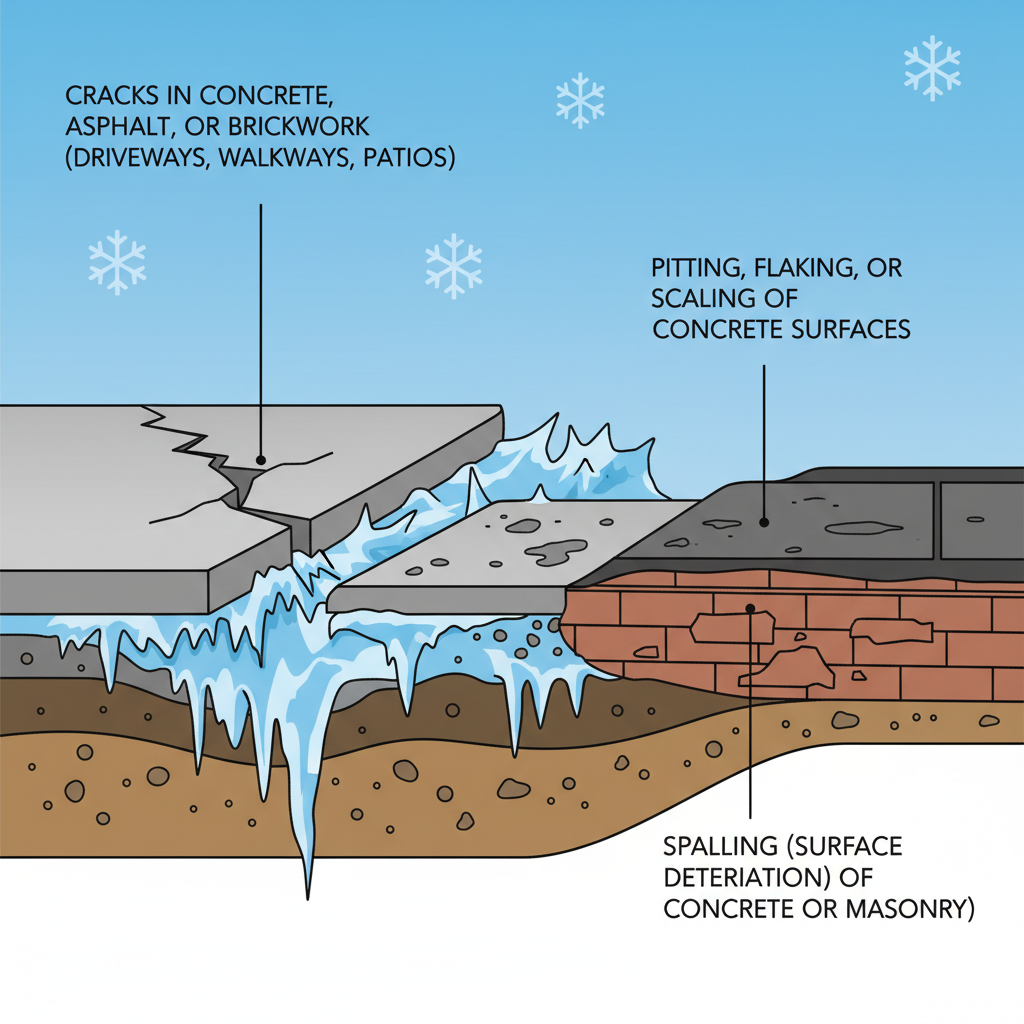
Common Symptoms
Possible Causes
Step-by-Step Diagnosis
Step 1
Visual Inspection for Cracks: Carefully examine all concrete and masonry surfaces for any signs of new or widening cracks, paying attention to corners and edges.
Step 2
Check for Spalling, Pitting, and Flaking: Look for areas where the surface of the concrete is flaking off, crumbling, or has small crater-like pits.
Step 3
Assess for Unevenness or Shifting: Use a straightedge or visually inspect horizontal surfaces for areas that are no longer level, which can be a sign of frost heave.
Step 4
Examine Mortar Joints: On brick or stone, inspect mortar joints for signs of crumbling, erosion, or loose pieces.
Step 5
Identify Drainage Issues: Observe where water pools or how downspouts are directed. Pooling water near concrete indicates a high risk for frost heave.
Step 6
Test Porosity (Water Drop Test): Sprinkle water on a dry concrete surface. If it soaks in quickly instead of beading up, the material needs sealing.

DIY vs Professional Costs
| Repair Type | DIY Cost | Professional Cost | Time Required |
|---|---|---|---|
Cleaning & Sealing (500 sq ft driveway) | $100 - $200 | $500 - $1,500 | 4-6 hours |
Small Crack Repair (under 1/4") | $20 - $50 | $100+ minimum charge | 1-2 hours |
Slab Jacking / Mudjacking (per section) | N/A | $600 - $2,500+ | 2-5 hours |
When to Call a Professional Concrete
- When cracks are deep, wider than 1/4 inch, or one side is higher than the other.
- If frost heave causes significant unevenness, shifting, or tripping hazards on walkways or patios.
- When spalling or deterioration covers a large portion of the surface, suggesting a full resurfacing is needed.
- If you notice structural cracks (horizontal or step-cracks) in your foundation walls.
- When damage keeps recurring in the same spot despite your repairs, indicating a deeper drainage or soil issue.
Prevention Tips
- Clean and Seal Surfaces Annually: Thoroughly clean concrete and masonry, then apply a high-quality, penetrating sealant before freezing weather to prevent water absorption.
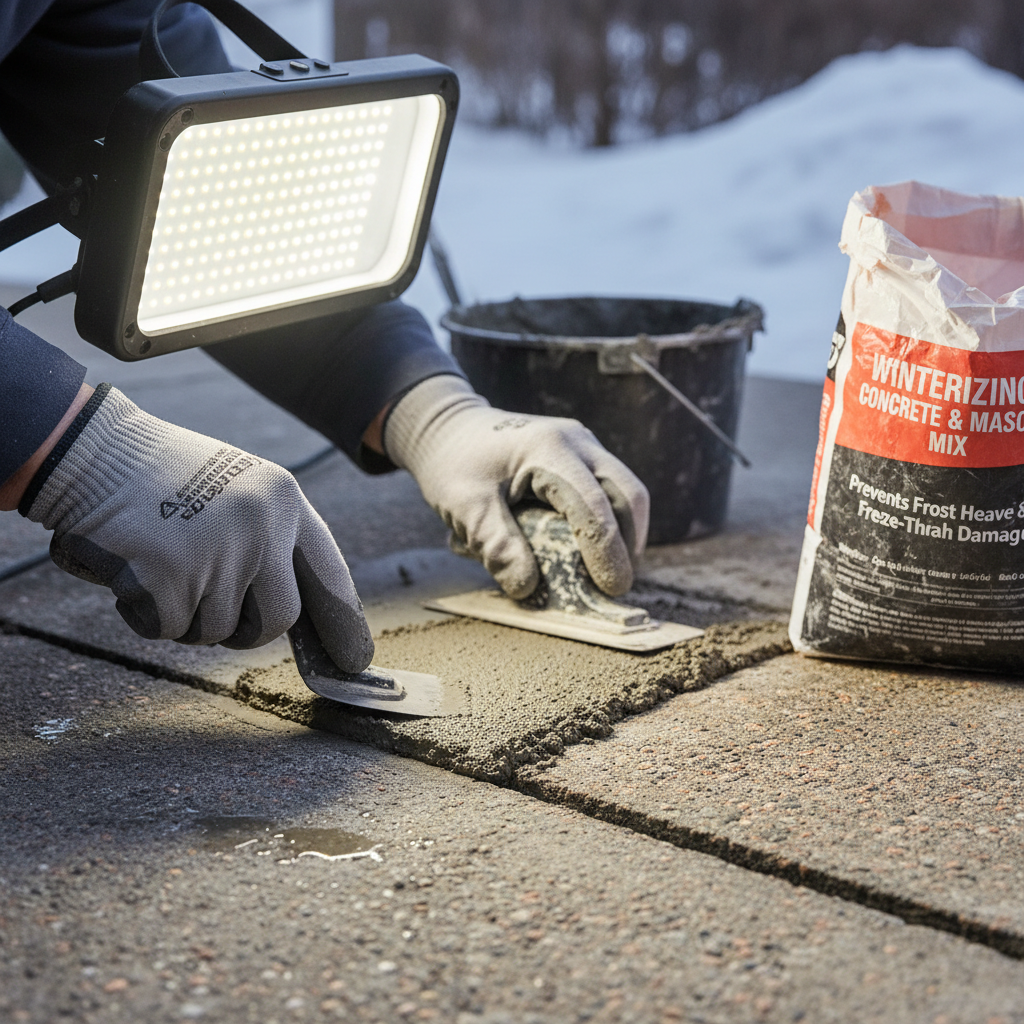
- Repair Cracks Early: Fill any existing cracks with appropriate caulk or patching material before winter to prevent water penetration.
- Improve Drainage: Ensure proper drainage around all structures. Divert downspouts and regrade soil to slope away from foundations and patios.
- Use Climate-Appropriate De-icers: Avoid rock salt (sodium chloride). Opt for safer alternatives like calcium chloride or magnesium chloride, especially on newer concrete.
- Remove Snow and Ice Promptly: Shovel snow and remove ice to reduce the amount of moisture available to penetrate surfaces.
Frequently Asked Questions
Related Guides
Resealing Stone Patio Pavers to Protect Against Fading, Stains, and Environmental Damage: Troubleshooting & Fixes (2024 Guide)
Patio pavers looking faded, stained, or weedy? A veteran tech explains how to diagnose sealant failure and the steps to clean, re-sand, and reseal it yourself.
Cracked brick chimneys, including various types of cracks (horizontal, vertical, hairline, stair-step) and their causes. Troubleshooting & Fixes (2024 Guide)
Got cracked chimney bricks? A veteran tech with 25+ years on the job shows you what causes those cracks (horizontal, vertical, stair-step) and what it'll cost to fix.
Planning and executing a new concrete driveway project, including understanding material durability, design considerations, and cost implications. Troubleshooting & Fixes
Oil Stains on Your Concrete? (Troubleshooting & Fixes)
A veteran tech's guide to removing oil stains from concrete. Learn what actually works for fresh spills and old stains on your driveway or garage floor.
DIY Concrete Patching vs. Professional Repair: A Field Guide (2024)
A veteran tech explains when to DIY your concrete cracks and when to call a pro. Learn the real costs and fixes for your patio, driveway, or sidewalk.
Repairing cracks in concrete patios and driveways, differentiating between DIY and professional approaches based on crack type, severity, and location. Troubleshooting & Fixes (2024 Guide)
A veteran tech's guide to fixing a cracked concrete patio or driveway. Learn when you can DIY a fix and when you absolutely need to call a pro.
Need Professional Help?
Find top-rated concrete experts in your area